 By Deepak Parvatiyar*
Trees Vanish, Plans Soar: Green Pledges Ring Hollow
New Delhi: India’s environmental vision—rooted in the National Environment Policy, 2006, and Nationally Determined Contributions (NDCs) targeting net-zero by 2070—heralds a green dawn. Yet, the reality is a brutal reckoning: 81 elephants crushed by trains, illegal mines tearing at Kaziranga’s fringes, trees felled under feeble oversight, mangroves teetering on fickle funds, vehicle waste mounting, e-waste piling up, and air choking 130 cities.
Union Minister of State for Environment, Forest and Climate Change Kirti Vardhan Singh’s parliamentary responses detail policies, but ambition dwarfs action. Approving roads in eco-sensitive zones while preaching conservation, diverting 1.73 lakh hectares of forest land while claiming gains, and touting clean air plans while funds lie idle—these contradictions shred India’s green rhetoric. The Ministry’s data—persistent elephant deaths, unprocessed e-waste, stalled pollution funds—exposes a nation racing for progress at nature’s expense. Can India deliver, or will its promises choke in bureaucratic fog?
From 2019-20 to 2023-24, 81 elephants died in train collisions, per State Governments and Union Territory Administrations, a stark toll of infrastructure’s clash with wildlife. The Ministry of Environment, Forest and Climate Change and the Ministry of Railways cite speed restrictions, seismic sensor pilots, and underpasses, ramps, and fencing. The Wildlife Institute of India’s “Eco-friendly Measures to Mitigate Impacts of Linear Infrastructure” and a report mapping 127 vulnerable railway stretches (3,452.4 km), with 77 prioritised across 14 states (1,965.2 km), promise precision. Workshops in 2023 and 2024 trained railway officials. Yet, the National Board for Wild Life’s 2022 guidelines failed to curb deaths, per Ministry data. Erratic rollouts and weak coordination let trains plough through habitats, mocking the NDCs’ biodiversity commitments.
Kaziranga Betrayed: Courts Defied, Roads Carved
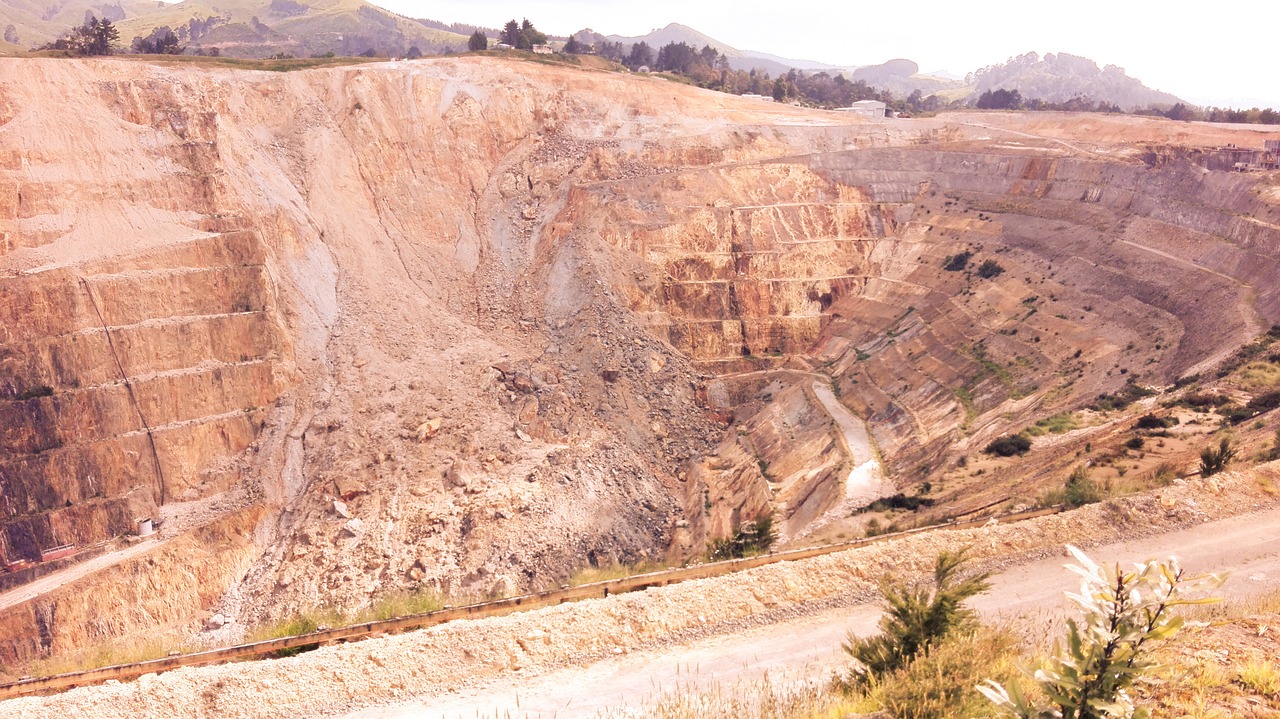
Near Kaziranga National Park – the only abode of the Indian One-horned rhinoceros in the world, illegal mining in Karbi Anglong defies a 2019 Supreme Court order (I.A. No. 42944/2019) banning all types of such activities along the southern boundary of Kaziranga National Park (KNP), a UNESCO World Heritage Site, and in the catchment areas of rivers and streams in Karbi Anglong district.
Assam’s closure of 28 stone quarries, 18 crushers, and 10 permits is reactive. Mitigation—underpasses, wildlife corridors, eco-friendly barriers, speed-reducing measures, signboards, camera traps, infrared sensors, and drones—seems robust. Yet, the Standing Committee of the National Board for Wild Life’s approval of a 4-lane Brahmaputra tunnel and Kaliabor-Numaligarh road widening in eco-sensitive zones, overseen by the Central Empowered Committee, favours connectivity. The Supreme Court’s 2019 ruling in Ashok Kumar Sharma case underscores “deemed forests” protection, but violations persist, exposing enforcement as performative, betraying the National Environment Policy’s conservation ethos.
Also read: 17,101 Trees Felled for Ken-Betwa Dam in Madhya Pradesh
Illegal tree felling, governed by the Indian Forest Act, 1927, the Van (Sanrakshan Evam Samvardhan) Adhiniyam, 1980, and the Wild Life (Protection) Act, 1972, relies on State Governments. The India State of Forest Report-2023 claims a 156.41 square kilometre rise in forest cover and 1,289.40 square kilometres in tree cover since 2021. Yet, the Ministry’s 2024 Year-end Review admits 1,73,984.3 hectares diverted from 2014-24, with 63% for mining, hydropower, and roads. The 2023 Forest Conservation Amendment, easing diversions by narrowing forest definitions, tilts toward extraction. National Green Tribunal’s 2024 fines for deforestation highlight a reactive system, contradicting NDC forest protection goals. The National Mission for a Green India, releasing ₹982.34 crores to 17 states since 2015-16, including ₹619.79 crores from 2020-25, funds plantations, but diversions undermine these efforts.
Mangroves Rise, Funds Fade: Climate Dreams Teeter
The Mangrove Initiative for Shoreline Habitats & Tangible Incomes (MISHTI) restored 26,396.34 hectares in 2023-24 and 2024-25, with 3,836 hectares via National Compensatory Afforestation Management and Planning Authority (CAMPA) and 22,560.34 hectares via State CAMPA and other programmes. In Odisha, ₹0.70 crores supported 89 hectares across Balasore, Bhadrak, Kendrapara, and Puri. In Kendrapara’s Junusnagar, 5 hectares are under plantation, with ₹4.69 lakh spent in 2024-25 for 13,750 seedlings. Eco-Development Committees drive nursery raising and livelihoods like backyard duckery. Workshops with forest officials and Panchayati Raj Institutions foster conservation. The 2024 Ministry report warns of budget shortfalls, risking reversal. This aligns with the National Environment Policy’s participatory approach, yet its fragility betrays NDC climate resilience goals.
The Environment Protection (End-of-Life Vehicles) Rules, 2025, mandate producers to scrap vehicles introduced 15 years ago for transport and 20 years ago for non-transport vehicles. Registered Vehicle Scrapping Facilities handle depollution, with materials sent to recyclers. Producers must establish collection centres, and owners must deposit vehicles within 180 days. The Central Pollution Control Board (CPCB) and State Pollution Control Boards enforce compliance. The Ministry of Road Transport and Highways’ 2021 rules and the Ministry of Steel’s 2019 Scrap Recycling Policy support this. CPCB’s 2023 guidelines note sparse rural collection centres, undermining NDC waste management goals. Coordination complexity risks inertia.
E-Waste Piles, Air Chokes: Promises Rust
E-waste management under the E-Waste (Management) Rules, 2022, effective April 2023, shows 12,54,286.55 metric tons generated in 2023-24 (61.94% processed) and 13,97,955.59 metric tons in 2024-25 (70.71% processed). Recyclers grew from 271 to 346 across 19 states, with Uttar Pradesh (125) and Maharashtra (75) leading. Over 29% of e-waste remains unprocessed, and states like Assam lag with minimal facilities. No funding exists for processing units, per the Rules, limiting scalability. The National Environment Policy’s circular economy vision is undercut by uneven infrastructure.
Air pollution chokes 130 non-attainment cities under the National Clean Air Programme (NCAP), launched in 2019. NCAP’s ₹13,036.52 crore allocation, with ₹9,209.44 crore utilised, funds road improvements and greening. Dust contributes 40-50% of PM10, per source apportionment studies. BS-VI norms and PM E-DRIVE push electric mobility, while CPCB guidelines curb biomass burning. Yet, the 2024 IQAir report ranks India high in PM2.5, and CPCB notes no direct link between air pollution and deaths. Environmental Compensation (EC) funds (₹620.6 crore accrued, with ₹80.82 crore utilized, ₹138.38 crore committed, and ₹284.18 crore locked in sub judice accounts, leaving ₹117.22 crore available) and Environmental Protection Charge (EPC) funds (₹527.91 crore accrued from diesel vehicle charges in Delhi-NCR, with ₹173 crore disbursed, ₹222.83 crore allocated, and ₹78.08 crore available) remain underutilized. The NGT’s January 21, 2025, order (OA No. 638/2023) froze EC fund use, likely due to allocation disputes, while bureaucratic delays—slow project approvals and poor coordination between CPCB, SPCBs, and urban local bodies—stall EPC funds. This hampers NCAP’s dust control and greening efforts, contradicting NDC commitments to reduce air pollution intensity by 2030.
The National Action Plan on Climate Change (NAPCC), with nine missions, drives adaptation and mitigation. The National Mission for a Green India (₹619.79 crore, 2020-25), National Solar Mission (116.25 GW by June 2025), National Innovations in Climate Resilient Agriculture (₹23,554.06 lakh utilised), and others show intent. The “Ek Ped Maa Ke Naam” campaign planted 1.64 billion trees since June 2024. CPCB’s monitoring of 311 polluted river stretches and guidelines for water body restoration are steps forward, but implementation lags, belying NAPCC’s resilience goals.
India’s policies—rooted in the National Environment Policy and NDCs—aim for biodiversity, clean air, and net-zero by 2070. Yet, the 2023 Forest Conservation Amendment, easing forest diversions and infrastructure approvals in eco-sensitive zones, clash with the Supreme Court’s 2019 ruling in the Ashok Kumar Sharma case. Eighty-one elephant deaths, illegal mining, unprocessed e-waste, and choked cities expose reactive enforcement. Mangrove restoration thrives but risks collapse without funds. Vehicle and e-waste rules falter in rural reaches. NCAP’s funds sit idle. India’s green ambition is bold, but actions—favouring development over ecology—betray it. Relentless enforcement, transparent monitoring, and an ecosystem-first mindset are urgent, or the nation risks a legacy of lost wildlife, poisoned air, and shattered promises.
*Senior journalist