Muhammed Yunus offering Eid Namaz in Dhaka. Photo source FB.
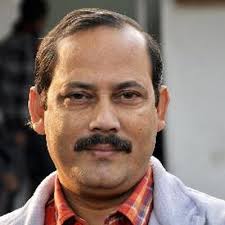 By Nava Thakuria
Bangladesh is navigating a transformative political landscape as it prepares for the 13th Jatiya Sansad elections in April 2026, under the interim leadership of Dr. Muhammad Yunus, the nation’s sole Nobel laureate. His administration, formed after a student-led uprising ousted former Prime Minister Sheikh Hasina on August 5, 2024, is tasked with delivering reform, justice, and an inclusive electoral process.
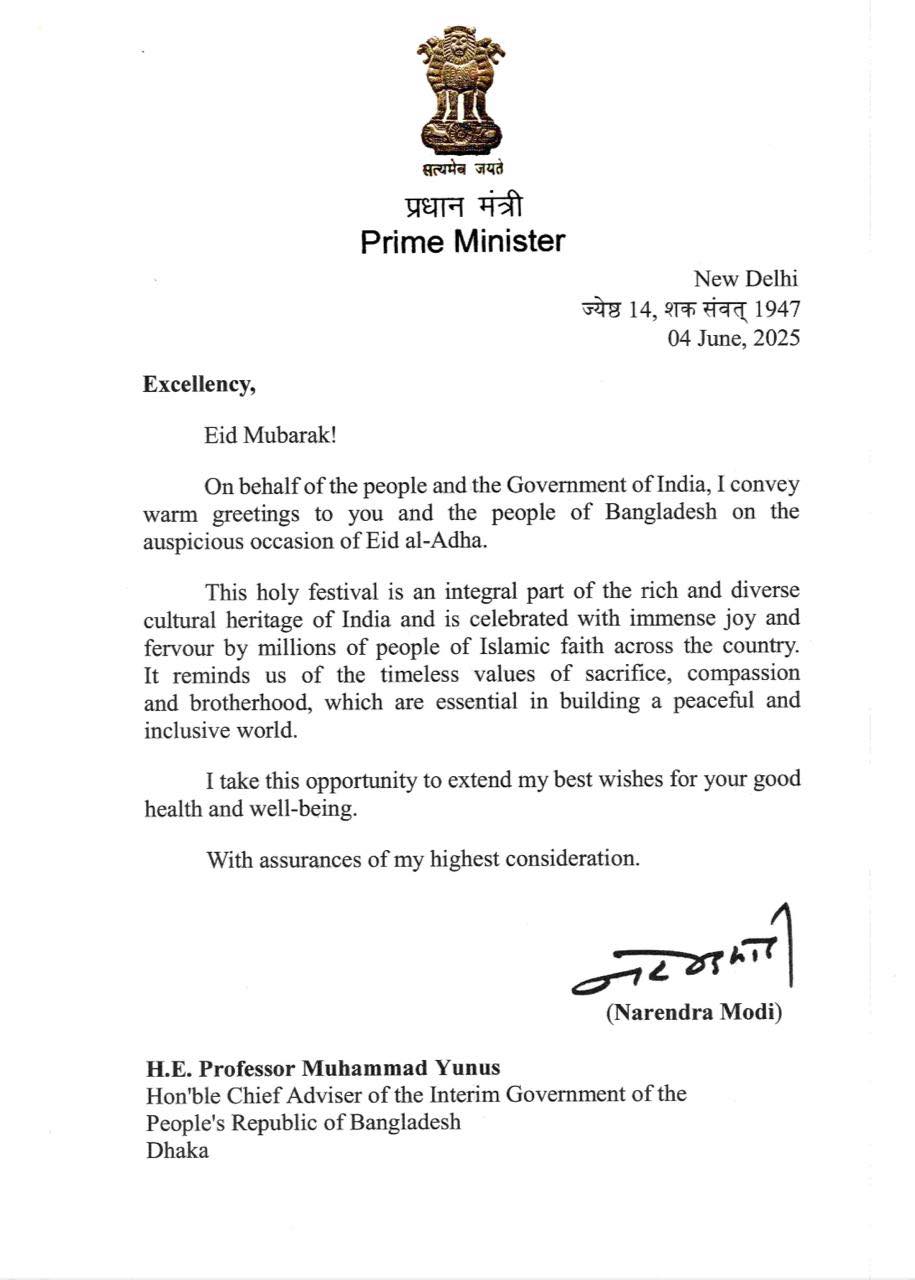
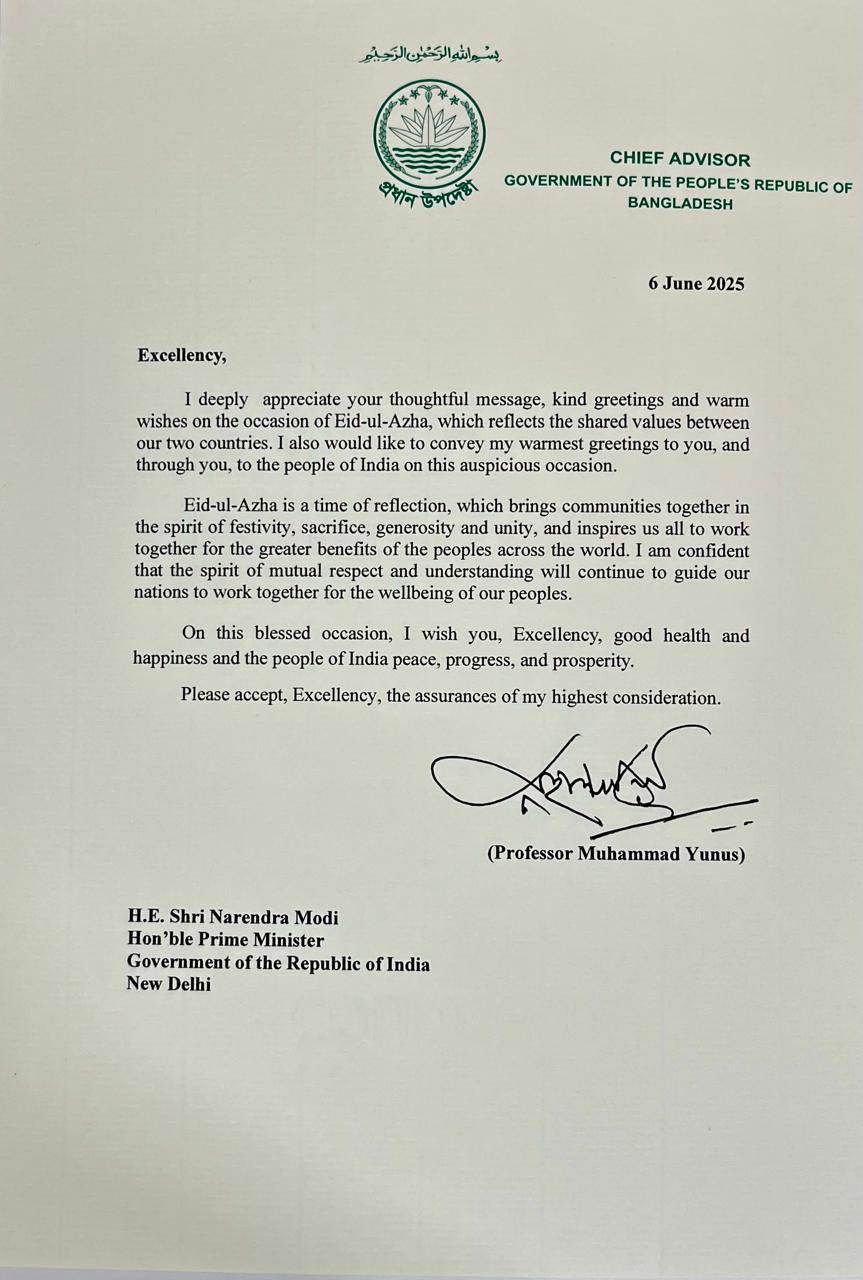
Despite strained India-Bangladesh relations, with Hasina seeking refuge in India, diplomatic civility persists. On June 4, 2025, Indian Prime Minister Narendra Modi sent Eid-ul-Azha greetings to Yunus and the Bangladeshi people, emphasising goodwill. Yunus responded on June 6, framing Eid-ul-Azha as a time for unity, sacrifice, generosity, and solidarity, signalling efforts to maintain positive ties amid tensions.
Yunus’s interim government has outlined three core mandates: reform, justice, and elections. The April 2026 election date reflects a commitment to restoring democracy, with Yunus emphasising an inclusive process that honours the sacrifices of ‘martyrs’, particularly the youth, who are expected to hold candidates accountable for safeguarding national sovereignty, territorial integrity, and dignity.
However, the timing has sparked debate. The Bangladesh Nationalist Party (BNP), led by Khaleda Zia, criticised mid-April due to extreme heat, seasonal rains, and academic examinations, advocating for a winter schedule. The Communist Party of Bangladesh, Revolutionary Workers Party, and Amar Bangladesh Party echoed these concerns, while newer parties like the National Citizen Party, Nagarik Oikya, and Jatiya Ganatantrik Party endorsed the timeline, highlighting a strategic divide.
The Awami League, Hasina’s party that ruled for 16 years, faces significant hurdles. The interim government has restricted the party under a modified anti-terror law and suspended its electoral registration, casting doubt on its participation in the 2026 polls. Hasina and numerous party leaders, now fugitives, face legal battles over complaints tied to authoritarian practices, including enforced disappearances and clandestine detention centres “uncovered” in Dhaka, Chapainawabganj, and Bogra, which are under investigation. The International Crimes Tribunal issued an extradition directive for Hasina’s appearance by June 16, 2026. A US-based Awami League leader dismissed the election roadmap, claiming Hasina’s mandate extends to 2029 per the Bangladesh Constitution, while others on social media accused Yunus of buying time and spreading false narratives against the party. Yunus has condemned the Awami League’s decades-long authoritarian rule, accusing it of orchestrating public misery. Efforts to erase its legacy include renaming institutions previously dedicated to Hasina’s family and introducing new currency notes replacing Bangabandhu Sheikh Mujibur Rahman’s image with natural landscapes, historic palaces, and heritage sites, including Hindu and Buddhist temples. These notes, printed in limited quantities on an experimental basis, are scarcely available, with existing notes featuring Rahman’s image still in circulation but set to be phased out.
The political vacuum has elevated the BNP and Bangladesh Jamaat-e-Islami as frontrunners. The BNP is capitalising on public discontent, while Jamaat, reinstated by the Supreme Court after its 1971 Liberation War-related ban, has consolidated support among religious voters in the Muslim-majority nation, positioning it as a formidable electoral force. Other parties, like the National Citizen Party, are gaining traction, indicating a fragmented yet dynamic political landscape. Yunus’s depiction of Bangladesh as “in a state of war” against Hasina’s influence underscores the polarised climate. Legal actions against the Awami League risk alienating its supporters, potentially fueling unrest, while Jamaat’s inclusion may polarise secular voters, challenging the interim government’s push for inclusivity.
Bangladesh stands at a critical juncture. The interim government’s reforms and legal actions signal a break from authoritarianism but risk deepening divisions. The rise of the BNP and Jamaat suggests a competitive electoral arena, though the timing and inclusivity of the polls remain contentious. Diplomatic efforts with India reflect pragmatism in maintaining regional stability. The Yunus administration’s success will hinge on balancing reform, justice, and electoral integrity while addressing opposition concerns and public expectations.
*Senior journalist