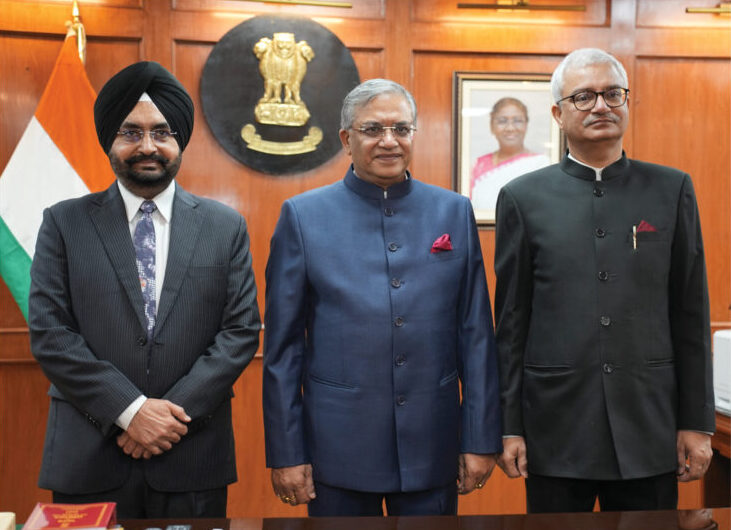
Chief Election Commissioner of India Gyanesh Kumar flanked by Election Commissioners Dr Sukhbir Singh Sandhu(left), and Dr. Vivek Joshi (right). Photo source: ECI
New Delhi: The Election Commission of India (ECI) has carved out 334 Registered Unrecognised Political Parties (RUPPs) from its register, slashing the total from 2,854 to 2,520 in a robust drive to cleanse India’s electoral framework.
Announced today, this purge leaves untouched the six National Parties—Aam Aadmi Party, Bahujan Samaj Party, Bharatiya Janata Party, Communist Party of India (Marxist), Indian National Congress, and National People’s Party—and the 67 State Parties, including All India Trinamool Congress, Dravida Munnetra Kazhagam, Telugu Desam Party, Samajwadi Party, and Janata Dal (United).
The crackdown targets RUPPs violating Section 29A of the Representation of the People Act, 1951, which requires parties to register their name, address, office bearers, and any changes promptly with the ECI. ECI rules further stipulate that parties must contest elections at least once every six years to remain registered, with non-compliance triggering removal.
The process began in June 2025, when the ECI tasked the Chief Electoral Officers (CEOs) of States and Union Territories with scrutinising 345 RUPPs. CEOs launched rigorous probes, dispatching show-cause notices to each party and offering personal hearings to defend their status.
After reviewing the CEOs’ findings, the ECI ruled that 334 RUPPs had failed, either by skipping elections for six consecutive years or neglecting to update registration details. Eleven cases were returned to CEOs for deeper verification to ensure precision. The delisted parties are now barred from benefits under Sections 29B and 29C of the Representation of the People Act, 1951, covering contributions and tax exemptions, and the Election Symbols (Reservation and Allotment) Order, 1968, governing party symbols. Affected parties have 30 days to appeal the decision. The ECI framed this action as a vital step in its ongoing mission to ensure only active, compliant parties shape India’s democratic process, fortifying electoral transparency and accountability.
Meanwhile, in a scorching side controversy, the ECI faces mounting criticism over alleged vote theft, with Congress heavyweight Sonia Gandhi lending her formidable influence to bolster the Leader of the Opposition in Lok Sabha, Rahul Gandhi’s explosive claims. On August 7, 2025, Rahul Gandhi alleged 100,250 fraudulent votes in Bangalore Central’s Mahadevapura segment during the 2024 Lok Sabha elections, citing duplicate entries and fake addresses.
Sonia Gandhi, as Congress Parliamentary Party chairperson, has backed her son’s call for a thorough ECI investigation, amplifying the party’s demand for digital voter roll transparency. Nationalist Congress Party (NCP)-SCP leader Sharad Pawar added fuel today, revealing in Nagpur that he was offered guaranteed wins in 160 of Maharashtra’s 288 Assembly seats before the 2024 polls, an offer he and Rahul Gandhi rejected as unethical. Pawar praised Sonia Gandhi’s strategic resolve in rallying opposition leaders to challenge the ECI’s credibility, intensifying scrutiny on its voter roll management.
The ECI dismissed these allegations as baseless, demanding evidence, but the combined clout of Sonia Gandhi and Pawar has escalated the battle over electoral integrity.
– global bihari bureau