Suweida’s Sectarian Strife Tests Syria’s Fragile Peace
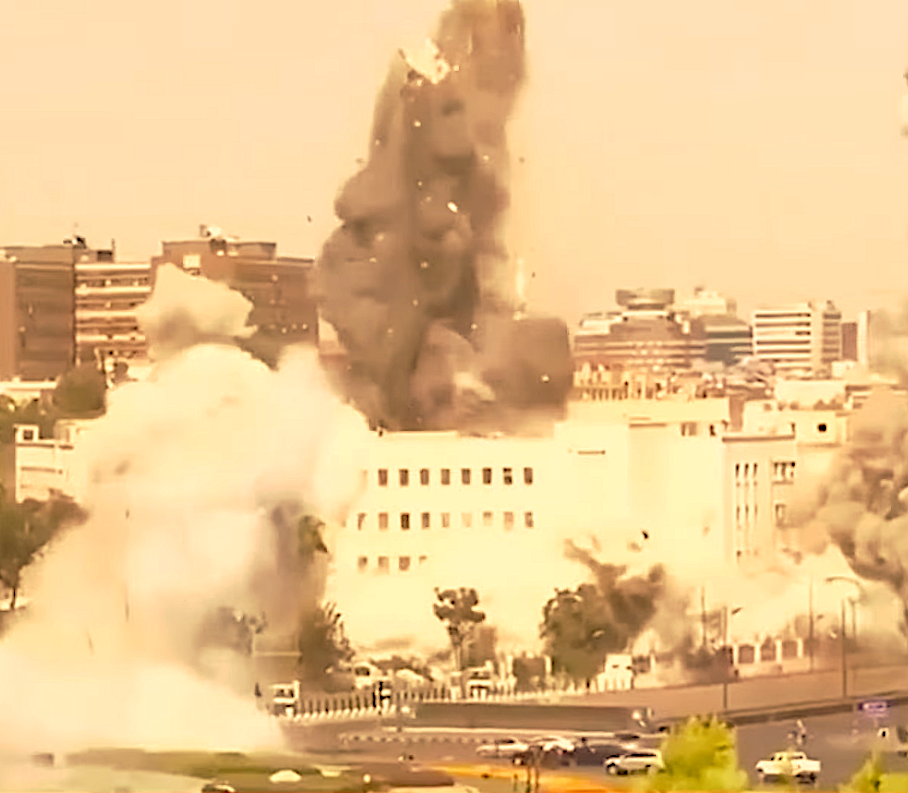
Damascus/New York/Washington/Tel Aviv: On July 16, 2025, Israel unleashed a barrage of airstrikes on Syrian military targets, striking the heart of Damascus’s defence ministry and escalating a deadly crisis in the Druze-majority city of Suweida, where over 300 people have perished since July 13.
The violence, triggered by the collapse of a fragile ceasefire and rooted in historic rivalries between the Druze and Sunni Bedouin tribes, has plunged Syria’s fragile post-war transition into chaos. UN Secretary-General António Guterres has condemned both the sectarian bloodshed and Israel’s strikes as violations of Syria’s sovereignty, while the United States scrambles to broker de-escalation amid pointed questions about the Syrian government’s ability to protect its diverse population. As Suweida reels from a humanitarian catastrophe, the crisis lays bare a volatile web of tribal tensions, regional power plays, and international interventions threatening Syria’s path to stability.
The unrest in Suweida erupted on July 13 following the abduction of a Druze merchant on the Damascus-Suweida highway, a flashpoint that reignited longstanding tensions between the Druze and Sunni Bedouin tribes. The Druze, a religious minority of approximately 700,000 concentrated in southern Syria, adhere to a distinct faith rooted in an 11th-century offshoot of Ismaili Islam, maintaining semi-autonomous enclaves across Syria, Lebanon, and Israel. Their rivalry with the Bedouin, a nomadic Sunni group, stems from competition over scarce resources—land, water, and trade routes—in the arid southwest, compounded by decades of marginalisation under the Bashar al-Assad regime, which was overthrown in 2024 after 13 years of civil war.
These tensions, often simmering beneath the surface, have periodically erupted into violence, but the current clashes mark a deadly escalation. The Syrian Observatory for Human Rights reported at least 27 executions, with civilians trapped between Druze militias and government-aligned Bedouin forces.
Interim President Ahmed al-Sharaa, leading a government backed by Hayat Tahrir al-Sham (HTS), a former al-Qaeda affiliate, deployed troops to restore order. A ceasefire announced on July 15 collapsed within hours, with Druze leader Sheikh Hikmat al-Hajri accusing Syrian forces of violating the truce and targeting civilians. In a televised address on July 17, al-Sharaa vowed to protect Druze rights and investigate the violence, but scepticism persists among Druze communities wary of HTS’s centralised authority and spotty record on minority protections.
Israel’s response was swift and unprecedented. Citing a “covenant of blood” with its 150,000 Druze citizens in the Golan Heights, who share familial and historical ties with Syria’s Druze, Prime Minister Benjamin Netanyahu and Defence Minister Israel Katz ordered airstrikes on Syrian military convoys, tanks, and infrastructure across Suweida, Daraa, and central Damascus. Over 160 targets were hit, including sites near the presidential palace and the defence ministry, which Israel accused of deploying weaponry in violation of the 1974 Disengagement of Forces Agreement mandating a demilitarised zone near its border. In a July 16 statement, Netanyahu urged Israeli Druze not to cross into Syria, warning, “You are risking your lives; you could be murdered, you could be taken hostage, and you are impeding the efforts of the IDF [Israeli Defense Forces].” Katz emphasised Israel’s commitment to preventing harm to Syria’s Druze, framing the strikes as a response to “regime gangs” threatening the community. The U.S. State Department, through spokesperson Tammy Bruce, confirmed Israel’s intent to protect the Druze but stopped short of endorsing the strikes, with Secretary of State Marco Rubio describing the conflict as a “misunderstanding” driven by “historic rivalries between different groups in the southwest of Syria—Bedouins, the Druze community.”
At a UN press briefing on July 16, Spokesman Stéphane Dujarric conveyed Guterres’ alarm at the escalating violence, condemning “arbitrary killings and acts that fan the flames of sectarian tensions” after 14 years of Syria’s brutal civil war. Particularly disturbing were social media videos showing Syrian forces humiliating Druze men by shaving their moustaches, a potent symbol of cultural pride, which Dujarric called “shocking and highly disturbing.” Guterres welcomed al-Sharaa’s pledge to investigate and hold perpetrators accountable but stressed that “transparency means buy-in” to ensure public trust, responding to a journalist’s query about the need for an independent investigation. Another reporter pressed Dujarric on whether the UN had received updates on investigations into prior incidents, such as the disappearance of over 50 Alawite women in HTS-controlled Idlib, to which he replied he would check with Special Envoy Geir Pedersen’s team. A pointed question challenged the legitimacy of an HTS-led government, given its al-Qaeda roots and failure to prevent massacres against Alawites and now Druze. Dujarric responded, “The facts are the facts. The government is in charge, and they need to be held to account in how they fulfil those responsibilities to all the citizens of Syria.” Guterres also condemned Israel’s airstrikes and reports of IDF redeployment in the Golan as violations of Syria’s sovereignty and the 1974 agreement, urging an immediate cessation of hostilities and a return to Security Council Resolution 2254’s framework for a credible, inclusive political transition.
The U.S., having invested significant political capital in stabilising Syria since the fall of Bashar al-Assad in December 2024, faces intense scrutiny over its strategy. At a July 16 State Department briefing, Bruce detailed Rubio’s round-the-clock discussions with Syrian and Israeli officials, expressing optimism for de-escalation “in the next few hours.” Rubio framed the violence as a misunderstanding rooted in tribal dynamics, urging both Syrian and Israeli forces to withdraw from Suweida. Journalists pressed Bruce on whether the U.S. received advance warning of Israel’s strikes, to which she replied, “Not that I’m aware of,” emphasising the administration’s reactive stance. When asked if the Syrian defence ministry and presidential palace were legitimate targets, Bruce declined to speculate, deferring to Israel’s rationale of protecting the Druze. A probing question challenged the U.S. stance on minority protections, noting that the absence of a comprehensive political framework, coupled with the U.S. rejection of federalism per the U.S. President’s Envoy for Syria, Ambassador Thomas Barrack, leaves groups like the Druze, Kurds, and Christians vulnerable. Bruce acknowledged the “fluid dynamics” of Syria’s transition, stressing that “results have to be described” to rebuild trust among Syrians, but rebuffed the phrase “propping up” al-Sharaa, insisting the U.S. is “supporting serious people trying to make this situation work” in a region with “constant tribal issues.” Another journalist highlighted the Suweida violence as the second minority massacre under HTS, following Alawite attacks, questioning the government’s commitments to its international backers. Bruce countered that such incidents are part of navigating a region “in a very tough spot for a very long time,” but the administration expects accountability and results.
The humanitarian crisis in Suweida is catastrophic. UN Resident and Humanitarian Coordinator Adam Abdelmoula reported severe disruptions to water, electricity, and telecommunications, with hospitals in Suweida and neighbouring Daraa nearing capacity. The World Health Organization dispatched emergency medical supplies to Daraa, but ongoing insecurity and road closures have blocked aid to Suweida, leaving civilians unable to reach designated shelters. Abdelmoula’s team plans to assess needs as soon as conditions allow, in coordination with Syrian authorities, but Dujarric warned that the violence “makes the UN’s work, both humanitarian and political, that much more challenging.” Special Envoy Geir Pedersen and his deputy, Najat Rochdi, are actively engaging stakeholders in Damascus and beyond, but the escalating conflict hinders progress toward a political resolution.
The crisis has also strained Syria’s nascent regional diplomacy. Al-Sharaa’s July 2025 visit to Azerbaijan, where he signed agreements for postwar reconstruction and energy cooperation, including potential natural gas supplies, drew sharp criticism from Iranian media as a threat to Tehran’s regional influence. At the State Department briefing, Azerbaijani journalist Ahmad Shahidov questioned whether this cooperation could destabilise the Middle East, to which Bruce responded that U.S.-backed sanction relief aims to enable infrastructure investment for “all Syrians, from all tribes, all regions” to rebuild after years of war-induced devastation. However, Israel’s strikes have disrupted security coordination talks held in Baku, complicating Syria’s efforts to balance external partnerships with internal stability. The U.S. sees these agreements as critical to restoring basic services, a priority underscored by Bruce’s emphasis on enabling Syrians to “enjoy life again.”
The Suweida crisis exposes deeper fault lines in Syria’s postwar landscape. The Druze, historically autonomous and culturally distinct, face an uncertain future under an HTS-led government with a checkered record on minority protections. Sheikh al-Hajri’s demand for autonomy reflects broader tensions over centralised governance, a concern echoed by journalists questioning Dujarric on the need for independent investigations and Bruce on the lack of minority safeguards. The U.S. rejection of federalism, articulated by Ambassador Barrack, has fueled doubts about how minorities can feel secure, especially after repeated violence against Alawites and now Druze. A journalist at the UN briefing pressed Dujarric on whether inflammatory rhetoric, such as Israeli calls for al-Sharaa’s “elimination,” exacerbates tensions, to which he replied, “What this situation doesn’t need is more inflammatory statements.” Israel’s intervention, while framed as protective, risks escalating tensions with a Syrian government struggling to assert legitimacy, particularly as it navigates international recognition and domestic distrust.
The crisis also highlights Syria’s precarious position in a volatile region. The Azerbaijan agreements, while promising economic relief, have stirred geopolitical tensions, with Iran viewing Syria’s outreach as a challenge to its influence. The U.S., balancing support for al-Sharaa with calls for de-escalation, faces scrutiny over its ability to foster stability without addressing structural issues like minority representation. The Druze-Bedouin rivalry, while localised, reflects broader sectarian and tribal fault lines that HTS must navigate to consolidate power. The moustache-shaving incidents, beyond their immediate humiliation, symbolise the deeper challenge of respecting cultural identities in a diverse nation. As Dujarric noted, the government’s primary responsibility is to protect all Syrians, yet its failure to prevent recurring massacres raises questions about its capacity and commitment.
As the UN Security Council convenes on July 17, the Suweida crisis serves as a stark reminder of Syria’s fragility after 14 years of conflict. The Druze, caught between tribal rivalries, a struggling regime, and Israel’s military might, embody the challenge of forging an inclusive Syria. Guterres’ call for a credible political transition per Security Council Resolution 2254 remains a distant goal as sectarian bloodshed, external meddling, and a humanitarian catastrophe threaten to unravel fragile progress. The international community faces a pivotal moment to balance Syria’s sovereignty with the protection of its diverse communities, as Suweida’s plight underscores the high stakes of rebuilding a fractured nation.
– global bihari bureau