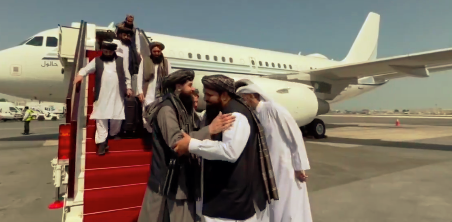
High-level delegation of the Taliban Afghan Government led by Afghanistan’s Defence Minister Mohammad Yaqub arrived for talks with the Pakistani side in Doha today.
Airstrikes in Afghanistan Escalate Pakistan Border Crisis
Journalists Killed in Kabul
Kabul/Geneva/Doha: Heavy fighting between Pakistan and Afghanistan has plunged their shared frontier into one of the worst crises since the Taliban seized power in Kabul in 2021, with civilian, military, and journalist deaths following a breakdown of the short-lived truce. At least ten Afghan civilians, including two children and two journalists, were killed in Pakistani airstrikes this week, while both nations reported heavy combat losses and mutual accusations of cross-border aggression. Afghan authorities accused Pakistan of “blatant aggression” and summoned Islamabad’s envoy in Kabul to protest the airstrikes. Pakistan’s Defence Minister Khawaja Asif said that while Islamabad remained committed to dialogue, “hostilities can resume at any time” if cross-border militant attacks continued. He further alleged that the Taliban were being “sponsored by Delhi” in what he termed a “proxy war,” a charge India has not responded to.
Diplomatically, while negotiators from both sides today began emergency talks hosted by Qatar in Doha, which aimed at stabilising the frontier and addressing the unresolved dispute over the Durand Line, it may be mentioned that Afghanistan has never formally recognised the colonial-era boundary.
The Doha negotiations are being led by Afghanistan’s Defence Minister Mullah Muhammad Yaqoob and Pakistan’s Defence Minister Khawaja Asif. The talks aim to address border security, cross-border terrorism, and the extension of the previously enacted 48-hour ceasefire. Le Monde reported that the Afghan delegation has raised civilian and journalist deaths as primary grievances. Both countries continue to blame each other for escalating tensions, while regional powers such as Qatar and Saudi Arabia urge restraint and de-escalation.
As of today, no new airstrikes were confirmed, though both armies remained on high alert along the 2,600-km frontier. Observers note that the fragile truce has effectively collapsed amid mutual recriminations, with civilians, journalists, and children bearing the brunt of renewed hostilities.
Independent verification of battlefield claims remains limited, but the United Nations Assistance Mission in Afghanistan (UNAMA) confirmed at least 18 civilians killed and 360 wounded in Afghanistan since October 10 as a result of the fighting. Witnesses described entire villages along the border being shelled, with families fleeing overnight to safer zones. On the ground, border crossings at Torkham and Chaman remain partially closed, halting trade and stranding hundreds of trucks carrying food, fuel, and medicine. Civilians in frontier districts have been displaced, and humanitarian agencies warned of acute shortages and limited access to conflict-hit areas. Afghan authorities say repeated bombardments have destroyed homes in Paktika and Khost, while Pakistan accuses the Taliban of harbouring members of the Tehreek-e-Taliban Pakistan (TTP) — allegations that Kabul rejects as “baseless” and “provocative.”
Independent monitors warn that a single miscalculation could trigger a wider regional conflict, given the volatile mix of border disputes, militant movements, and distrust that defines the Afghanistan–Pakistan relationship.
The situation worsened when Afghan officials accused Pakistan of conducting aerial strikes inside Afghan territory late on October 17. The strikes, reportedly in Paktika province, killed at least ten civilians, including two children. The attacks appeared to breach the 48-hour ceasefire agreed on October 15. Kabul described them as a “grave violation” of the truce, while Islamabad insisted they were “precision strikes” against anti-Pakistan militants operating from Afghan soil.
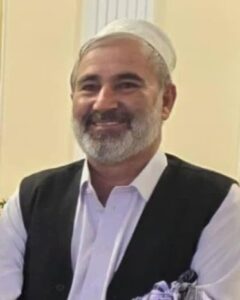
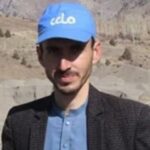
Among those killed in the attacks were two Afghan journalists, sparking international condemnation. Local media reports reveal that Abdul Zahir Safi, associated with Afghanistan’s state-run media outlets, was killed after an alleged airstrike in a civilian area of Kabul on 16 October. Safi (55) died because of cross-border fighting between Pakistan and Afghanistan, becoming the 145th journo-victim across the globe this year. Before Safi’s demise, Abdul Ghafoor Abid (40), a provincial reporter of Paktia National Radio Television (controlled by the Taliban regime), was killed in Khost locality on October 14. Another media worker named Tawab Arman also sustained injuries.
Expressing concern over the killing of two Afghan journalists within two days, the Press Emblem Campaign (PEC), a Geneva-based global media safety organisation, expressed deep concern over the targeting of media workers and called for an impartial investigation. The global media safety and rights body urged all concerned not to target the media professionals as they do their solemn duties on the ground.
“PEC demands an impartial investigation into the circumstances leading to the demise of both the Afghan media persons. Both Abdul Zahir Safi and Abdul Ghafoor Abid were reporting from the conflict zone, and they must have the liberty to do so safely,” said Blaise Lempen, president of PEC, adding that both were Afghanistan’s first journalist fatalities this year. Lempen also noted that Pakistan has witnessed five journalist murders since January 2025 — namely AD Shar, Abdul Latif, Syed Mohammed Shah, Imtiaz Mir, and Tufail Rind.
The Afghanistan Independent Journalists’ Union (AIJU) likewise condemned the killings, demanding justice and urging both governments to guarantee media safety under international law.
Afghanistan’s withdrawal from a scheduled T20 cricket tri-series in Pakistan underscored the deepening diplomatic rift. The suspension of sporting and trade ties has amplified fears that a broader regional confrontation could follow if hostilities continue.
According to United Nations monitors, hostilities erupted in early October across multiple sectors — including Khyber Pakhtunkhwa and Balochistan on the Pakistani side, and Kandahar, Spin Boldak, and Paktika provinces in Afghanistan. The exchanges involved artillery, rockets, and drone strikes. Afghanistan’s Taliban-led government claimed to have killed 58 Pakistani soldiers in retaliatory operations around October 11–12. Pakistan’s military confirmed 23 soldiers killed and 29 wounded, claiming in turn to have “neutralised” more than 200 Taliban and affiliated militants and captured several Afghan posts during counter-operations.
Underlying the confrontation are decades-old grievances rooted in border disputes and militancy. Pakistan maintains that TTP fighters operate freely from Afghan soil, conducting attacks inside its territory. Afghanistan denies the charge and accuses Pakistan of violating its sovereignty through repeated cross-border incursions and airstrikes.
Regional and global reactions have been swift. Saudi Arabia, Qatar, Iran, and China have urged restraint and dialogue, warning that the conflict could destabilise the region. The United Nations and the European Union have called on both countries to honour humanitarian law and protect civilians and journalists. UNAMA confirmed it is monitoring the situation closely.
The ongoing violence has turned the border into one of the world’s most dangerous flashpoints. Whether the Doha talks can restore calm will depend on both governments’ willingness to address the deeper causes of their confrontation — as families displaced by shelling and airstrikes, and journalists trying to document their suffering, continue to pay the highest price for the enduring instability.
(Additional inputs on journalists by Nava Thakuria, PEC)
– global bihari bureau