Photo by Shankar Chakrabarty
World Theatre Day: 27 March
 By Rathin Das*
Delhi Stages Come Alive with Bengali Theatre Magic
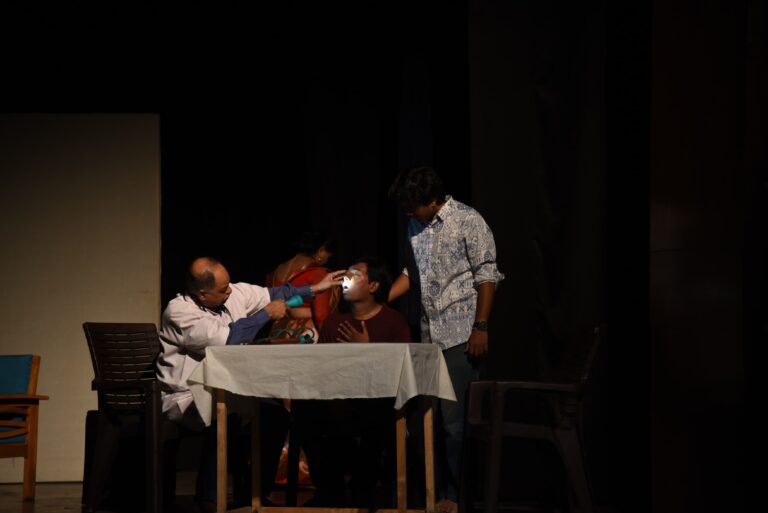
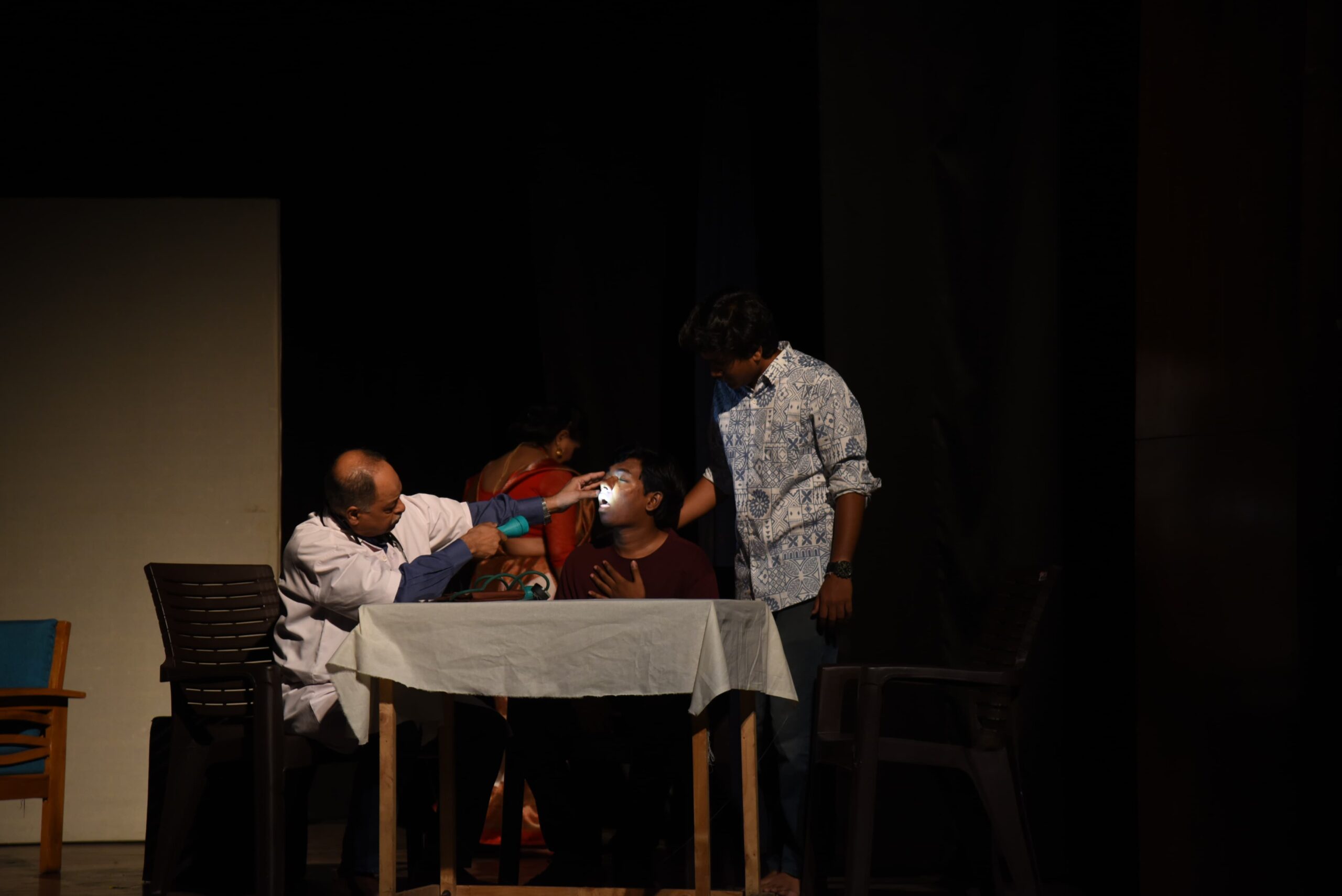
New Delhi: On stage, a doctor—a real-life medical practitioner playing a doctor in the play—was to examine his ‘patient’ exactly as rehearsed. But when the moment arrived, theatre and reality blurred. As he shone a torch on his co-actor’s throat, he noticed an unusual growth with pus. What had been scripted instantly became a genuine medical check. The director, pacing in the wings, grew anxious as the dialogue faltered. Only after the play ended did the troupe understand why their colleague had been unusually quiet that morning, coughing intermittently. The doctor then prescribed the medicines his co-actor needed. In that fleeting moment, the stage became more than a reflection of life—it intervened in it, demonstrating the uncanny power of theatre to mirror, and sometimes intersect with, reality, and forcing the audience to witness life’s immediacy unfold before them. The episode, a perfect illustration of theatre’s ability to capture human experience, would have resonated especially today, on World Theatre Day, with audiences who cherish the unpredictability, immediacy, and intimacy of live performance.
This extraordinary incident took place earlier this month during a performance in Delhi by an Ahmedabad-based troupe. Their one-act play was part of the 18th All India Bengali Short Drama Competition, organised by the New Delhi Kali Bari and held at the Little Theatre Group (LTG) auditorium. Over the week, 21 plays were staged by as many groups, mostly from West Bengal and Delhi. While most participants came from the familiar hubs of Bengali theatre, the Ahmedabad troupe’s presence represented the wider, pan-Indian reach of this art form. From the wings to the front row, from actors to audience, each person was immersed in stories that spanned geography, language, and social concern.
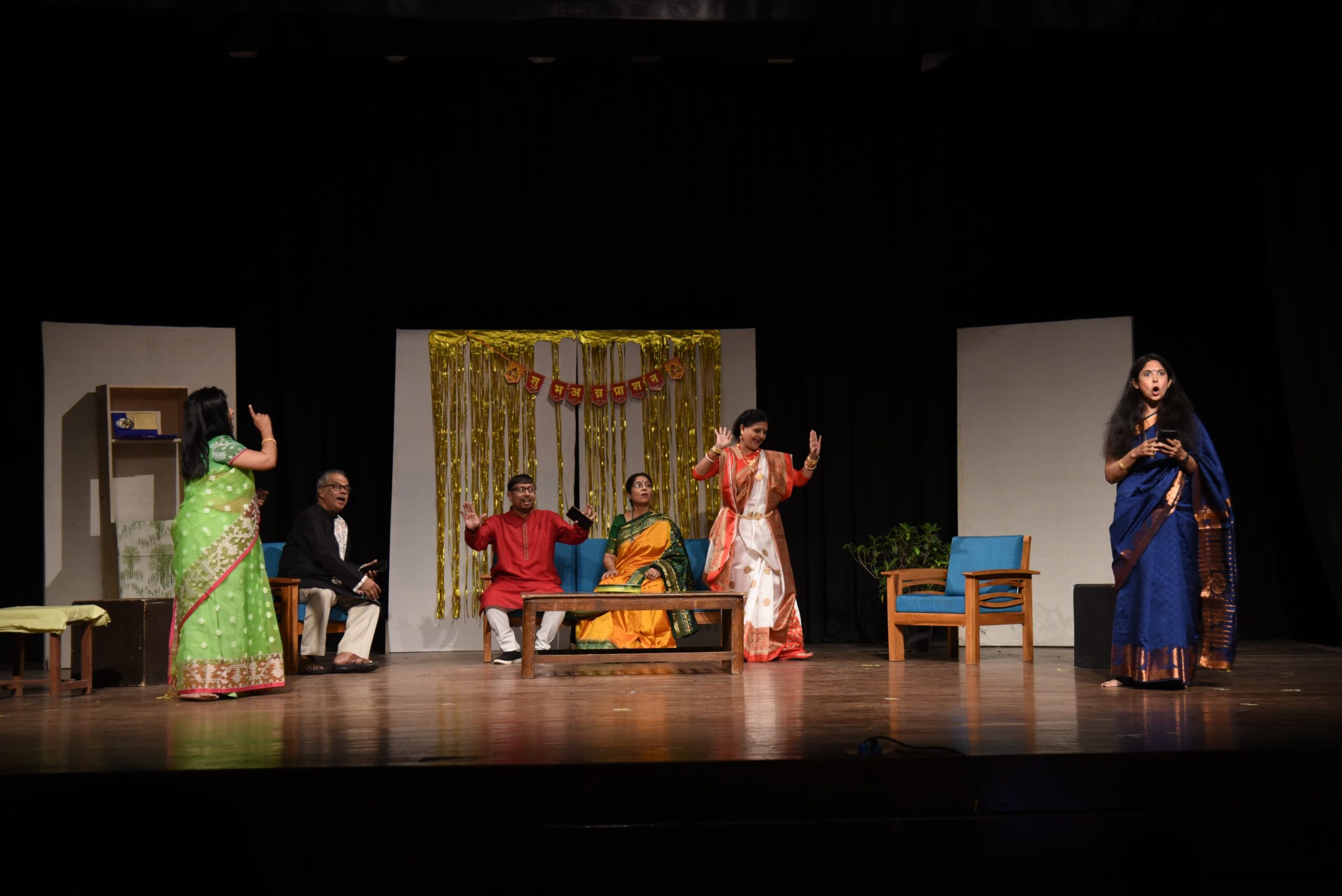
The festival’s plays were diverse in both theme and treatment, yet most were anchored in the social malaise of contemporary life. Some explored the corrosive effects of social media on middle-class families, portraying individuals who are alienated despite constant digital connectivity. Others exposed religious leaders who exploit their devotees, particularly women, with manipulative charisma and moral authority.
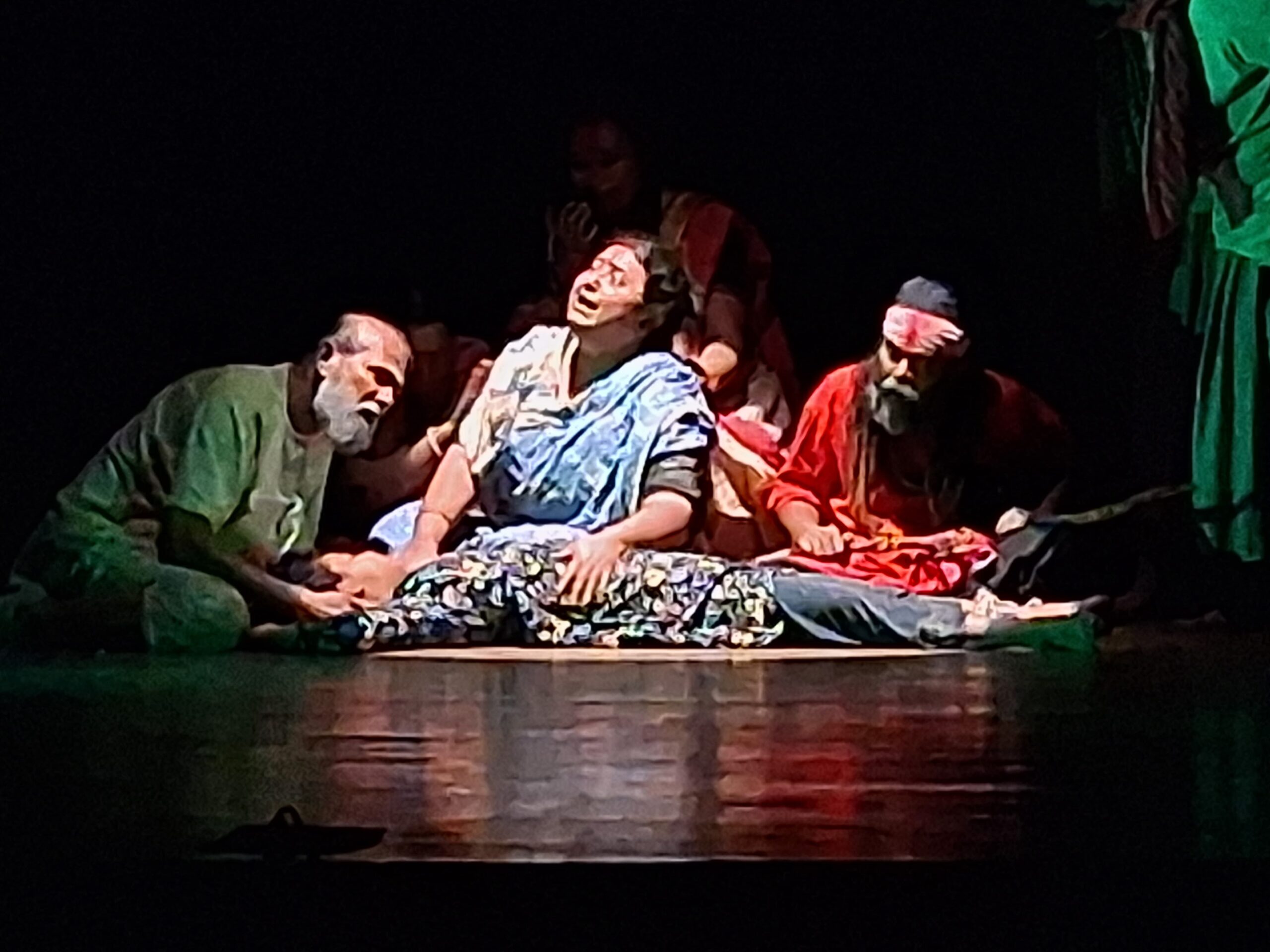
Political satire also found its place, sometimes with darkly comic effect: in one production, a minister proudly inaugurates an electric crematorium while his followers scramble to arrange a dead body “just in time,” highlighting the dissonance between bureaucratic ceremony and human reality.
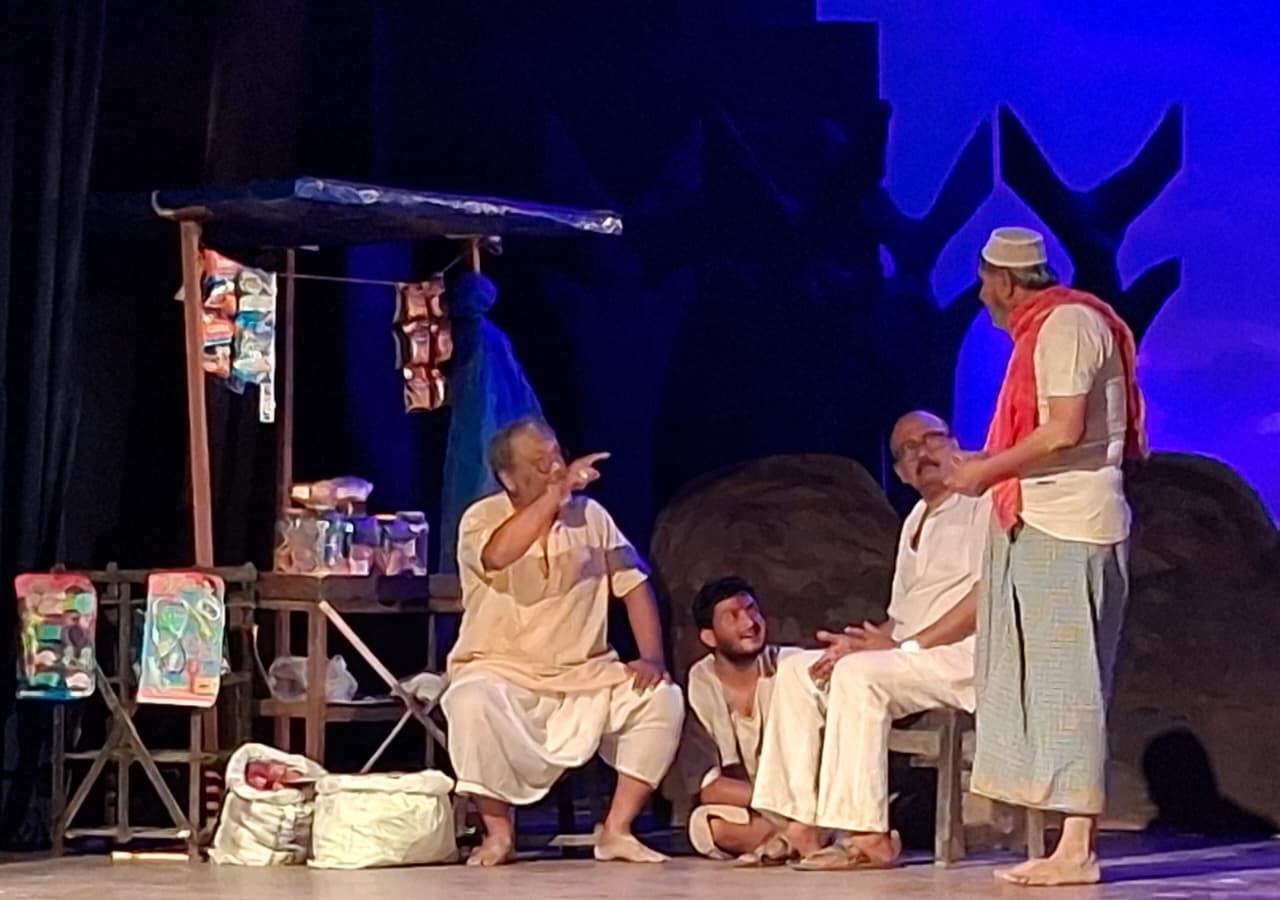
Regional contrasts enriched the narratives further. In the riverine Sundarbans, communities face constant danger from snake bites and rely on quacks and local remedies, revealing vulnerability alongside resilience. Far away, in Rajasthan, Rudalis—professional female mourners—strive to reclaim agency and dignity in a life constrained by tradition and social expectation. Across these varied landscapes, theatre explored both the microcosms of domestic tension and the macrocosms of social inequity, revealing the universality of human struggle and the subtle interplay of power, superstition, and aspiration.
The Ahmedabad troupe’s play, in which the doctor shifted seamlessly between his real-life professional role and his theatrical character, exemplified how theatre can be both funny and poignant, playful and instructive. It showed how a single word may carry multiple meanings across languages and contexts, and how humour can mask deep social truths. Other plays probed intimate emotional landscapes: a childless widow’s boundless love for her nephew, complicated by societal prejudices and the faith of his would-be spouse; the tensions of human relationships portrayed with tenderness, humour, and often an aching realism.
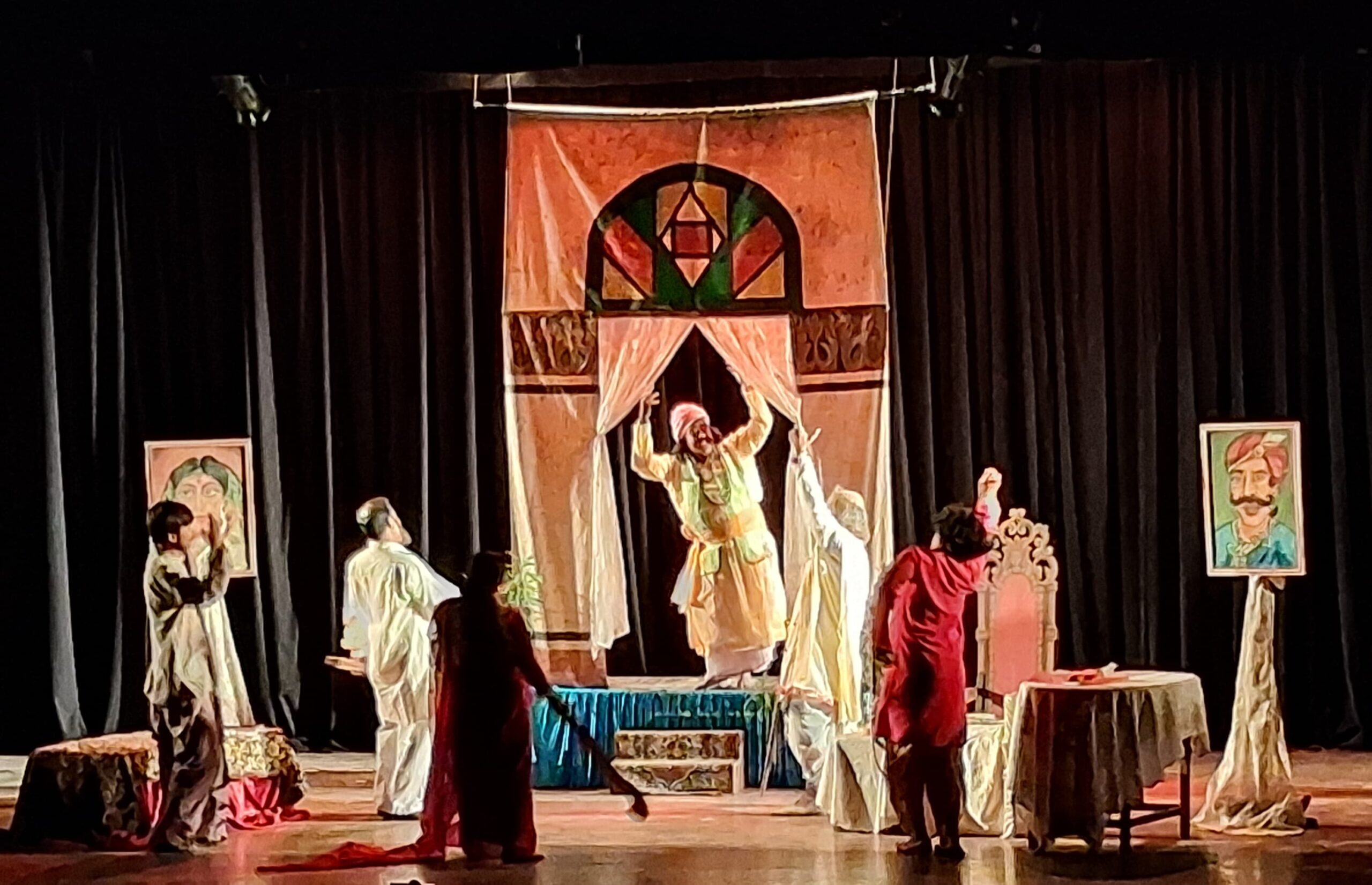
Throughout the week, the audience was treated to inventive lighting, imaginative set designs, and subtle soundscapes that transformed each stage into a living, breathing world. The careful orchestration of technical elements with narrative ensured that the audience was not a passive observer but a participant in the unfolding drama. Small gestures, pauses, and carefully timed visual effects elevated the stories, making every scene linger in the memory long after the curtains fell.
Reflecting the vibrancy of Bengali theatre in the national capital, Delhi audiences were treated to a revival of Rabindranath Tagore’s Taasher Desh (The Land of Cards), staged by Rabigeetika and Shapno Ekhon at LTG Auditorium on March 22. This production, not part of the Bengali drama festival, nonetheless added to the city’s cultural richness. Written in 1926, Tagore’s play examines the tension between conformity and individual freedom, a theme that resonates powerfully in today’s world of cultural homogenization and social control. “Taasher Desh is a powerful allegory that questions the structures that govern our lives,” says director Shomik Ray. Jayati Ghosh of Rabigeetika adds, “It challenges us to think about the cards we’re dealt and whether we’ll play by the rules or create our own game.” Directed by Shomik Ray, Durba Ghose, and Jayati Ghosh, the production offered an immersive, thought-provoking journey that celebrated creativity, individuality, and the enduring relevance of Tagore’s vision. The revival also reaffirmed that even classics written nearly a century ago continue to speak to contemporary audiences, questioning societal norms and inspiring reflection.
The energy of theatre was not confined to Delhi alone. In Kolkata, streets thrummed with performances as mime artistes from across India converged for the National Mime Festival hosted by Padmashree Niranjan Goswami. Though not part of the Bengali drama festival, these performances linked the two cities in a shared celebration of performing arts, highlighting the nationwide pulse of Bengali theatre—a tradition both resilient and evolving, thriving today as a dynamic, contemporary force capable of engaging, entertaining, and challenging audiences across generations. From intimate auditoriums in Delhi to bustling streets in Kolkata, the spirit of Bengali theatre continues to surprise, provoke, and connect, reminding us that on any stage—real or imagined—life and art are inseparably entwined, and that the national conversation in theatre is alive, immediate, and vibrant.
*Senior journalist and theatre personality