 By Onkareshwar Pandey*
14 Missing in Russia: Congress Alleges Job-Trafficking Plot
New Delhi: Did job scams traffic 126 Indian citizens into Russia’s military, leaving 14 missing, as claimed by Congress Party’s Amarinder Singh Raja Warring on June 27, 2025? The government is yet to respond.
Warring, President of the Punjab Pradesh Congress Committee (PCC) and Member of Parliament (MP), claimed of the 126, approximately 100 have returned to India, many bearing combat injuries such as shrapnel wounds, amputations, or psychological trauma, including post-traumatic stress, but 14 remain unaccounted for—9 from Uttar Pradesh, 3 from Punjab, 1 from Maharashtra, and 1 from Jammu & Kashmir. Offering details, he stated that 126 Indian citizens, promised jobs in Singapore, Malaysia, and Italy by agents operating from West Bengal (Kolkata) and Punjab, were trafficked to Moscow.
These agents, according to Warring, used social media platforms, local job fairs, and personal contacts to target unemployed youth, particularly from rural and economically disadvantaged regions, with offers of high-paying jobs in sectors like hospitality, construction, or logistics. Victims, often paying substantial fees to secure these jobs, were transported to Russia, some via complex routes through third countries like Dubai, Türkiye, or Uzbekistan, where they were coerced into military service with only 15 days of training.
Warring described the situation as a significant issue ignored by the media and the government during a press conference at Indira Bhawan, All India Congress Committee (AICC) Headquarters, and questioned the government’s response, noting that families approached the Ministry of External Affairs and the Indian Embassy in Russia, submitting formal pleas through letters, emails, phone calls, and in-person visits, but received no actionable support, often being redirected between departments. He referenced Prime Minister Modi’s visits to Russia in 2024 and 2025 for diplomatic engagements, including bilateral summits focused on trade and defense, asking why the issue of these citizens remains unaddressed, and demanded accountability for Russia’s alleged unauthorized recruitment of Indians and the role of agents, questioning whether the government has investigated or prosecuted those collaborating with Russian entities, possibly military recruiters or intermediaries.
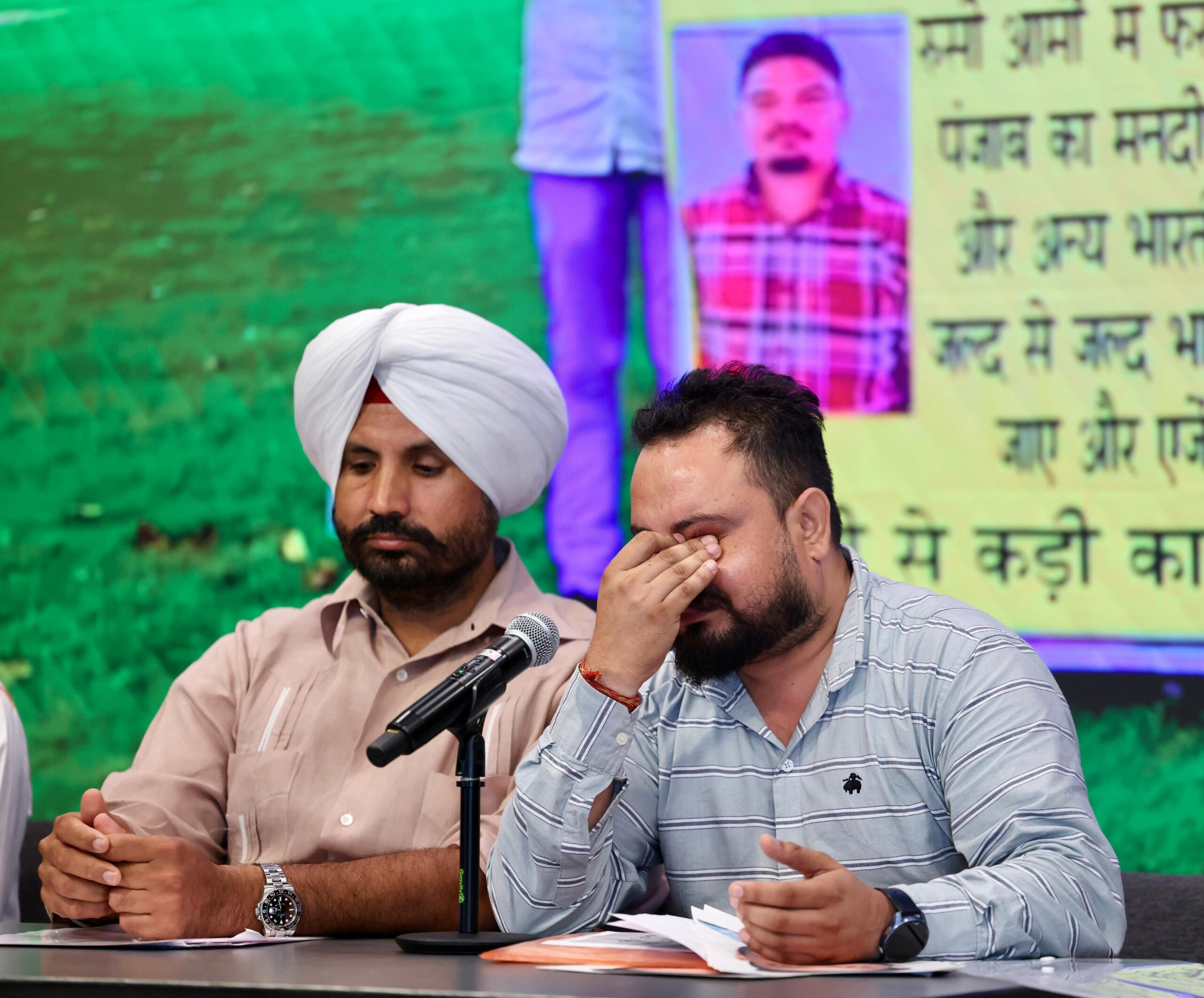
Jagdeep Singh and Khushboo Yadav, whose brothers Mandeep Kumar and Yogendra Yadav are among the 14 reportedly missing, were present during Warring’s press conference.
Jagdeep Singh, searching for his brother Mandeep, shared that for one and a half years, his family has pursued answers, contacting the Indian Embassy in Moscow multiple times via emails, phone calls, and two in-person visits without response, leaving them to rely on unofficial sources for information.
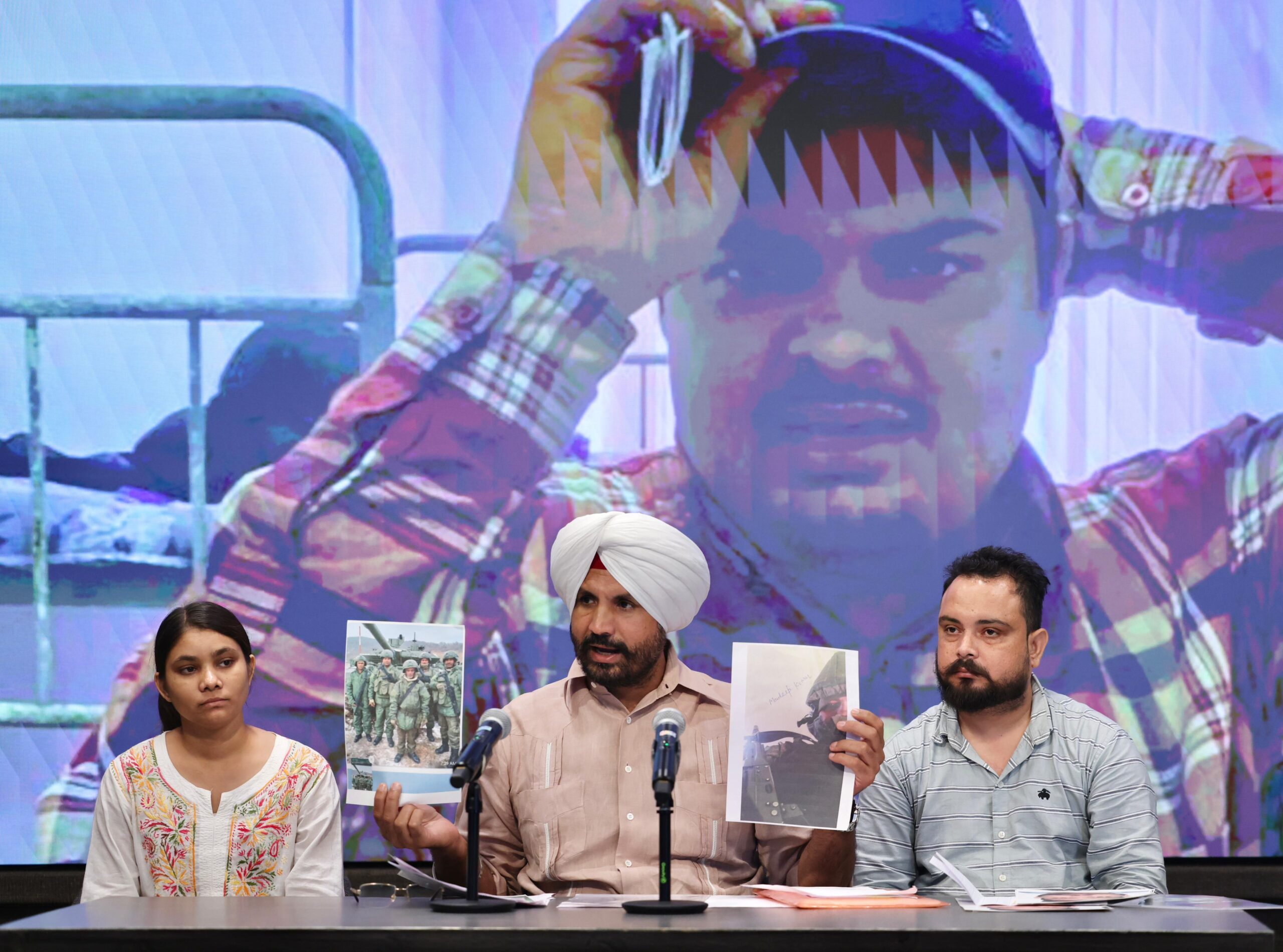
Mandeep Kumar, who has a physical disability affecting his mobility, faced physical abuse, including beatings, was handed a machine gun, and was forced to train as a sniper despite his condition, Warring noted, displaying photographs of the missing men in Russian military uniforms, some showing visible signs of distress, malnourishment, or injuries.
Jagdeep appealed for the Prime Minister’s intervention, emphasising their status as ordinary citizens with limited financial means, unable to afford prolonged searches abroad. Khushboo Yadav, sister of Yogendra Yadav, stated that her brother, last heard from on May 25, 2024, via a brief, interrupted call from an unknown number, has left their parents in distress, unable to cope with the uncertainty, and urged government action to locate him.
Warring pledged to personally fund travel to Russia for the families to seek their loved ones, including covering visa and accommodation costs, but insisted that the government must engage its Ministry of External Affairs to secure the return of the 14 missing citizens, potentially through direct negotiations with Russian authorities or international bodies.
The Russian government has not commented on these allegations, and no official confirmation of Indian citizens serving in their military has been provided, though reports of foreign nationals in Russia’s forces have surfaced in global media.
This situation, as alleged, reflects a broader issue of human trafficking targeting India’s unemployed youth, particularly from economically disadvantaged regions with high unemployment rates.
A 2024 International Labour Organization (ILO) report estimates that 29 million Indians seek overseas jobs annually, many falling victim to scams due to inadequate regulation of recruitment agencies, which often operate without licenses or oversight. A 2023 United Nations (UN) report criticised forced recruitment of foreigners in conflict zones, specifically citing Russia’s actions in Ukraine, where foreign nationals, including those from South Asia, were reportedly deployed to active combat zones, such as Donetsk or Kharkiv, without consent or adequate training. India’s Ministry of External Affairs reported in 2024 that over 1,200 citizens were deceived by illegal recruiters, often through unregistered agencies promising lucrative jobs in sectors like hospitality, construction, or caregiving, yet only 300 cases have been prosecuted since 2020, indicating limited enforcement and judicial follow-through. Amnesty International’s 2024 report labelled Russia’s recruitment of foreign nationals a serious human rights violation, noting that untrained civilians, including those from India, were coerced into combat roles under threats of violence, imprisonment, or deportation, often after having their passports confiscated.
Families like Jagdeep’s and Khushboo’s, who travelled to Moscow seeking answers but faced bureaucratic obstacles, such as delayed consular responses, lack of interpreter services, or restricted access to Russian authorities, exemplify this crisis, according to the Congress Party’s claims.
The absence of robust Indo-Russian diplomatic action, despite Prime Minister Modi’s visits to Russia in 2024 and 2025 for summits focused on trade and defence, raises questions about India’s commitment to protecting its citizens abroad, particularly amid ongoing geopolitical tensions involving Russia’s military actions in Ukraine, which have drawn international scrutiny. The Indian government has not publicly addressed these specific allegations, though it has previously issued advisories against fraudulent job offers abroad, warning citizens to verify agencies through official channels, and acknowledged challenges in combating human trafficking, citing jurisdictional complexities and limited international cooperation.
Warring called for immediate action, stating that the Prime Minister’s promise of jobs for two crore people, announced in earlier policy pledges, if fulfilled, could have reduced the desperation driving Indian citizens to seek work abroad, where they fall prey to such traps. He urged the government to engage Russian authorities to locate the 14 missing Indians, ensure their safe return, and provide medical and psychological support for those who returned injured. He also emphasised the need to dismantle trafficking networks, noting that agents operate without consequence across India, often with ties to international syndicates, due to government inaction. No official data confirms the extent of such networks or government efforts to address them in this specific case.
The ordeal of these 14 missing Indians, as alleged, exposes a network of deceit, unemployment, and governmental oversight, compounded by the challenges of navigating international jurisdictions, if proven correct. Warring’s demand for accountability challenges the narrative of prosperity associated with “Amrit Kaal.” As families continue their search for answers, some relying on personal networks or crowdfunding to sustain their efforts, the nation awaits the government’s response to these allegations.
*Onkareshwar Pandey is a Delhi-based Senior Journalist.