 By Deepak Parvatiyar*
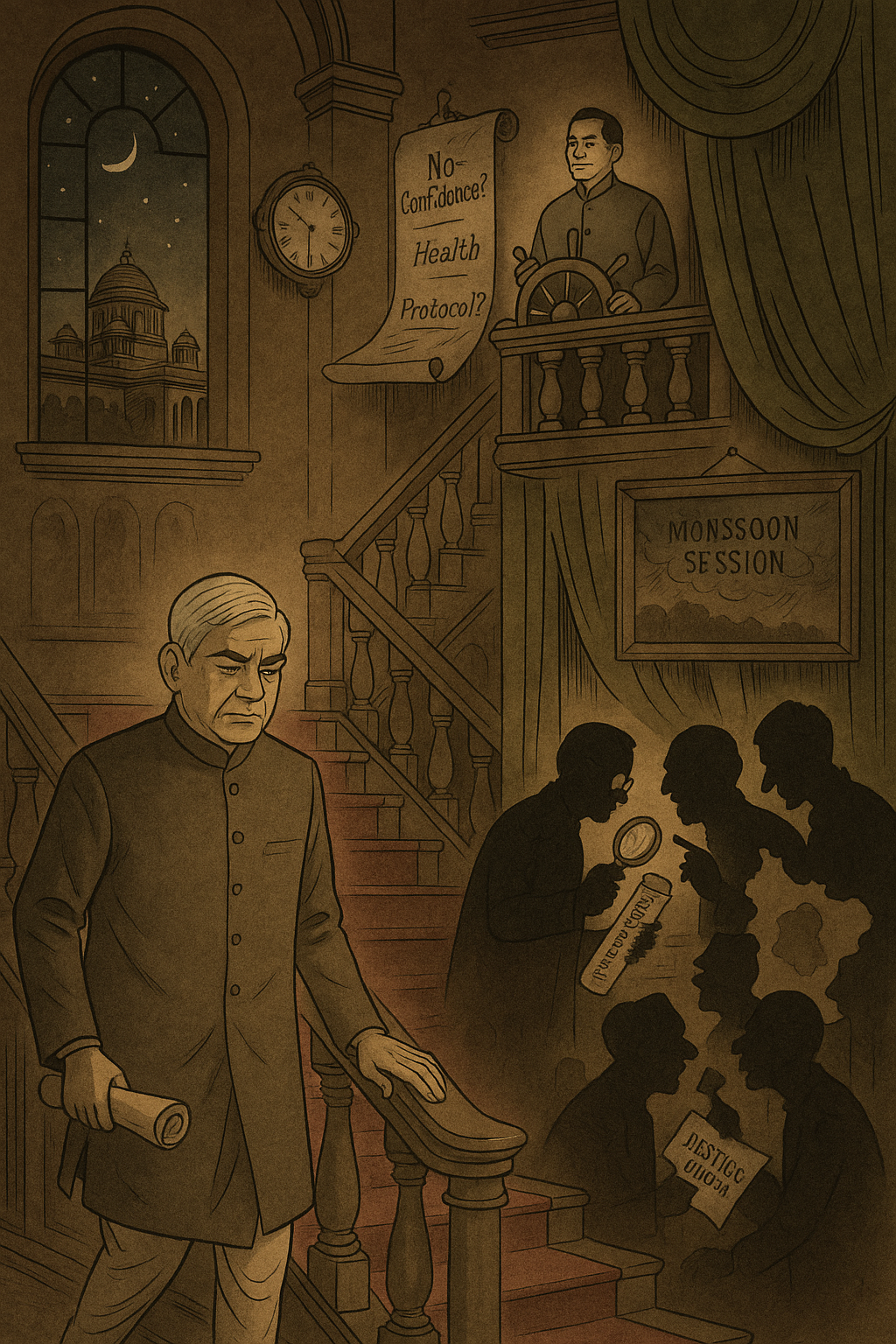
As twilight falls on New Delhi this July 22, 2025, the capital’s political salons hum with murmurs that drift like leaves in a quiet breeze, stirred by the sudden resignation of Vice President Jagdeep Dhankhar, a squire who has slipped from the Rajya Sabha’s helm, leaving Deputy Chairman Harivansh Narayan Singh to steer its course.
Like a Wodehousean manor aglow with whispered intrigues, the city pulses with questions, the opposition including Congress, Aam Aadmi Party, and Rashtriya Janata Dal, earnest as clubmen at a Drones Club wager, spinning theories of hidden motives, while the Bharatiya Janata Party, with a Jeevesian poise, offers only a Prime Minister’s X post: “Shri Jagdeep Dhankhar Ji has served our country in many capacities. Wishing him good health.”
Dhankhar, at 74, penned a letter to President Droupadi Murmu on July 21, citing “medical advice” under Article 67(a) to step down, a move accepted yesterday, marking the third mid-term Vice Presidential exit.
Today’s developments fuel the capital’s speculation. The RJD’s Sudhakar Singh, peering through the dusk, suggests a BJP stratagem to outmanoeuvre Bihar’s Nitish Kumar before state polls, Harivansh’s Janata Dal (United) stewardship casting a subtle National Democratic Alliance glow. Yet, the link is as delicate as a Wooster fib, unmoored by evidence beyond RJD’s sleuthing instinct. The AAP’s Sanjay Singh casts Dhankhar as a squire eased out for his forthrightness, his notice to remove Justice Yashwant Varma and farmer advocacy jarring the government’s tidy plans. Congress’s Jairam Ramesh hints at a dodged no-confidence motion, echoing the 2024 opposition attempt, with Imran Masood querying, “What happened in just one hour?”
Whispers of government “rumblings” over a potential motion against Dhankhar glimmer, but no proof emerges, leaving the theory as fleeting as a Jeevesian plan half-whispered. Or perhaps Dhankhar, wearied by the ceremonial dance, chose his roses, despite his July 10 remark at the Jawaharlal Nehru University: “I will retire at the right time—August 2027. Subject to divine intervention.” His health—a cardiac event in March, a fainting spell at Kumaon University in June, a collapse on July 17 with his wife and Lieutenant Governor VK Saxena—lends weight, yet the Monsoon Session’s gathering clouds obscure the truth.
The government’s response is as spare as a Jeevesian murmur, Modi’s X post drawing sighs: Congress’s Ramesh deemed it “a trifle too curt,” Sanjay Singh a “diplomatic dodge.” Manish Tewari mused, “If he speaks, the truth will be known to 146 crore Indians.”
The opposition’s pleas for Dhankhar to linger, citing farmers and “national interest,” echo like a Wodehousean chorus mourning a mislaid heirloom. Dhankhar spurned a farewell, and with Harivansh at the helm, the NDA weighs replacements, Harivansh among the whispered names.
Dhankhar’s letter marked the end of a term begun in August 2022, after defeating Margaret Alva, leaving two years unserved. On July 21, he chaired the Rajya Sabha with a squire’s dignity, swearing in new members and addressing a notice from 50 to 68 opposition MPs—numbers as fluid as a guest list at a muddled soiree—to oust Justice Varma over a cash recovery. With a butler’s precision, he directed the Secretary General to verify a Lok Sabha motion, noting the first-filed prevails, a move that reportedly unsettled the government’s preference for a Lok Sabha-led charge. Murmurs of brisk exchanges suggest a rift, perhaps over protocol, perhaps principle, for Dhankhar once called Article 142 a “nuclear missile against democratic forces,” a quip that stirred the pot like a misplaced jest at a vicar’s tea. The Article grants the Supreme Court the power to issue decrees or orders necessary to ensure “complete justice” in any case or matter pending before it.
Yesterday’s drama peaked at a Business Advisory Committee meeting. At 12:30 PM, Dhankhar presided, flanked by JP Nadda and Kiren Rijiju. A 4:30 PM rescheduling saw both absent, as if summoned to unravel some urgent tangle. Ramesh, with a sleuth’s keen eye, alleged Dhankhar took umbrage at not being personally informed. The BJP insists his office was notified, but the opposition, like clubmen spotting a dubious bet, sees a snub. Nadda’s Rajya Sabha quip—“Nothing will go on record, only what I say will go on record”—aimed at opposition clamour, was taken by some as an affront to the Chair, though Nadda clarified it targeted MPs.
Dhankhar’s tenure was a spirited waltz. As West Bengal’s Governor, he crossed swords with Mamata Banerjee with a knight’s resolve. As Vice President, he faced a 2024 no-confidence motion, dismissed by Harivansh as an affront. His calls for judicial restraint and prodding of Shivraj Singh Chouhan on farmer woes earned him the “Kisan putra” nod, yet his candour, like a squire misreading the manor’s mood, stirred unease. To some, a constitutional sentinel; to others, a chap whose forthrightness ruffled the wrong feathers.
The capital’s tapestry weaves a delicate riddle. The RJD’s Bihar theory, tying Harivansh’s role to NDA gains, frays like a Wooster fib, lacking a thread to Dhankhar’s exit. The AAP’s claim of a squire ousted for boldness falters, as the Varma notice’s friction, though real, doesn’t confirm a shove. Congress’s no-confidence dodge, vivid with Masood’s query, hangs on whispers, not proof. Dhankhar’s health, pitted against his JNU quip, suggests a voluntary retreat, yet the Monsoon Session’s squalls veil the truth. With the Election Commission poised for a new Vice President, New Delhi’s murmurs, soft as a butler’s tread, leave the enigma intact—health, principle, or a nudge from the dusk?
*Senior journalist