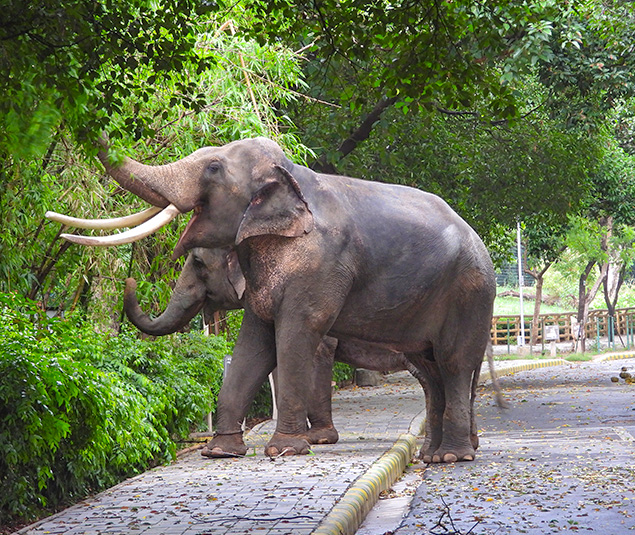
Inquiry Launched into Delhi Zoo Elephant’s Demise
New Delhi: The National Zoological Park in Delhi faced a double blow to its animal welfare reputation this month, with the sudden death of its beloved 29-year-old African elephant Shankar on September 17, followed by an ongoing avian influenza outbreak that has claimed multiple bird lives since late August. Authorities have ordered an inquiry into Shankar’s demise, while rigorous bio-security measures continue to combat the bird flu, highlighting persistent challenges in maintaining the health of zoo residents amid environmental and disease threats.
Shankar, a gentle giant who had resided at the zoo since November 1998 after arriving from Zimbabwe, collapsed in his enclosure at approximately 7:25 PM on September 17. Zoo officials reported that earlier that day, the elephant showed signs of reduced appetite for leaves and grasses along with slight loose motion, though he consumed concentrates, fruits, and vegetables normally. The veterinary team administered treatment and kept him under close observation, but despite emergency interventions, Shankar succumbed at 8:00 PM. No prior sickness or abnormal behaviour was noted up to September 16. A post-mortem examination is underway, conducted by experts from the Indian Veterinary Research Institute (IVRI) in Bareilly, the zoo’s health advisory committee, and a Ministry representative. Samples from the procedure will aid further investigation, after which the carcass will be disposed of according to protocol. Director Dr Sanjeet Kumar described Shankar as a symbol of strength, wisdom, and love, noting the emotional impact on staff, visitors, and the conservation community. The zoo has reaffirmed its commitment to wildlife welfare.
This incident compounds the distress from an avian influenza (H5N1) outbreak that began affecting water birds and migratory species in late August. As of September 18, no new deaths have been reported in the waterbird aviary or migratory bird pond, and intensive sanitation and biosecurity measures persist to protect birds, animals, and staff. Frontline personnel involved in aviary handling, disinfection, and carcass disposal have been screened by a team from the National Centre for Disease Control (NCDC), with orientations on personal hygiene and preventive measures provided to supervisors.
Rewinding to mid-September, the zoo reported on September 15 that all samples collected after September 1 tested negative for H5N1, with no new waterbird mortalities and no influenza-like symptoms in mammals or other animals. Environmental samples were sent to the National Institute of High Security Animal Diseases (NIHSAD) in Bhopal for analysis, results pending at the time. The zoo emphasised its vigilance in implementing standard protocols.
Earlier, on September 9, officials confirmed no fresh bird deaths in the preceding 72 hours. From August 24 to September 6, nine Painted Storks and three Black-headed Ibises died in the waterbird aviary or isolation ward, with seven samples testing positive for H5N1. No aviary deaths occurred after August 28, and by September 6, no further isolation ward fatalities were noted, with two birds recovering. Additionally, five migratory Painted Storks died near the water pond; three samples were positive for the virus, but none after September 1. No other zoo animals exhibited symptoms, and sanitation efforts were described as rigorous.
On September 4, the zoo updated that no new mortalities had occurred among aviary or pond birds. A World Health Organization (WHO) team visited, discussing staff health screening and public health measures, expressing satisfaction with the responses. A joint surveillance team from the Central Zoo Authority (CZA) and Delhi’s Department of Animal Husbandry collected environmental and bird samples for testing.
The outbreak’s initial report came on September 2, mirroring the September 4 update in noting no new deaths and ongoing sanitation. This was the first public acknowledgement of the incident, with NCDC screening for staff and hygiene training emphasised.
These events underscore broader concerns at the Delhi Zoo, including questions about preventive health monitoring and rapid response capabilities. While the avian influenza appears contained, with negative tests post-September 1 and recovering birds, the unexplained death of Shankar has prompted scrutiny. The inquiry’s findings could reveal lapses in care or underlying health issues, potentially leading to policy reforms. As the zoo considers reopening—pending competent authority approval—the focus remains on containment and conservation, ensuring the safety of its inhabitants and visitors.
– global bihari bureau