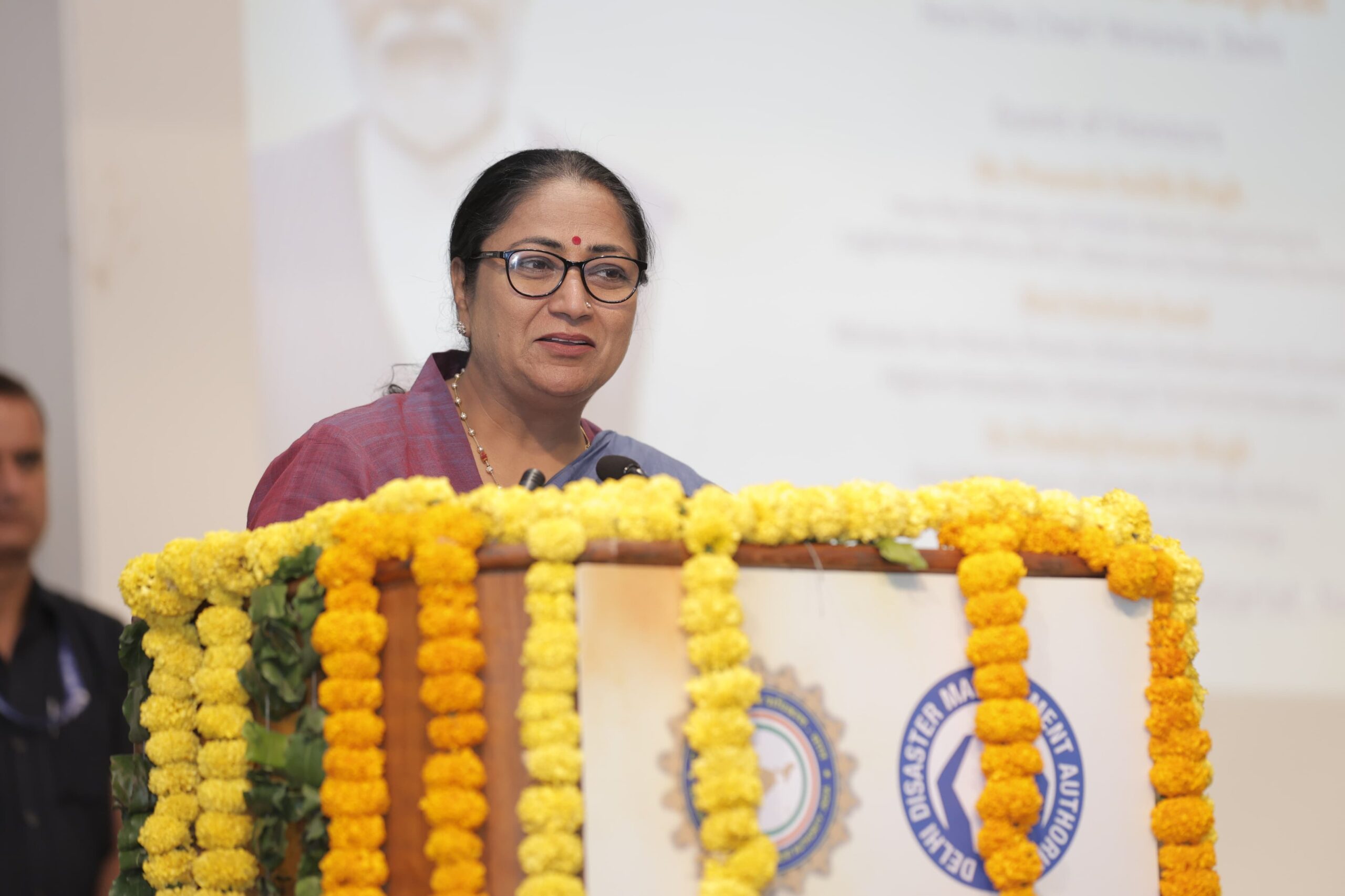
Delhi Chief Minister Rekha Gupta
Delhi: Two separate incidents today morning have heightened concerns among security agencies in India’s capital, exposing vulnerabilities in public safety measures. At approximately 8:30 a.m. Indian Standard Time, Delhi Chief Minister Rekha Gupta was physically assaulted during a public grievance redressal session at her official residence in Civil Lines. One hour earlier, starting around 7:30 a.m., over 50 schools across Delhi received bomb threat emails, leading to evacuations and extensive searches. These events have prompted investigations into their causes and potential connections, with the Bharatiya Janata Party (BJP), which governs Delhi, alleging political conspiracies behind the attack on Gupta, while authorities assess security protocols. Evidence suggests distinct origins for the two incidents, indicating their timing, one hour apart, is likely coincidental amid Delhi’s tense political climate.
The attack on Chief Minister Gupta occurred during her weekly Jan Sunwai programme, a Bharatiya Janata Party initiative allowing citizens to present complaints directly to the Chief Minister. A 41-year-old man, Rajesh Khimji Bhai Sakariya from Rajkot, Gujarat, approached Gupta with documents, ostensibly to submit a petition. According to police reports and eyewitness accounts, he then grabbed her hand, pulled her toward him, used abusive language, and engaged in a brief scuffle, possibly striking her.
Gupta sustained minor injuries to her hand, shoulder, and head, described by Delhi BJP chief Virendra Sachdeva as resulting from a “light blow” or contact during the altercation. She was taken to a hospital for medical evaluation and remains stable. No official statement specifies the exact duration of the physical confrontation, but accounts from attendees indicate it lasted approximately 10 to 15 seconds before security personnel restrained Sakariya and handed him over to the Delhi Police.
The ability of the assailant to approach Gupta, despite her Z-plus security—the highest level of protection in India—has raised questions about a security failure. The Jan Sunwai’s open-access format, requiring identity checks and frisking, did not prevent Sakariya from breaching the queue and making physical contact, leading Delhi Police Commissioner SBK Singh to initiate a review of entry procedures. The program has been temporarily suspended to address these concerns.
Delhi Deputy Chief Minister Parvesh Sahib Singh Verma, who oversees the Public Works Department and Water portfolios, condemned the attack as a “direct assault on democratic values,” emphasising the Jan Sunwai’s role in enabling public engagement.
Verma, who visited Gupta’s residence with the Chief Secretary to assess the situation, alleged that Sakariya conducted reconnaissance at her Civil Lines and Shalimar Bagh residences for 24 hours prior to the attack. He stated to the media, “The individual was doing a recce for the last 24 hours. He did recce at her Shalimar Bagh residence too yesterday,” suggesting the assault was premeditated.
Delhi’s Law and Justice Minister Kapil Mishra described the attack as “not ordinary” but driven by “deep hatred” and an “intent to kill,” claiming Sakariya “cannot be alone” and that “others are definitely involved.” Mishra linked the incident to opposition against BJP policies, including the Ayushman Bharat health card, Devi bus services for women, sewer system upgrades, and Yamuna River cleanup, implying rivals, likely the Aam Aadmi Party (AAP), resorted to violence to undermine these initiatives. Environment Minister Manjinder Singh Sirsa called it a “political conspiracy,” suggesting Gupta’s accessibility threatened opponents.
No evidence supports these claims, and police are investigating Sakariya’s actions, including any reconnaissance footage, to determine if he had accomplices.
Preliminary police findings indicate Sakariya’s motive was primarily personal. His mother, Bhanu, informed Rajkot police that he was a “dog lover” distressed by a Supreme Court order, issued around July 28, 2025, mandating the relocation of stray dogs in the Delhi-National Capital Region to shelters, a policy Gupta has endorsed as addressing a significant issue. Bhanu noted Sakariya had untreated mental health issues, a claim under review through medical records. Early reports mentioned a petition to secure a relative’s release from Tihar Jail, but this appears secondary. Sakariya is in custody at Civil Lines police station, facing charges under the Indian Penal Code for assault and criminal force. No political affiliations have been confirmed, challenging the BJP’s conspiracy narrative.
One hour earlier, starting at 7:30 a.m., bomb threats targeted over 50 Delhi schools, including Rahul Model School, Maxfort School in Dwarka, Sarvodaya Kanya Vidyalaya in Malviya Nagar, and Andhra Education Society in Prasad Nagar. Emails from the “Terrorisers 111 Group” demanded $25,000 (approximately 21 lakh Indian rupees) in cryptocurrency, claiming “pipe bombs and advanced explosive devices” were planted, with detonation threatened within 48 to 72 hours and warnings of data leaks if authorities were contacted. Delhi Police, bomb disposal squads, dog units, and Delhi Fire Services conducted searches and evacuated schools, finding no explosives by midday. The threats were deemed hoaxes, consistent with prior incidents.
On August 18, 2025, 32 schools received similar emails from the same group demanding $5,000 (approximately 4.2 lakh Indian rupees) in cryptocurrency, also declared non-credible. Earlier threats in July and December 2024 affected dozens of schools, disrupting education and raising parental concerns. The Delhi High Court has criticised authorities for delays in implementing a standard operating procedure, ordered in November 2024, to address such cyber hoaxes. The police’s cybercrime unit is tracing the emails, suspecting a foreign-based platform, possibly in Germany, but no arrests have been reported.
The timing of these incidents—one hour apart—has raised questions about a potential connection, particularly given Delhi’s volatile political climate following the BJP’s landslide victory in the February 2025 Delhi Assembly elections, ending AAP’s 10-year rule. The BJP’s 48-seat win led to Gupta’s swearing-in on February 20 at Ramlila Maidan, with a cabinet including Verma, Mishra, and others.
The assault on Gupta and the school threats could be interpreted as attempts to destabilise the new government. However, their motives and methods differ sharply. Sakariya’s attack was a physical act driven by a grievance over the stray dog policy, while the school threats were digital, financially motivated extortion attempts by an anonymous group. So far, no evidence links Sakariya to the “Terrorisers 111 Group,” and their distinct execution—physical versus cyber—suggests separate actors and objectives.
Opposition leaders condemned the assault while highlighting broader issues. Kejriwal stated, “In a democratic system, differences of opinion are acceptable, but there is no place for violence,” urging Gupta’s safety. AAP’s Atishi, a former chief minister, called for strict action. Delhi Congress chief Devender Yadav termed the incident “unfortunate,” noting, “If the Chief Minister of Delhi is not safe, how can a common man or woman be safe?” Some Congress members suggested the attack might be staged, though without evidence.
On social media platforms such as X, reactions included support for the BJP’s conspiracy claims and scepticism, with memes referencing past attacks on Kejriwal and hashtags like #ThappadPolitics reflecting public frustration.
Delhi’s history of attacks on chief ministers provides context. Kejriwal faced a slap in 2014, ink in 2016, chilli powder in 2019, and residence vandalism in 2022, often tied to policy disputes or personal grievances, with arrests but few convictions. AAP frequently alleged BJP involvement, mirroring the BJP’s current claims against the AAP, yet evidence was lacking. Gupta’s attack aligns with this pattern, driven by a specific issue, though political accusations persist. The school threats, part of a 2025 wave, underscore cybersecurity gaps, with the High Court’s unheeded directive amplifying concerns.
The 10-to-15 (or more?)- second window of Gupta’s assault, while brief, indicates a security failure, as Sakariya breached Z-plus protocols to make contact. The school threats highlight digital vulnerabilities, with repeated hoaxes disrupting education.
The lack of evidence linking the incidents, one hour apart, suggests they are coincidental, driven by unrelated motives. Yet, their combined impact—exposing physical and cyber weaknesses—may compel Delhi’s authorities to strengthen protections amid a tense political transition.
– global bihari bureau