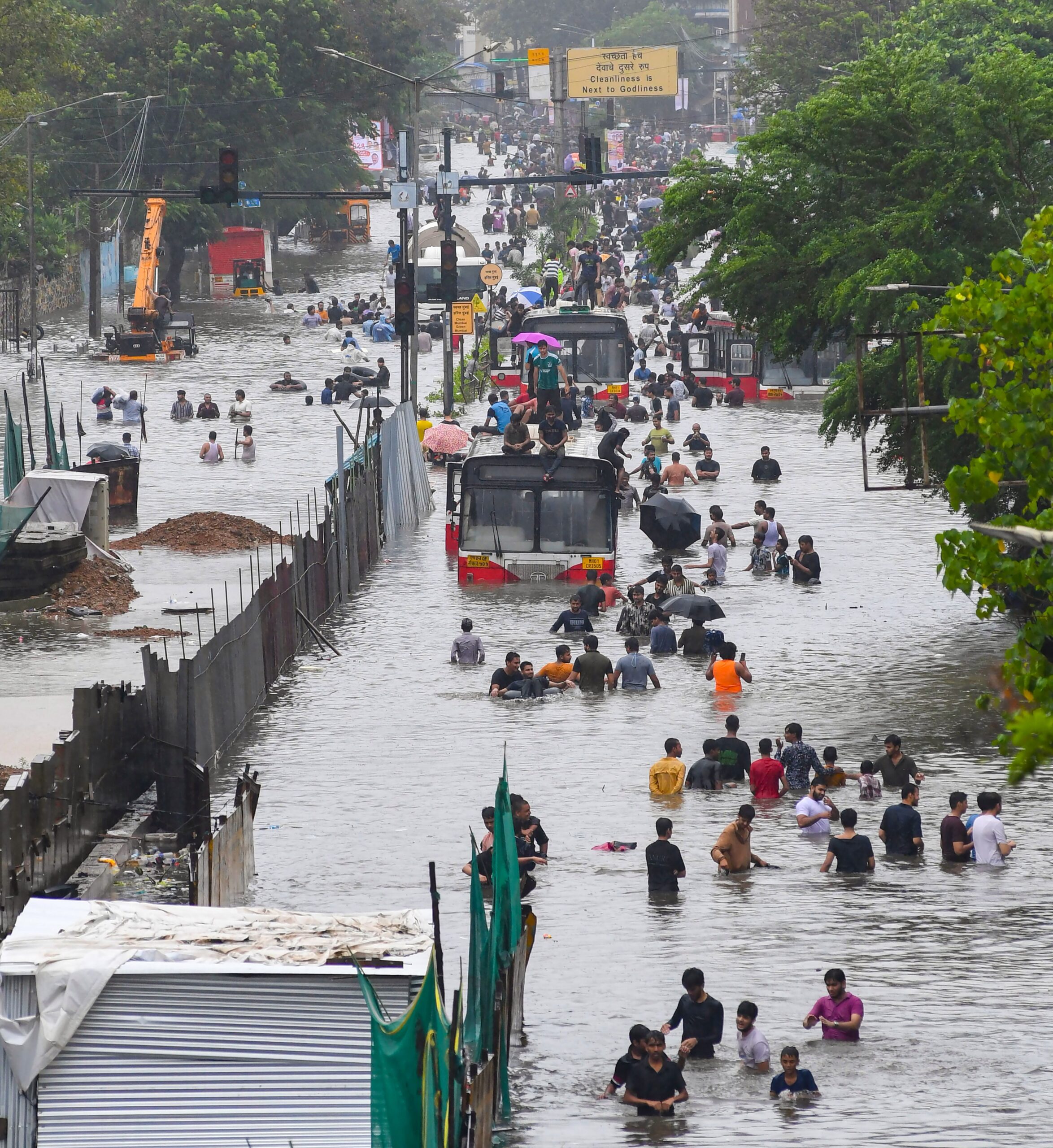
Mumbai Monsoon: Photo source: @airnewsalerts|X
 By Deepak Parvatiyar*
In the shadows of Delhi’s gleaming government offices and Mumbai’s towering skyscrapers, the 2025 monsoon exposes a silent scandal: millions in slums like Yamuna Bazar and Dharavi face floods that go uncounted, their losses invisible to civic ledgers.
On August 20, 2025, Delhi’s Yamuna River hit 205.95 metres, breaching the danger mark of 205.33 metres, while Mumbai’s Mithi River swamped the new Worli Metro Station.
Outdated drains—1976 for Delhi, 1860s for Mumbai—clogged by garbage and encroachments, buckle under climate-driven rains, disrupting 58 million lives. With ₹5,980 crore from the Government of National Capital Territory of Delhi (GNCTD) and Municipal Corporation of Delhi (MCD), and ₹15,357 crore from Mumbai’s Brihanmumbai Municipal Corporation (BMC), the Public Works Department (PWD) and BMC fail to protect vulnerable communities, costing ₹6,000–15,000 crore in damages and deepening inequity.
In Delhi’s Yamuna Bazar, a daily-wage labourer salvages soaked belongings from a shanty as the Yamuna’s muddy waters recede from their August 20 peak, mourning six lives lost when a roof collapsed at Humayun’s Tomb campus on August 16, 2025, during relentless rains. Just weeks earlier, on July 9, 126 millimetres of rain fell, and on August 29, 77.1 millimetres drenched the city, with Lodhi Road recording 92.2 millimetres on August 20 alone.
These deluges overwhelmed a 2,064-kilometre drainage network, built in 1976 for a smaller city and a gentler 12.5 millimetres per hour, now serving 38 million. Only 50% of the National Capital Territory is covered, and with just 60% of drains desilted by May 2025, waterlogging gripped 445 hotspots—up from 194 in 2024. Rohtak Road, a perennial trouble spot, saw both carriageways from Nangloi to Tikri Border inundated on August 20, stranding commuters for hours. Aya Nagar’s new reinforced cement-concrete drains, completed in 2025, spared Market Road, but Kirari and Rithala, awaiting the ₹264.5-crore Kirari-to-Rithala Trunk Drain, remained waterlogged. ITO’s upgraded pumps reduced flooding, yet traffic snarls persisted. Only 631 of 1,045 waterbodies remain, choked by encroachments that shrink natural absorption, while Hathnikund Barrage releases—104,306 cusecs on August 17—pushed the Yamuna to 205.77 meters on August 19, nearly triggering mass evacuations.
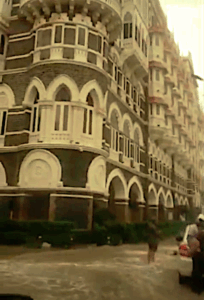
Across the peninsula, Mumbai’s Dharavi residents navigate knee-deep sludge, their homes dwarfed by the city’s financial hub, as May’s 400 millimetres—the wettest since 1918—flooded even the new Worli Metro Station, while a landslip in Jankalyan Society on August 16, 2025, claimed two lives. July and August rains, including 200 millimetres in 12 hours, halted trains and clogged highways like the Eastern and Western Express.
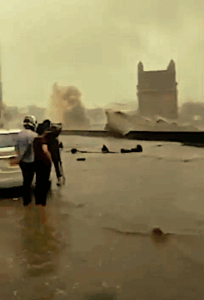
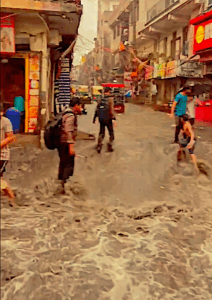
The 2,000-kilometre drainage system, dating to the 1860s and designed for 25 millimetres per hour, falters under a 20-million population and coastal high tides. The Mithi River, narrowed to 10 meters by encroachments, overflows, while 40% of mangroves—natural flood barriers—have vanished. A June 2025 deluge exposed flaws in the under-construction Acharya Atre Chowk metro station, suspending services. The BMC’s dewatering pumps, down to 417 from 482 in 2024, and manual desilting struggle against garbage-filled drains, as seen in SakiNaka’s viral videos.
Corruption festers at the core of this crisis, turning rains into ruin. In Delhi, Aam Aadmi Party (AAP) leader Saurabh Bharadwaj’s 2024 Right to Information (RTI) request revealed no records for desilting audits, fueling accusations of deleted evidence to shield contractor mismanagement. According to Bharadwaj, his June 13, 2024, letter to the Delhi Chief Secretary had sought details of the audit status, internal correspondence and file notings related to desilting works. “The RTI reply dated July 29, 2025, now claims the letter was never received,” he reportedly claimed.
Mumbai’s ₹249 crore spent on desilting in 2024 enriched contractors while drains remained choked, with only 28 of 58 Brihanmumbai Storm Water Disposal (BRIMSTOWAD) upgrades completed, per a 2023 Shiv Sena (UBT) editorial in Saamana. Floodplain encroachments, like Delhi’s Akshardham Temple and Commonwealth Games Village or Mumbai’s Bandra-Kurla Complex, thrive under lax oversight, with environmentalist Himanshu Thakkar noting they block natural drainage.
Transparency International’s 2024 Corruption Perceptions Index ranked India 96th, with 60% of regulatory stoppages tied to extortion, enabling substandard desilting and illegal constructions. The National Disaster Management Authority (NDMA) highlights weak audit mechanisms and contractor collusion as key barriers, with Delhi’s PWD and Mumbai’s BMC routinely bypassing tender transparency, siphoning funds meant for flood mitigation into private pockets.
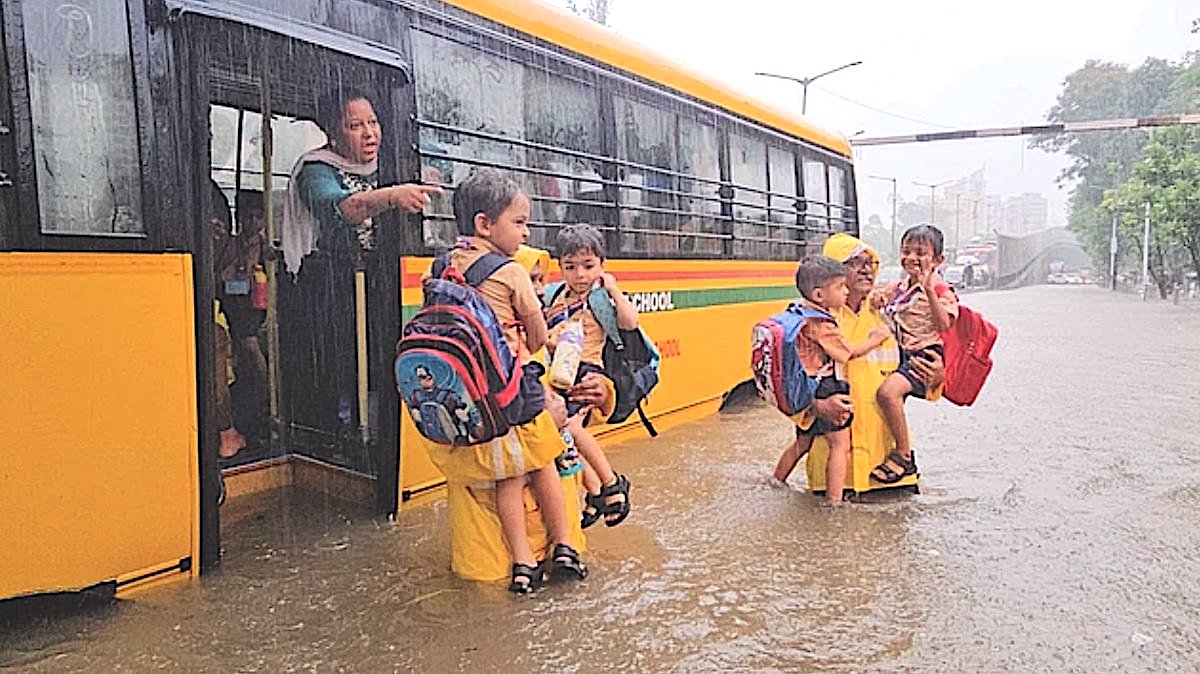
Experts and institutions propose a unified blueprint to break this cycle, blending innovation with accountability. Climate scientist Dr. Raghu Murtugudde, from the Indian Institute of Technology-Mumbai, advocates citizen-focused early warning systems, using real-time India Meteorological Department (IMD) data to predict flash floods, as seen in Mumbai’s 944 millimetres from August 1–19, 2025. Urban planner Dikshu Kukreja suggests retrofitting drains with modular, climate-resilient designs to handle 120 millimetres per hour, restoring 414 lost waterbodies in Delhi and 40% of Mumbai’s mangroves to absorb runoff. Vajjarapu Harsha, a climate adaptation expert, pushes community-driven watershed management, citing Tarun Bharat Sangh’s revival of 23 rivers through local knowledge, adaptable to Delhi’s waterbodies and Mumbai’s creeks. Dr. Rajendra Singh, a water conservationist, proposes a Water University in Delhi to train experts in integrating hydrology with urban planning, preventing roads from blocking natural flows. The Coalition for Disaster Resilient Infrastructure (CDRI) recommends AI-based multi-hazard risk mapping, as piloted with Mumbai’s BMC, to guide infrastructure planning and emergency response. The NDMA emphasises enforcing anti-encroachment laws, regular flood drills, and community awareness programmes to enhance preparedness. The World Bank’s EPIC Response framework, piloted in Assam, advocates data-driven tools like the Ensemble Prediction System for hydrologic forecasting and transparent procurement to curb corruption. Open contracting, as seen in Assam’s 2023 green budget, could ensure Delhi and Mumbai’s ₹21,337 crore flood budgets are tracked transparently, reducing contractor fraud. Sustainable urban drainage systems (SUDS), endorsed by Down to Earth, mimic natural water retention to ease pressure on outdated infrastructure.
These solutions—early warnings, resilient drains, restored ecosystems, transparent governance—require cross-sectoral coordination and community buy-in to transform India’s capitals into flood-resilient cities.
Civic promises ring hollow. Delhi’s GNCTD allocated ₹603 crore to the Irrigation and Flood Control Department in 2025-26, with ₹475 crore for drainage and ₹150 crore for drain remodelling, while MCD’s ₹10,537 crore included ₹4,907.11 crore for sanitation, indirectly aiding drains. Mumbai’s BMC committed ₹15,048 crore for urban flooding and ₹309 crore for disaster management within a ₹74,427 crore budget, dwarfing Maharashtra’s ₹22.40 crore statewide disaster fund.
Delhi completed projects like Aya Nagar’s drainage and ITO’s pump upgrades, but the Kirari-Rithala drain and Rohtak Road’s 18-kilometre redevelopment lag. A drone-based desilting pilot near Dayal Singh College hints at innovation, yet the 1976 master plan awaits an overhaul, with a new basin-based plan still in progress.
Mumbai’s BRIMSTOWAD project, launched in 1993, completed ₹260 crore in upgrades, but encroachments and flat gradients persist. Plans to handle 120 millimetres per hour remain aspirational, as garbage and reclaimed land like Bandra-Kurla Complex thwart relief.
The economic toll is staggering. Delhi’s 2023 floods cost ₹10,000–15,000 crore regionally, with 2025 projections at ₹5,000–10,000 crore, driven by infrastructure damage, business losses at hubs like ITO, and relief costs—₹1–1.45 lakh per damaged house. Mumbai’s 2005 floods cost $1–2 billion, and 2025 estimates hit ₹1,000–5,000 crore, impacting its $300 billion economy with metro and road damage.
Yet, the uncounted losses in slums—where 35,000 were displaced in Delhi’s 2023 floods—reveal a deeper inequity. Governance stumbles, with Delhi’s PWD, MCD, and Delhi Development Authority bickering, and the AAP blaming Haryana’s barrage releases. Mumbai’s BMC faces similar criticism for poor coordination.
The IMD forecasts light to moderate rain in Delhi through August 22, with heavier showers in Haryana, signalling ongoing risks. As 58 million residents endure another monsoon, the silent scandal of neglected slums, corrupt systems, and fixable failures demands accountability and action.
*Senior journalist