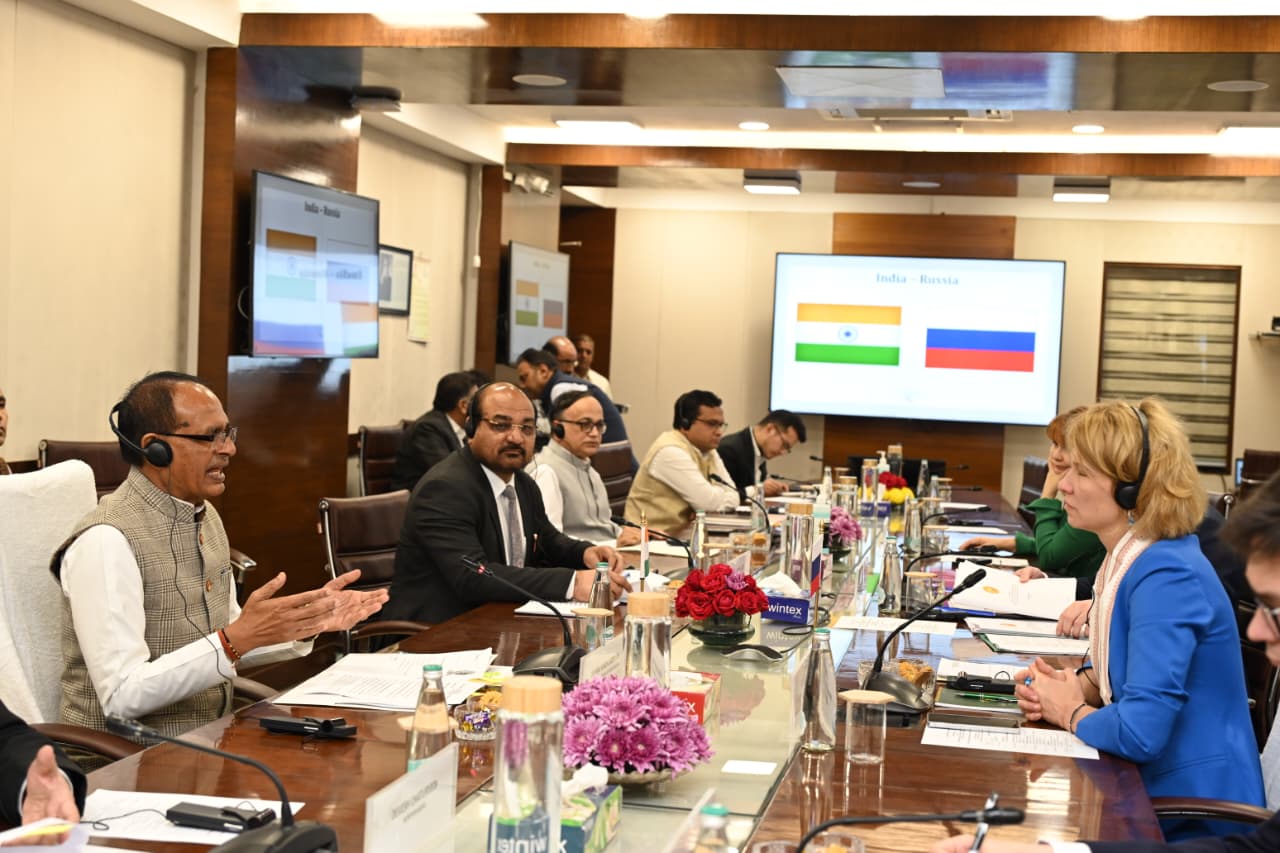
Union Minister of Agriculture and Farmers Welfare, Shivraj Singh Chouhan, held a bilateral meeting with Oxana Lut, Minister of Agriculture of the Russian Federation, at Krishi Bhawan today to discuss ongoing cooperation and outline future areas of collaboration.
Agriculture and e-Commerce Drive New India–Russia Push
New Delhi: India and Russia signalled a renewed economic alignment today with two separate agreements—one aimed at strengthening agricultural cooperation and another designed to ease cross-border e-commerce logistics. Together, they indicate an attempt by both governments to build deeper, more diversified trade linkages at a time when global supply chains are shifting, and traditional markets are becoming more competitive.
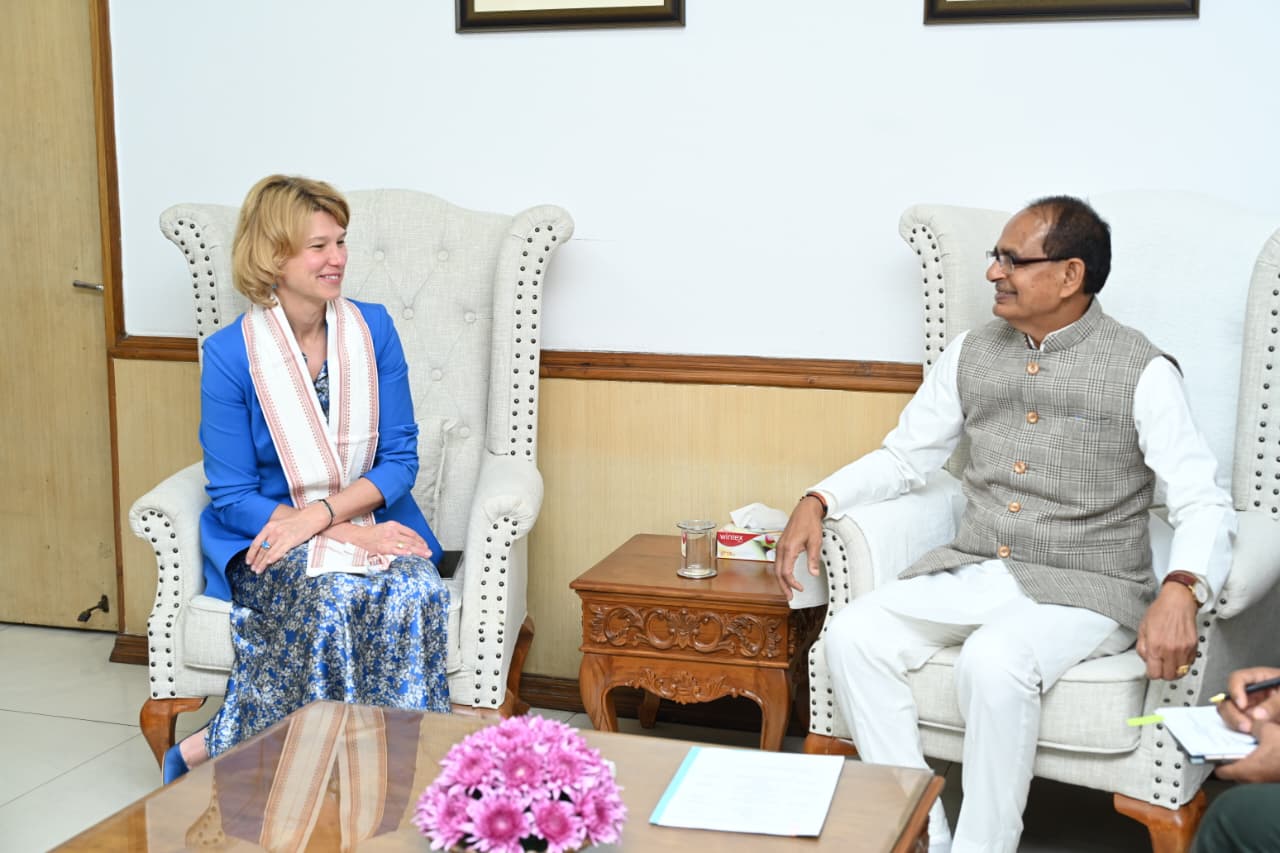
At Krishi Bhawan, Union Agriculture Minister Shivraj Singh Chouhan hosted Russian Agriculture Minister Oxana Lut for a bilateral dialogue that reviewed the progress of agricultural trade and attempted to open new pathways for farmers and agribusinesses in both countries. The ministers agreed that the current bilateral agricultural trade level of approximately USD 3.5 billion does not reflect the full potential of the partnership. India reiterated that trade must move toward a more balanced structure, pointing to the recent resolution of Russia’s market-access restrictions on Indian potatoes, pomegranates and seeds as a positive signal of trust.
The dialogue placed particular emphasis on expanding Indian exports of foodgrains and horticultural products, an area where Moscow is expected to examine new openings as demand evolves. Both sides also discussed improving cooperation in fertilisers and seed development—a matter of strategic importance to India, which is seeking stable sourcing of agricultural inputs and a technology pipeline to boost productivity. Joint research and smoother market access procedures were recognised as areas where progress would deliver direct benefits to farmers.
A key outcome of the meeting was the signing of a Memorandum of Understanding between the Indian Council of Agricultural Research and Russia’s Federal Center for Animal Health. The agreement is expected to accelerate scientific exchanges, capacity building and innovation in crop and animal disease management, with an eye on long-term resilience of food systems. Chouhan also invited Russia to take part in the BRICS Agriculture Ministers’ Meeting that India will host next year, suggesting that agricultural cooperation is now being woven into multilateral frameworks rather than confined to bilateral channels.
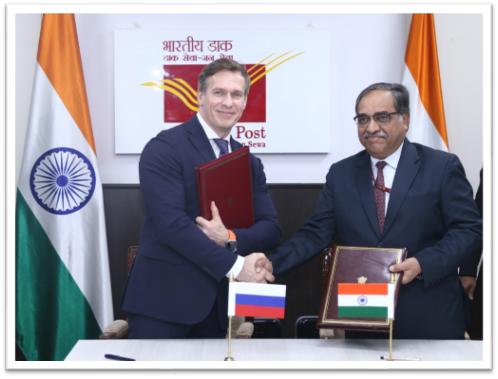
Mikhail Yurevich Volkov, Director General, JSC Russia Post, in New Delhi today.
Later in the day, another agreement broadened the scope of India–Russia trade. The Department of Posts and JSC Russia Post concluded a bilateral pact to introduce the International Tracked Packet Service between the two countries. The service is designed to meet the needs of e-commerce exporters who ship low-value consignments, offering end-to-end digital tracking, delivery confirmation and electronic advance data to simplify customs clearance. Russia Post’s preferential delivery rates under the agreement mean that India Post will be able to offer the service at competitive tariffs, making Indian products more price-attractive in the Russian market.
Russia has quickly emerged as a fast-expanding retail destination for Indian suppliers of wellness products, apparel, fashion accessories, jewellery, décor items and handicrafts — sectors where micro, small and medium enterprises dominate. The postal pact complements India’s creation of 1,013 Dak Ghar Niryat Kendras across the country, which help small sellers in Tier-2 and Tier-3 cities access export markets. For artisans, rural entrepreneurs and startups that lack access to major logistics networks, the new service promises predictable delivery timelines and lower operating costs, reducing a significant barrier to international sales.
With both agreements landing on the same day, the message from New Delhi and Moscow is clear: agricultural supply chains and digital commerce are being positioned as major anchors of future bilateral trade. While India sees an opportunity to diversify export destinations for farmers and small businesses, Russia is signalling that Indian products and expertise have a growing place in its consumer and agri-industry ecosystem. If implementation moves quickly, the twin pacts could broaden the commercial bandwidth of the India–Russia partnership beyond energy and defence, and bring new economic constituencies — from horticulture producers to handmade-goods entrepreneurs — into the fold of international trade.
– global bihari bureau