Sangeet Sudha Celebrates Indian Classical Music in Delhi
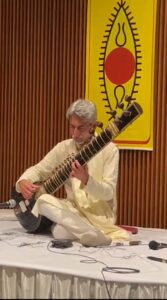
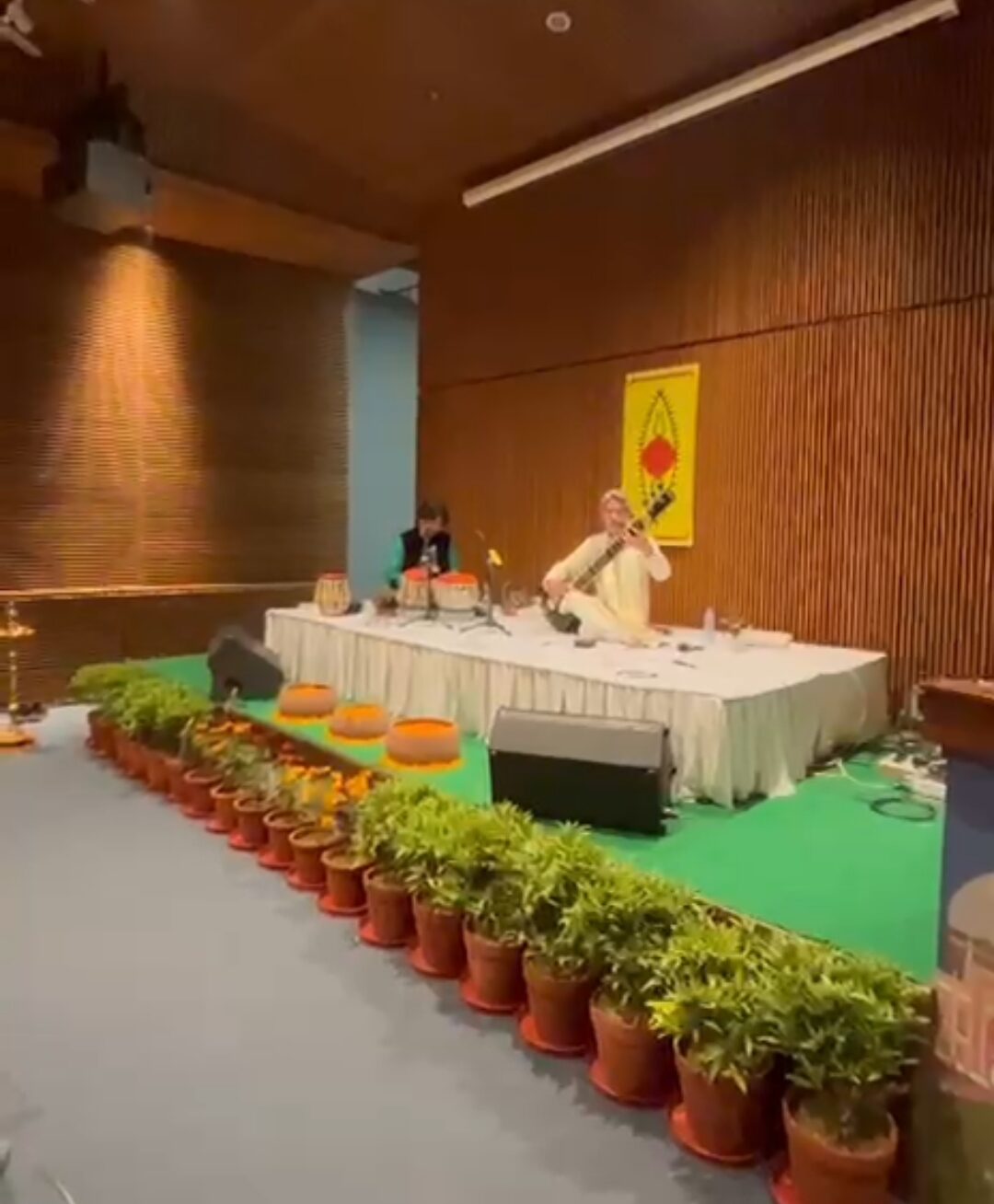
New Delhi: As the winter sun slipped behind the sandstone arches of Humayun’s Tomb on January 16, 2026, the auditorium inside the World Heritage Site Museum grew quietly still. Silence itself seemed to settle in the corners, as if holding its breath for what was about to arrive. And then it did: Ustad Saeed Zafar Khan, one of the foremost exponents of the Delhi Gharana, touched the sitar, and Raga Bhimpalasi began to unfurl. Traditionally performed in the late afternoon, Bhimpalasi carries a mood of gentle introspection, a soft tug between melancholy and hope. In that moment, with winter light thinning beyond the museum walls, the raga felt uncannily in harmony with the hour. Across from him, Ustad Babar Latif’s tabla did not merely accompany—it listened, responding with delicacy, shaping silence as much as sound. The audience leaned in, drawn into the music’s patient, meditative dialogue.
Between 4:30 pm and 6 pm, SPIC MACAY’s ‘Sangeet Sudha’ programme had transformed the museum’s state-of-the-art auditorium into an intimate chamber of reflection. This performance was part of a wider public outreach initiative between SPIC MACAY and Sunder Nursery, supported by the Aga Khan Trust for Culture, which has, since January 2025, been bringing classical music and dance into Delhi’s shared public spaces. Over twelve months, the auditorium has echoed with Hindustani vocal recitals and instrumental traditions—from sitar and Shankar slide guitar to flute and the austere beauty of Dhrupad—hosting maestros including Pt. Shubhendru Rao, Pt. Abhay Rustom Sopori, Vidushi Sunanda Sharma, Ustad Kamal Sabri, Ustad Wasifuddin Dagar, Pt. Ronu Majumdar and Vidushi Dr Kamala Shankar.
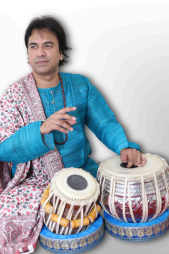
Even before the first note, Ustad Saeed Zafar Khan commanded the room. A tenth-generation inheritor of Hindustani classical music, his presence was at once calm and magnetic. Accompanied by Ustad Babar Latif on tabla, the evening revolved around their interplay—mastery, restraint, and dialogue in equal measure.
The programme began formally with anchor Lavanya Balwani introducing Sangeet Sudha and SPIC MACAY’s vision of cultural education and artistic excellence. The artists were welcomed by Khush Shaw, followed by the ceremonial lighting of the lamp. Felicitations by Yogesh Andley and words of appreciation for Dr Kiran Seth, Founder of SPIC MACAY, and Suman Doonga, curator of the series, underlined the enduring commitment to Indian arts.
Born into a family of eminent musicians, Ustad Saeed Zafar Khan’s immersion in riyaz from early childhood honed a distinctive style that fuses tantrakar virtuosity with the gayaki ang of the Delhi Gharana. His playing is defined by tonal clarity, measured phrasing, refined meend, and a meditative, carefully structured alaap. A Top Grade artist of All India Radio and Doordarshan, he has performed publicly since the age of seven, with appearances at the ITC Sangeet Sammelan in Kolkata, Kalakshetra Music Festival in Chennai, Sankat Mochan Sangeet Samaroh in Varanasi, Harivallabh Sangeet Sammelan in Jalandhar, Swami Haridas Sangeet Sammelan in Mumbai, and festivals organised by the Sangeet Natak Akademi and Sahitya Kala Parishad. Alongside tradition, he has explored innovative collaborations with jazz, rock, and contemporary genres, releasing albums including The Gold Collection – Sitar by Saeed Zafar Khan, Himalayan Breeze, and Suroor.
As the recital deepened, Bhimpalasi unfolded fully, its notes curving, lingering, and dissolving into each other. The sitar’s voice spoke with eloquence and restraint, the tabla responding with subtle nuance, shaping the silence around it. A composition rendered in a Carnatic idiom introduced a gentle shift in rhythm, highlighting the sitarist’s versatility. Then came the bandish “Ae Ri No La Man Reet,” traditionally associated with the Bhadarwa context—the monsoon season of longing and separation in North Indian musical and poetic imagination—its lyrical and rhythmic richness captivating the audience. The evening concluded with the devotional “Vaishnav Jan To,” offered with quiet dignity, leaving behind a stillness that seemed to linger in the listeners’ hearts.
Raghavi delivered the vote of thanks, expressing gratitude to artists, organisers, anchors, and the audience. Forthcoming programmes were announced: Ustad Jawaad Ali Khan, grandson of Bade Ghulam Ali Khan, would perform on February 27, 2026, followed by a Hindustani classical vocal recital by Pt. Madhup Mudgal on March 27, 2026.
Beyond a single concert, the evening reflected a larger cultural revival. With over a million annual visitors, the Humayun’s Tomb Museum and Sunder Nursery have become vibrant venues for classical performance. Through this partnership, these spaces have been transformed into hubs of cultural immersion, drawing Delhiites closer to the living pulse of India’s artistic heritage. The initiative is further strengthened by the Sudha Sangini Foundation, which works with tribal women, environmental initiatives, and diverse sections of society.
As audiences stepped back into the winter night, carrying the lingering resonance of sitar and tabla, Sangeet Sudha reaffirmed SPIC MACAY’s mission: to preserve, promote, and transmit India’s classical arts not as distant inheritances, but as living, breathing traditions—patient, resonant, and enduring.
– global bihari bureau