
Counterpoint: When Life Is Not by Chance
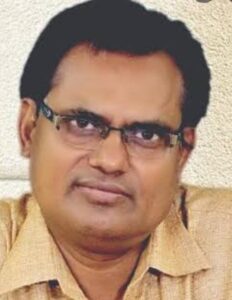 By Vivekanand Jha*
The Inward Turn of Life
When Silence Reveals Design
In Autobiography of a Yogi, Paramahansa Yogananda recounts many encounters that reveal the subtle workings of divine consciousness. One such anecdote—true to the spirit of the book’s many stories of saints attuned to inner states and unseen events—comes to mind.
While walking in deep conversation with a revered master, young Mukunda (later Yogananda) is interrupted by an acquaintance who, oblivious to the sacredness of the moment, launches into a long and noisy monologue. The senior saint, sensing the discomfort this intrusion causes, leans in quietly and whispers, “I see the veil of boredom clouding your face from this chatter; yet divine indication assures me this man will soon recall an urgent matter and depart abruptly.” Moments later, the intruder suddenly remembers an urgency and leaves. Silence and peace return, as if guided by an unseen hand.
This small incident reflects a deeper truth echoed throughout the book: nothing in life unfolds by mere chance. Every interruption, every coincidence, participates in a larger design.
The Question That Visits Every Life
The trajectory of human life winds through many phases—youthful ambition, worldly pursuits, fleeting joys—until it reaches a quiet confrontation with impermanence. At that moment, the question arises with stark clarity: What was the true meaning of it all?
Even amid material success, this existential inquiry visits everyone. Some dismiss it as futile; others, sensing its gravity, turn inward in search of answers.
Beyond Chance: Aurobindo’s Vision
For me, the turning point came through the teachings of Maharshi Sri Aurobindo in his monumental work, The Life Divine. He presents the cosmos not as random chaos but as a purposeful evolution guided by divine will. Every event, however ordinary, arises from conscious acquiescence.
This vision stands apart from purely material explanations that emphasise chance and accident. Science brilliantly explains the mechanisms of the universe, but traditions such as those of Adi Shankaracharya and Sri Aurobindo illuminate the deeper “why” behind existence. This realisation led me to the eternal inquiry: Who am I?
The Illusion of Endless Pursuit
Life often seems to spring from nowhere and rush forward under the force of desire and conditioning. The soul, swept into the currents of consumerism and sensory pursuit, chases illusions with restless intensity—only to arrive at a dead end.
Too late comes the awakening: the life lived was a squandered opportunity, and the deeper purpose of existence was neglected, leaving no time for course correction.
Buddha and the Silence of the End
At life’s close, the noise of rumbustious joy fades into the silence described by the Buddha’s insight that all conditioned phenomena are impermanent and empty of lasting substance. We spend our days feeding the cravings of the mind, yet death arrives without mercy, exposing the futility of unchecked attachment.
Osho’s Counsel on Letting Go
Osho offers a practical counsel: begin now to release one’s favourite obsessions—whether of food, habits, or addictions—before death strips them away. By cultivating non-attachment consciously, one learns to face the end without fear.
The Peace Found Within
This truth became vivid to me through Gayatri meditation. As I entered the depths of the mantra, an oceanic peace enveloped my being—vast, beneficent, and all-embracing. In those moments, the soul’s deepest longing revealed itself: true peace, so rare in a world saturated with noise and distraction.
Even if one were to conquer the world, what would that victory mean without inner fulfilment?
The Inward Invitation
What remains, then, is an invitation: to turn inward, to place the divine quest above all outer triumphs, and to discover a peace that no material success can ever grant.
*Vivekanand Jha is an author of Even if we win the world, what then? The views expressed are personal.