The 14th Dalai Lama
Counterpoint: India Must Crush China’s Dalai Lama Power Grab
 By Vivekanand Jha*
While extending its best wishes to the Dalai Lama on his 90th birthday today, the United States said the Tibetan spiritual leader continues to inspire people by embodying a message of unity, peace, and compassion. Washington asserted its firm commitment to promoting respect for the human rights and fundamental freedoms of Tibetans. “We support efforts to preserve Tibetans’ distinct linguistic, cultural, and religious heritage, including their ability to freely choose and venerate religious leaders without interference,” Marco Rubio, Secretary of State, said.
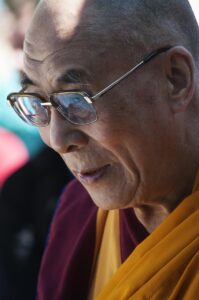
In contrast, China refers to the Dalai Lama as a separatist and requires that the reincarnation of this spiritual figure be sanctioned by the Chinese Central government.
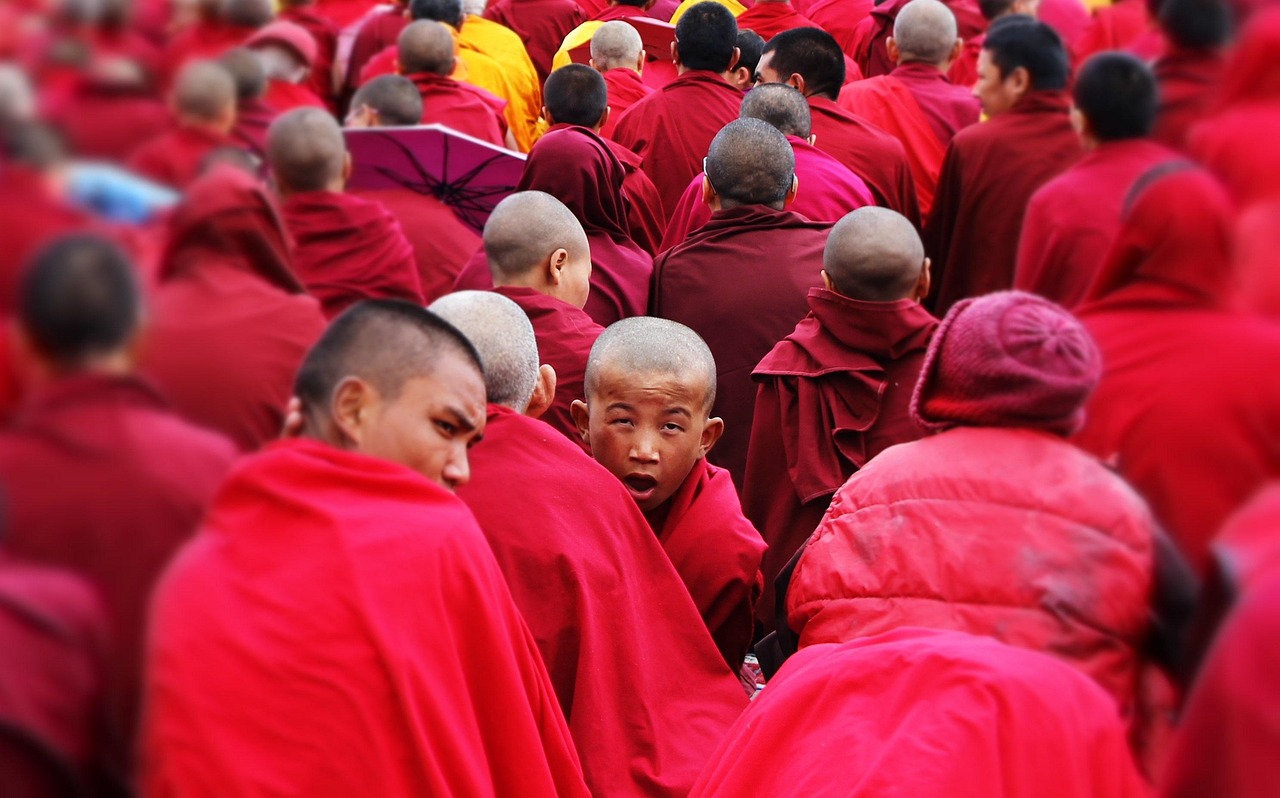
A book, Seven Years in Tibet, by an Austrian author who had spent seven years of his life in Tibet, evocatively showcases the purity of the Tibetan people, along with the life of the Dalai Lama. The process of the incarnation of the Dalai Lama, a sanctified institution having the antecedent of almost seven hundred years, is bewitchingly beatific.
The Chinese onslaught on the innocent people of Tibet was the most inhuman and heinous crime perpetrated by China under Mao Zedong. It was the first sign and symbol of Chinese imperialism, seeking to expand its imperial wings to gobble up the neighbouring territory under its so-called ‘ One China’ Policy. Tibet was the buffer state of British India; the latter handed it over to India when the British left. Inexplicably, Jawaharlal Nehru sat quietly as China unleashed its fangs upon the innocent people of Tibet. The then ambassador, K.M. Panikkar, played complicit, when the PLA (The People’s Liberation Army) was swooping upon Tibet. He kept on soft-pedalling the whole issue, to the strategic detriment of India. Only Dr Shankar Bajpayee, the then Secretary General in the Ministry of Foreign Affairs, knew the reality as he continued to warn Jawaharlal of the Chinese evil design on Tibet. Unequivocally, what could be dubbed as the most tragic event in the history of the world, Tibet fell to Chinese aggression in 1959, when the PLA sought to crush the uprising around the Potala Palace, forcing the Dalai Lama to flee to India.
Ostensibly, another significant aspect which the book so spectacularly envisages is this: how the process of incarnation of the Dalai Lama is kept confidential, with the secret of the next incarnation of the Dalai Lama known only to the most trusted lieutenants of the incumbent Dalai Lama. Interestingly, the Dalai Lama discloses about his next birth and the place where he will be born. The government of Tibet in exile, installed in Dharmashala, in Himachal Pradesh, had curtailed its demand from independence to autonomy – the demand of autonomy is considered essential for the preservation of Tibet as a separate culture and civilisation, which the hostile China is vehemently opposing.
China is hell bent upon nipping in the bud the last vestiges of the institution of the Dalai Lama. The incumbent 14th Dalai Lama, is striving hard to perpetuate the independence of the institution of Dalai Lama, whereas China is not inclined to let the institution prevail without its sanction; it means China is reconciled to infiltrate the sacrosanct institution of Dalai Lama to obliterate its independence, putting to naught the voice of separtism and rebellion, which it purportedly feels the institution of Dalai Lama so evocatively espouses.
Thus, the showdown between the Dalai Lama and China continues, as India, a pivotal player, rather arbiter of the institution of the Dalai Lama, has a larger role to keep the institution perpetuating without any interference from China.
However, there appears to be doubts whether India will stand up to China, as the Minority Affairs Minister Kiran Rijju’s retraction from his earlier statement irreversibly vindicates. Rijju had slammed China for its interference in the incarnation process of the institution of the Dalai Lama; however, with China snarling at the face of India’s opposition, Rijju chickened out by saying that it was his personal opinion, not the government’s stand.
The Narendra Modi government is facing the same dilemma which the government of Jawaharlal Nehru faced in the past. When buckling down, he failed to resist the invasion of Tibet in 1959. Ostensibly, India had surrendered to China in 1959, and if the Modi government does not pick up the gauntlet to confront China, not only Tibet will die forever, India will lose its strategic maneuovres over China, once and for all, for, if Tibet issue is lost, India will never be able to stand up to China.
Notwithstanding China being a far greater power, almost five times greater in terms of economy, far advanced in defence and technology, India robustly confronted China and even gave it a bloody nose in the clash in Galwan Valley in 2020.
China’s role in aiding and abetting Pakistan, during Operation Sindoor, was the vindication of the real Chinese intent on India. This aside, the latest episode of China calling back its team of technicians from Foxconn, operating in Chennai, to the jeopardy of India’s economic interest, corroborates the fact that China will never cease from creating bottlenecks in the affairs of India to checkmate its growth, and sustain its unipolar position in Asia, which it fears India alone can pour the cold water on it.
India should steadfastly stand its ground to keep the hope of Tibetan people, living across the world, alive, by taking China head-on, not falling victim to Chinese shenanigans. The great land of the millennium saint Milarepa should not be allowed to be gobbled up by China, once and for all, seeking to obliterate the last vestiges of Tibet as an independent nation once upon a time.
The onus is on the Modi government to ensure that the transition of the Dalai Lama from its incumbent 14th incarnation to that of the 15th smoothly crystallises without any undue interference from China. How Modi will react to this imbroglio, history will judge him, according to his actions or omissions.
*Vivekanand Jha is an Author, Academician and a Public Intellectual. The views expressed are personal.