COP30 Spotlights Green Trade Surge
Rome/Geneva: With the 30th United Nations Climate Change Conference (COP30) set to convene in Belém, Brazil, from November 10 to 21, 2025, two authoritative UN assessments released today in Geneva and Rome deliver a unified message: international trade and agrifood systems must be deliberately aligned with the Paris Agreement’s binding commitments—limiting global warming to well below 2 degrees Celsius, pursuing efforts to cap it at 1.5 degrees, and requiring all nations to submit updated nationally determined contributions every five years—if the world is to achieve measurable, inclusive, and equitable climate progress.
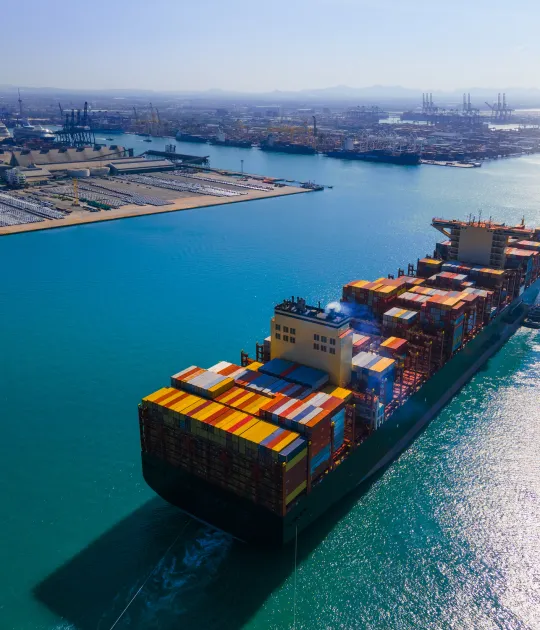
The United Nations Trade and Development (UNCTAD) unveiled its latest Global Trade Update, asserting that trade is not merely a bystander but a potent policy lever for turning climate ambition into tangible outcomes. By embedding trade instruments directly into national climate plans, countries can accelerate the shift to low-carbon economies, diversify export bases, and generate fiscal space for adaptation. The data underscores a dramatic expansion in environmentally supportive commerce: exports of environmental goods soared to 2 trillion United States dollars in 2024, accounting for 14 per cent of total global trade in manufactured goods. Biodiversity-based products were valued at 3.7 trillion dollars in 2021, while non-plastic substitutes—critical for reducing pollution—reached 485 billion dollars in 2023.
Clean energy affordability has improved markedly. The average global levelized cost of electricity from newly commissioned solar photovoltaic projects declined 41 per cent between 2010 and 2024, rendering it increasingly competitive. Onshore wind generation now costs 53 per cent less than equivalent fossil-fuel-based power, narrowing the economic rationale for continued reliance on coal, oil, or gas. Sustainable cooling technologies reveal similar promise: trade in thermostats expanded 32 per cent and in insulating glass rose 43 per cent between 2018 and 2023. The sustainable-cooling market is currently valued at 600 billion dollars and is projected to deliver up to 8 trillion dollars in socioeconomic benefits to developing countries by 2050 through enhanced energy efficiency, reduced emissions, and improved thermal comfort.
Yet significant barriers impede the fuller realisation of these gains. Average tariffs on solar and wind components stand at 1.9 per cent in developed economies but climb to 7.1 per cent across Africa; when non-tariff measures are factored in, the effective rate in Africa rises to 7.6 per cent. Plant-based plastic substitutes face average tariffs of 14.4 per cent—double the 7.2 per cent applied to conventional plastics—distorting markets and slowing the transition to circular alternatives.
UNCTAD’s mapping of nationally determined contributions from 60 developing countries reveals that most already integrate trade-related measures to promote renewable energy deployment, energy efficiency, and sustainable value chains. However, the depth and ambition of these measures vary widely across regions, with some plans treating trade as a marginal tool rather than a central driver. Nearly 90 per cent of the most recently submitted national climate plans originate from developing countries, demonstrating strong political will, yet persistent inequalities in access to clean technologies and affordable finance risk entrenching economic divides if global reforms stall.
To bridge these gaps, UNCTAD calls for intensified regional and South-South cooperation to reduce tariffs on climate-relevant goods, alongside South-North partnerships to harmonise sustainability standards and facilitate technology transfer at concessional terms. Aligning trade, industrial, and climate policies can unlock new value chains in renewable energy, sustainable agriculture, and circular-economy sectors, simultaneously creating jobs, boosting competitiveness, and generating revenues to finance adaptation and resilience. UNCTAD’s Guide for Policymakers on Trade Policies to Advance National Climate Plans—now formally incorporated into the COP30 Presidency’s Climate and Trade Toolbox under Key Objective 24—offers concrete, actionable steps for synchronising trade, investment, and climate strategies to ensure a just and inclusive global transition.
In Rome, the Food and Agriculture Organization of the United Nations (FAO) issued a parallel warning that climate extremes are no longer a future risk but a present crisis actively undermining food production. In an exclusive interview, Kaveh Zahedi, Director of FAO’s Office of Climate Change, Biodiversity and Environment, stated unequivocally, “It’s not a distant threat—it’s happening now. Climate extremes are already disrupting food and agriculture.” He detailed how yields are declining, unpredictable weather patterns are complicating harvesting, and pest and disease outbreaks are surging across continents. With one-third of global agricultural land already degraded and projections indicating that rain-fed agriculture could become impossible in some regions while other areas lose suitability for food production entirely, the stakes could not be higher. These trends contribute directly to the persistence of global hunger, which still afflicts approximately 700 million people.
Zahedi further emphasised the indivisibility of agrifood transformation and climate success, declaring, “Without transforming agriculture and food systems, achieving the Paris Agreement is nearly impossible.” He highlighted that 1.2 billion people depend on these systems for their livelihoods, yet only about 4 per cent of climate-related development finance currently flows to crop production, livestock, fisheries, and forestry—a share that must increase substantially to scale proven solutions.
FAO’s engagement at COP30 will focus on three interconnected priorities: ensuring agrifood systems are fully reflected in conference outcomes and decisions, including the Global Goal on Adaptation, loss and damage mechanisms, nationally determined contributions, National Adaptation Plans, climate finance, technology transfer, and just transition pathways; translating ambition into implementation by integrating agrifood solutions into national strategies and supporting the COP30 Presidency’s Action Agenda on agrifood systems; and redirecting significantly more climate finance toward agrifood transformation to maximize impact at scale.
The organisation anticipates COP30 will reaffirm agriculture and food systems as the strongest line of defence against climate impacts, while elevating the role of forests through integrated fire management, ecosystem protection, and guaranteed resources for sustainable maintenance. With approximately 3,000 Indigenous Peoples expected to participate—the largest such delegation in COP history—traditional knowledge emerges as a cornerstone of resilience. In Brazil’s Bahia region, for instance, cocoa farmers are reviving the cabruca system, cultivating crops beneath native forest canopies to restore soil health, sequester carbon, and stabilise incomes. FAO views such practices as replicable models for blending ancestral wisdom with modern science.
Taken together, the UNCTAD and FAO analyses position COP30 as a defining juncture. Trade can lower the cost of clean technologies, open markets for low-carbon goods, and mobilise investment; agrifood systems, meanwhile, must be transformed to feed a growing population under worsening climatic stress. Only through deliberate policy coherence—spanning tariff reductions, standard harmonisation, finance redirection, technology access, and respect for Indigenous stewardship—can the international community convert Paris pledges into irreversible progress, ensuring that neither economic development nor food security is sacrificed in the pursuit of a stable climate.
– global bihari bureau