 By G. Krishna Mohan Rao*
Karnataka CM to Stay Till Bihar Polls, Congress Treads Carefully
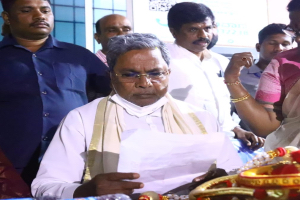
New Delhi: The Congress High Command on Friday sent a clear signal that Karnataka Chief Minister Siddaramaiah will remain in office at least until the Bihar assembly elections, scheduled for October-November this year. Both Siddaramaiah and his deputy, D K Shivakumar, a strong aspirant for the top post, left for Bangalore after meeting AICC in-charge General Secretary Randeep Singh Surjewala. Congress sources clarified that the leadership issue was not part of their discussions, which focused instead on organisational matters and pending appointments to over 60 corporations and boards in the state.
Amid swirling speculation about his removal, Siddaramaiah addressed the media with confidence, declaring there is “no vacancy” for the Chief Minister’s post. To bolster his stance, he noted that even Shivakumar, a claimant for the position, agrees with this view. Asserting his intent to complete his full five-year term, Siddaramaiah further stated he would lead the Congress in the 2028 Karnataka assembly elections. Both leaders had been camping in Delhi for three days to meet party leader Rahul Gandhi, but could not do so as Gandhi was occupied in Bihar. Sources suggest Rahul Gandhi deliberately snubbed the duo. However, Shivakumar met Priyanka Gandhi, the Wayanad MP, separately to discuss party matters in Karnataka.
Since Siddaramaiah assumed the Chief Minister’s role in May 2023, Shivakumar, who played a pivotal role in the Congress’s victory as the Pradesh Congress Committee (PCC) chief, has had to settle for the deputy chief minister post while retaining his position as PCC chief. A section of the Congress claims that in May 2023, an agreement was made for Siddaramaiah and Shivakumar to share power for two and a half years each. However, the Congress High Command has remained silent, leaving the matter unclear. Supporters of Shivakumar are vocally demanding that he be appointed the next Chief Minister. Despite Siddaramaiah enjoying majority support among the 136 Congress legislators in the 224-member assembly, a vocal group of MLAs has been running a dissident campaign in Shivakumar’s favour for the past six months.
Shivakumar, a lifelong Congressman and a resourceful leader, belongs to the dominant Vokkaliga caste and wields significant influence as both deputy chief minister and PCC chief, controlling the party organisation. In contrast, Siddaramaiah, a 78-year-old veteran who joined Congress from the Janata Dal, belongs to the OBC Kuruba caste. He previously served as a minister during the Janata Dal regime and led Karnataka as Congress Chief Minister for a full term from 2013 to 2018. At 62, Shivakumar is younger and seen as a dynamic strategist, while Siddaramaiah’s strength lies in his reputation as an experienced administrator and mass leader.
Also read: When Kharge unveils Congress’s Gandhi puppeteers!
Among the Congress’s three chief ministers, Siddaramaiah is the only OBC face, with Telangana’s Revanth Reddy and Himachal Pradesh’s Sukhwinder Sukhu belonging to upper castes. With Rahul Gandhi steering the party towards OBC, SC, and ST communities, and with Bihar’s OBC-dominated politics looming large in the upcoming polls, party insiders argue that replacing Siddaramaiah now would be a risky move. Many Congress leaders believe a leadership change could destabilise the government, especially given the threat from the BJP and the party’s past experiences with defections.
Siddaramaiah’s position has been under scrutiny since his wife was named as an alleged beneficiary in the Muda land scam. In the last two weeks, Surjewala met 104 MLAs during his visits to Karnataka and later told party leaders there was no question of changing the leadership. When pressed on a potential power-sharing arrangement, Surjewala remained non-committal. Siddaramaiah, addressing persistent questions from party members and the media, dismissed the idea of a power-sharing deal, stating, “It is natural to raise such issues when the government is completing two and a half years, but it does not mean such an arrangement exists. If such an agreement existed, I would not have said recently that I will be Chief Minister for five years.” He added that the party high command’s decision, led by Mallikarjun Kharge and Rahul Gandhi, would be final and binding, questioning whether personal opinions could override the party’s stance.
The core issue is one of stability. Congress strategists, wary of the Bharatiya Janata Party’s influence and past defections, appear keen to ensure a smooth transition without destabilising the government. For Shivakumar, giving up his ambition for the chief minister’s post at this juncture seems unlikely, presenting a classic Hobson’s choice for the Congress leadership. If the party does not accommodate Shivakumar, the consequences are uncertain. Yet, replacing Siddaramaiah could also trigger repercussions, particularly if the incumbent feels pressured to step down.
The partnership between Siddaramaiah’s administrative experience and Shivakumar’s strategic acumen was instrumental in the Congress’s electrifying victory in the 2023 elections, securing 136 seats—23 more than needed in the 224-member assembly. Party insiders acknowledge that a majority of these legislators support Siddaramaiah, though Shivakumar has a committed base of supporters within the state Congress. On Thursday in Bangalore, several key Karnataka cabinet ministers met AICC president Mallikarjun Kharge at his residence, even as Siddaramaiah and Shivakumar were in Delhi. While some ministers described it as a courtesy meeting, others admitted discussing political developments but refused to divulge details. Sources indicate that many urged Kharge to allow Siddaramaiah to continue as Chief Minister to maintain stability.
*Senior journalist