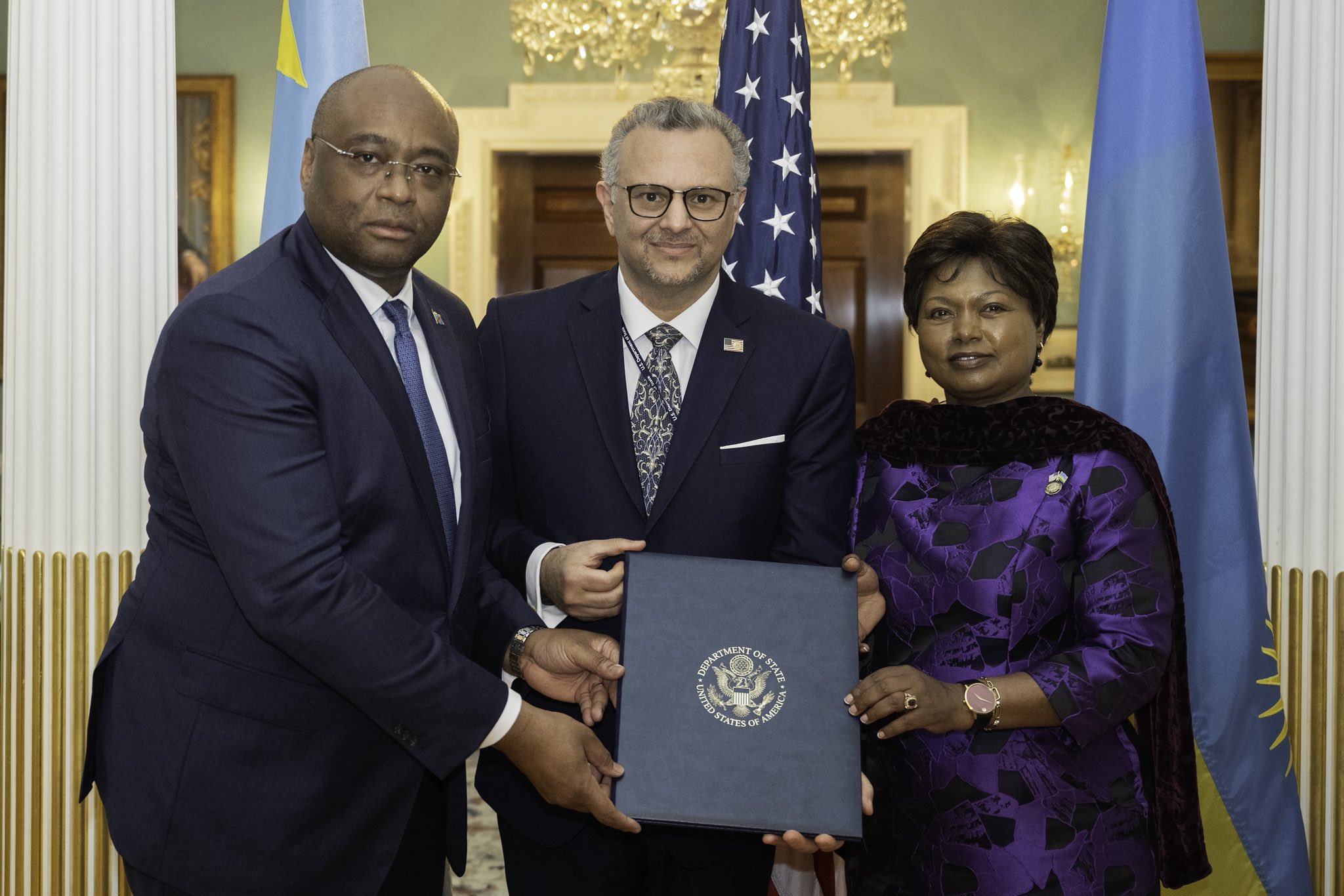
Three days of peace talks mediated by the US and Qatar in Washington resulted in the initialing of the peace agreement by delegations from the DRC and Rwanda. Photo source: @US_SrAdvisorAF|X
Washington: Technical representatives from the Democratic Republic of Congo (DRC) and the Republic of Rwanda finalised and initialled a comprehensive Peace Agreement here, under the mediation of the United States and observed by the State of Qatar on June 18, 2025.
U.S. Under Secretary for Political Affairs Allison Hooker witnessed the initialing, setting the stage for a formal Ministerial signing ceremony on June 27, 2025, to be overseen by U.S. Secretary of State Marco Rubio.
This agreement marks a significant step toward resolving a conflict rooted in decades of regional instability, particularly in the mineral-rich eastern DRC. It builds on the Declaration of Principles signed on April 25, 2025, which followed months of escalating violence driven by the Rwanda-backed March 23 Movement (M23) rebel group. The conflict, intensifying since November 2021, saw M23 capture key cities like Goma and Bukavu in early 2025, displacing over 600,000 people and causing at least 7,000 deaths, according to United Nations reports.
The roots of this unrest trace back to the 1994 Rwandan genocide, when Hutu extremists fled to eastern Zaire (now the DRC), forming militias like the Democratic Forces for the Liberation of Rwanda (FDLR). Rwanda, citing security threats from such groups, has been accused by the DRC, UN, and Western governments of supporting M23, a Tutsi-led rebel group, to counter these militias and secure economic interests in Congo’s mineral resources, including coltan, gold, and cobalt. Rwanda denies these allegations, claiming its actions are defensive.
The Peace Agreement, developed over three days of intensive negotiations, addresses critical political, security, and economic concerns. It commits both nations to respect territorial sovereignty and cease hostilities, mandates the disengagement, disarmament, and conditional integration of non-state armed groups like M23, and establishes a Joint Security Coordination Mechanism based on the Concept of Operations from October 31, 2024. It also facilitates the safe return of refugees and internally displaced persons, ensures humanitarian access, and promotes a regional economic integration framework to leverage the Great Lakes region’s resources transparently. This framework aligns with U.S. interests in securing access to critical minerals, countering China’s dominance in the region’s mining sector.
The United States and Qatar played complementary roles, with Qatar hosting parallel talks in Doha, including a March 2025 meeting between DRC President Félix Tshisekedi and Rwandan President Paul Kagame, which led to a temporary ceasefire. Both nations expressed gratitude for the mediation efforts, noting the nuanced diplomacy of U.S. advisor Massad Boulos and Qatar’s facilitation.
Despite progress, historical mistrust persists—previous peace efforts, like the 2022 Kenya talks and the 2024 Angola-mediated ceasefire, faltered due to violations and Rwanda’s alleged reluctance to withdraw troops.
The DRC’s insistence on Rwandan withdrawal and M23’s disarmament remains a sticking point, with analysts warning that economic incentives, such as Rwanda processing Congolese minerals, must be balanced with transparency to avoid fueling local discontent.
The upcoming Summit of Heads of State in Washington, D.C., aims to solidify commitments to peace, stability, and prosperity in the Great Lakes region, building on the African Union’s and UN’s calls for respecting DRC’s sovereignty and ending support for armed groups. The success of this agreement hinges on both parties’ political will and international oversight to ensure implementation.
– global bihari bureau