Toxic Himalayan Clouds Raise Cancer Risk Alarm
Kolkata: Clouds over the Eastern Himalayas and Western Ghats carry toxic heavy metals, challenging the belief that mountain precipitation is pristine and raising serious health concerns for high-altitude communities, a study by the Bose Institute, published in Environmental Advances, has revealed. However, despite these concerns, the study notes that Indian clouds are relatively less polluted than those in China, Pakistan, Italy, and the United States of America, placing India in a safer health zone for now.
The research, conducted by an autonomous institute under the Department of Science and Technology, found that clouds transport pollutants from lowland areas, potentially causing cancer and developmental disorders through inhalation, skin contact, and consumption of contaminated rainwater.
The research team, led by Dr. Sanat Kumar Das, Associate Professor at Bose Institute, examined non-precipitating clouds during the onset of monsoon over the Eastern Himalayas and Western Ghats, addressing a lack of prior data on metal contamination in India’s low-level clouds, particularly during late summer and early monsoon periods.
The study identified toxic metals, including cadmium (Cd), chromium (Cr), copper (Cu), and zinc (Zn), in these clouds, with Eastern Himalayan clouds showing 1.5 times higher pollution levels due to a 40-60% higher loading of cadmium, copper, and zinc, emitted from heavy traffic and industrial emissions in foothill regions, contributing to high health risk factors from carcinogenic diseases.
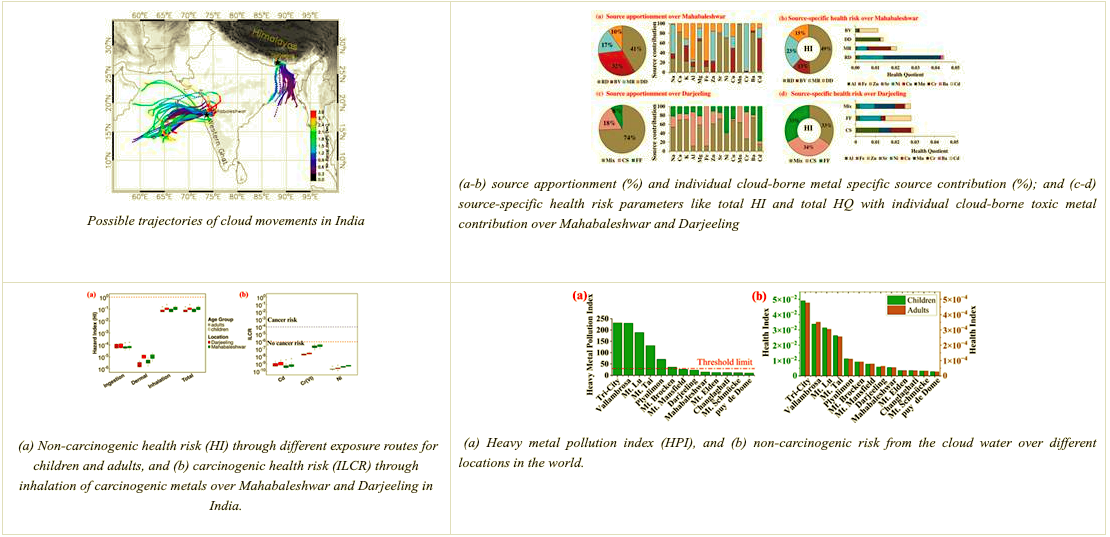 Using statistical models, the team pinpointed the sources of these metals to vehicular and industrial emissions carried via continental long-range transport. Inhalation of polluted clouds was identified as the primary route for non-carcinogenic health risks, particularly from cadmium, copper, and zinc, while inhalation of dissolved chromium was linked to increased carcinogenic risks. Children face a 30% higher risk from these metals compared to adults, with additional dangers from ingestion and dermal absorption of contaminated precipitation water in high-altitude regions. Clouds act as a transport medium, carrying dissolved heavy metals and threatening fragile Himalayan ecosystems.
The findings highlight the need for further research on atmospheric pollution and its public health impacts, particularly in vulnerable high-altitude ecosystems, and call for studies on metal contamination in low-level clouds to mitigate associated health risks.
– global bihari bureau