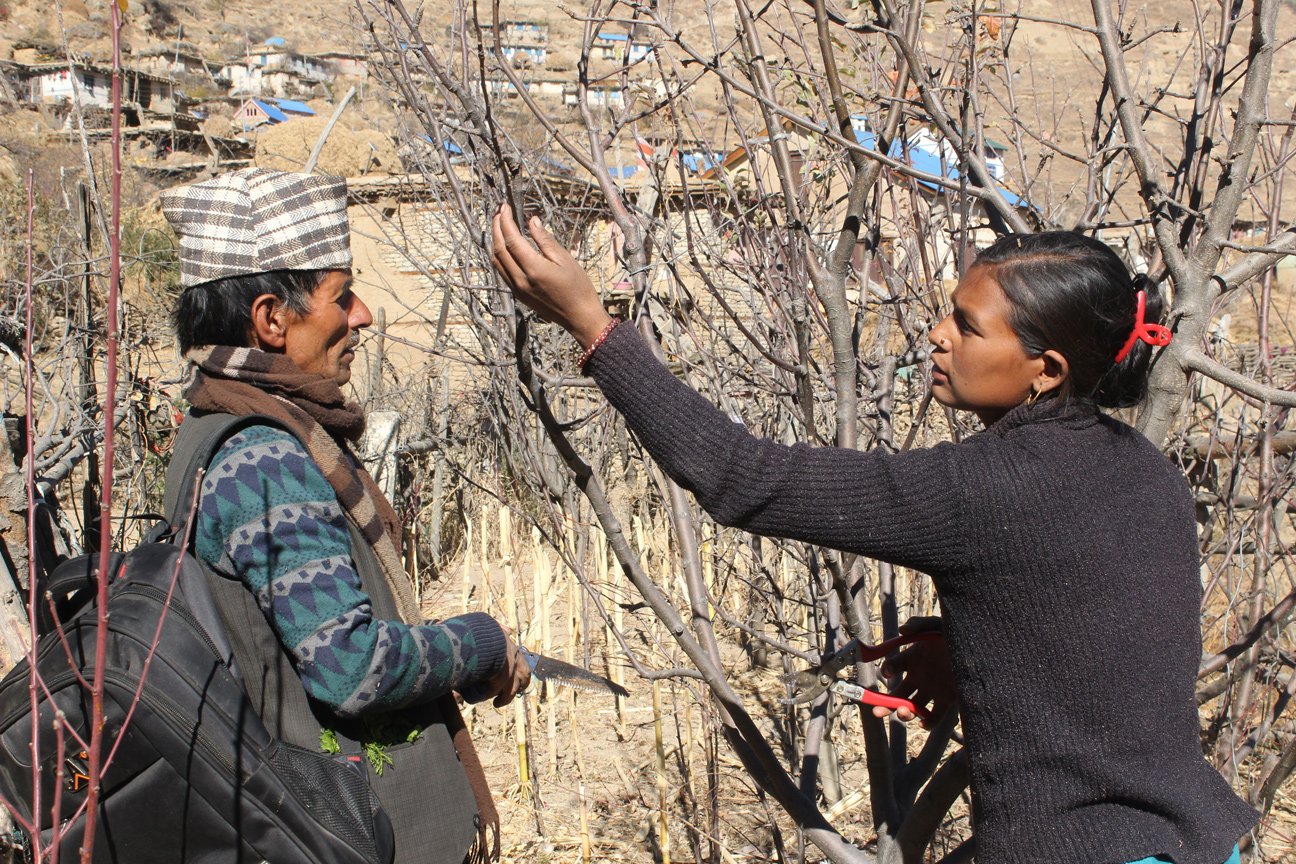
The techniques Indira Rawat has learned have increased her farm’s production and their family income. The stronger agricultural base has begun to shift her husband’s migration pattern, departing later and returning earlier. ©FAO/ Punkeshwar Bham
Highland Apples and Veggies: A Path to Staying Put
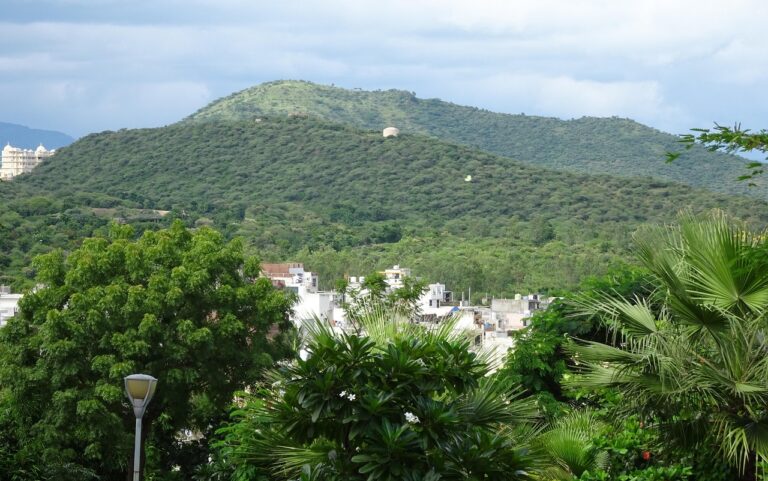
In the remote highlands of Nepal’s Karnali Province, where water scarcity and unpredictable weather have long pushed families toward seasonal migration, a quiet transformation is taking root. Villages like Raralihi in Jumla District—among the country’s driest and most climate-vulnerable areas—offer a glimpse of how practical, community-driven adaptations can help people stay connected to their land and homes.
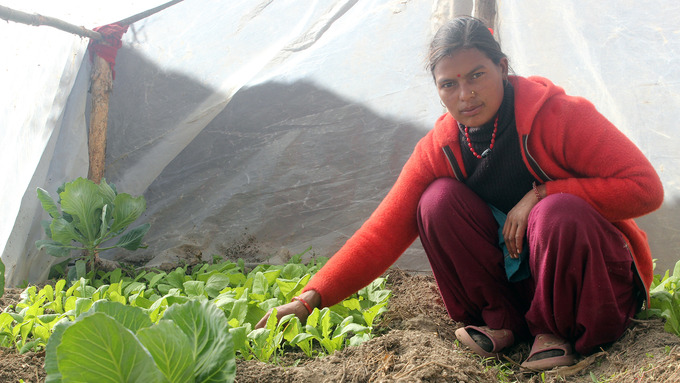
At the heart of this shift is 23-year-old Indira Rawat, whose life reflects the familiar cycle many families endure. For years, her 25-year-old husband, Man Bahadur Rawat, would leave each winter for temporary work in India, driven by the need to supplement income from their small farm. Traditional crops like beans, vegetables, and apples could no longer reliably cover household expenses amid worsening conditions. While he was away, Indira shouldered the responsibilities at home: tending the plots, caring for their two young children—a four-year-old son who walks to the nearby school each morning and a three-year-old daughter who stays close by—and supporting her mother-in-law.
The challenges in Raralihi stem from profound climate shifts. Erratic monsoon rains have fueled diseases like rust in bean crops, slashing yields. Reduced snowfall has shortened the essential chilling periods for apple trees, leading to poorer fruit set. Warmer summers have introduced new pests, such as thrips and tent caterpillars, that ravage orchards and vegetable fields already strained by limited water.
Recognising these pressures, the Food and Agriculture Organization of the United Nations (FAO), in partnership with the Karnali Integrated Rural Development and Research Centre (KIRDARC), launched community-based initiatives to build resilience. Through Farmer Field Schools (FFS), farmers receive hands-on training tailored to local conditions, empowering them to adapt rather than abandon their land.
Indira seized this opportunity when the project reached her village. Eager to bolster the farm and reduce dependence on her husband’s remittances from abroad, she enrolled in the FFS. The sessions introduced practical techniques: preparing compost from available materials, applying bio-fertilisers and bio-pesticides like Jholmal and neem-based solutions, harnessing beneficial microorganisms, and refining apple orchard management. She also embraced simpler innovations, such as turning rainy-season weeds into nutrient-rich compost and planting vegetables in properly spaced rows for better growth and yields.
These changes yielded tangible results. Her orchard grew healthier, vegetable production rose, and the family’s overall income improved—enough to ease the pull of migration. As secretary of the 25-member FFS group (comprising 12 men and 13 women), Indira gained confidence in voicing ideas during discussions. Yet adoption wasn’t without hurdles. Family members initially doubted her methods—questioning why she “wasted” land with wider spacing or applied 50 kilograms of farmyard manure to just one apple tree instead of spreading it thinly across fields.
Time proved the value of these approaches. The manure ring technique conserved soil moisture and fortified trees against stress, boosting apple harvests. Bio-pesticides curbed pests and diseases effectively in both orchards and vegetable patches. Soon, group members replicated successes through collective efforts, like joint compost preparation and shared manure application on communal plots.
Marketing remains arduous: farmers haul produce in traditional bamboo baskets (doko) along steep mountain trails to reach buyers in Raralihi and nearby Nagma. Still, higher yields translate to better earnings. Indira now affords her children’s education, meets daily needs, and contributes to a village savings group supported by the project.
The ripple effects extend to her husband’s migration. In recent seasons, he has delayed departures to join apple pruning sessions and returned sooner to help with vegetable cultivation, orchard maintenance, and sales. As farm income grows, his time abroad has begun to shorten noticeably.
Persistent obstacles linger. Droughts restrict irrigation, fragmented landholdings hinder scaling up, erratic rains and new pests threaten consistency, and Indira bears heavy loads—farming, household duties, and childcare—during his absences.
Undeterred, she presses forward with ambitions to expand vegetable plots, refine resilient practices, and forge greater household stability. Her vision includes quality schooling for her children and longer stretches with her husband at home, farming side by side.
Through targeted training from FAO and KIRDARC, blended with local determination, families across Nepal’s highlands are fortifying their livelihoods. These efforts not only counter climate threats but also ease the forces driving migration, offering rooted futures in places long shaped by departure.
Source: The FAO News And Media Office, Rome
– global bihari bureau