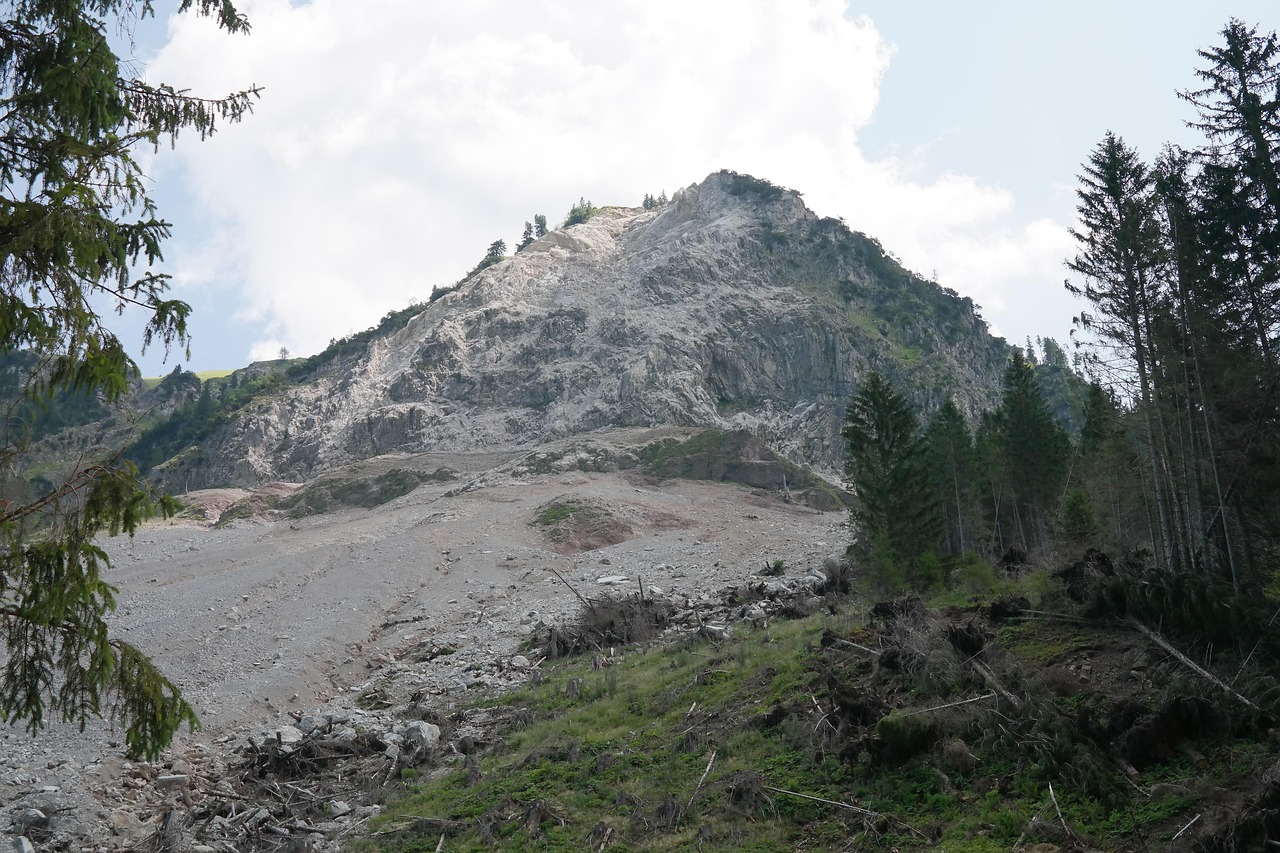
Landslide during the monsoon in India
2024 Heat Worsens India’s Flood Nightmare
No Relief as Water Crises Slam India, Globe
Geneva: With no respite in sight for the escalating devastation caused by water-related emergencies, the United Nations World Meteorological Organization (WMO) has warned that climate change is intensifying pressure on global water resources, severely impacting lives and livelihoods worldwide, including in India, where erratic monsoons have triggered unexpected flooding and landslides.
In its newly released 2024 State of Global Water Resources report, the agency detailed how 2024 marked the hottest year in 175 years of observations, with the annual mean surface temperature reaching 1.55 degrees Celsius above the pre-industrial baseline of 1850–1900. This warming has fueled a surge in extreme weather events, from devastating monsoon floods in Pakistan, South Sudan, and northern India to deadly flash-floods in Bali, Indonesia, amplifying the unpredictability and severity of water-related hazards across the globe, with India’s regions like Himachal Pradesh and Jammu and Kashmir facing particularly disruptive rainfall patterns.
WMO Secretary-General Celeste Saulo emphasised the relentless nature of these crises, stating, “Water-related hazards continue to cause major devastation this year,” citing examples like the floods in Pakistan, South Sudan, Bali, and northern India, and noting, “Unfortunately, we see no end to this trend.” The report highlighted how warmer air temperatures, which allow the atmosphere to hold more water, are resulting in heavier rainfall and more intense flooding events. In India, this unpredictability was starkly evident in Himachal Pradesh and Jammu and Kashmir, where the monsoon arrived earlier than anticipated, causing extremely heavy rainfall that disrupted communities and infrastructure. WMO Scientific Officer Sulagna Mishra underscored this shift, stating, “The region saw extremely heavy rainfall when it was not expected; the monsoon came early,” highlighting the growing instability of India’s critical monsoon system, a lifeline for agriculture and water security.
The report documented other global impacts of the erratic water cycle, including catastrophic flash-floods in central and eastern Europe from Storm Boris in September 2024, which uprooted tens of thousands. Stefan Uhlenbrook, WMO Director of Hydrology, Water and Cryosphere Division, pointed to the Czech Republic, where rivers experienced extreme flood events statistically expected only once every 100 years, adding that “statistics show that these extreme events might come even more frequently,” challenging the notion that such “century events” remain rare. In India, the early and intense monsoon rains in northern regions like Himachal Pradesh and Jammu and Kashmir mirrored this trend, signalling a broader destabilisation of traditional weather patterns critical to the country’s economy and food security.
The WMO report traced the lingering effects of the pronounced 2023 El Niño phenomenon, which contributed to severe drought in the Amazon basin, northwest Mexico, northern North America, and southern and southeastern Africa in early 2024. Saulo clarified that while “El Niño at the start of 2024 played a role,” the broader driver is “scientific evidence [that] shows that our changing climate and rising temperatures lead to more extreme events, both droughts and floods.” In contrast, wetter-than-normal conditions prevailed in 2024 across central-western Africa, Lake Victoria in Africa, Kazakhstan, southern Russia, central Europe, Pakistan, northern India, southern Iran, and north-eastern China, with northern India’s excessive rainfall aligning with this pattern of intensified precipitation.
Glaciers Melt, Threatening India’s Coasts
The WMO stressed the interconnectedness of the global water cycle, with Mishra explaining that impacts in one region ripple globally. “It’s not local,” she insisted, noting that “the impact of melting glaciers in the Arctic…[is] impacting the monsoons through the large circulation patterns. It is impacting the monsoon in Asia, or we see hurricanes in the Pacific, and we know through studies that these are all connected.” For India, this means Arctic glacier melt directly influences the monsoon system, critical for the livelihoods of millions reliant on agriculture. The report highlighted 2024 as the third consecutive year of widespread glacial retreat, with glaciers losing 450 gigatonnes of mass, equivalent to a seven-kilometre cube of ice or 180 million Olympic swimming pools, contributing approximately 1.2 millimetres to global sea level rise. Saulo described this as “a huge block of ice seven kilometres in height, seven kilometres wide and seven kilometres deep,” emphasising its threat to coastal communities, including India’s densely populated coastal regions like those in West Bengal and Tamil Nadu, where rising sea levels heighten flood risks.
The report also identified significant gaps in monitoring critical water parameters, including streamflow, groundwater, soil moisture, and water quality, which are heavily under-monitored globally, including in India, where such data is vital for managing monsoon-dependent water resources. As a flagship WMO product, the 2024 State of Global Water Resources report provides a comprehensive overview of available water resources worldwide, enabling assessments of their status and trends. It calls for increased investment, enhanced international collaboration, improved monitoring systems, and better data-sharing to strengthen early warning mechanisms. The WMO emphasised that improved data-sharing on streamflow, groundwater, soil moisture, and water quality is critical to addressing the growing unpredictability of water systems, particularly in monsoon-reliant countries like India, where early warnings could mitigate the impacts of floods and droughts.
The WMO’s findings paint a stark picture of a world grappling with an increasingly volatile water cycle, driven by climate change and marked by extreme droughts and floods, with India facing heightened risks due to its dependence on stable monsoon patterns. The agency’s urgent call for action underscores the need for global cooperation to enhance resilience, improve monitoring, and address the root causes of these escalating water-related emergencies. For India, the stakes are particularly high, as erratic monsoons threaten agriculture, water security, and coastal communities, necessitating robust national and international efforts to safeguard resources and protect vulnerable populations.
– global bihari bureau