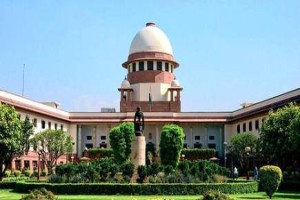
Supreme Court of India
 By G Krishna Mohan Rao*
New Delhi: This week, after the Supreme Court collegium interviewed at least 50 candidates on July 1 and 2, 2025, its new approach to high court judge appointments is proving effective, setting a record for the highest number of face-to-face interactions in one go and prioritizing personality assessment over paper credentials to ensure judges’ temperament and suitability.
People familiar with the development said the collegium, led by Chief Justice of India (CJI) Bhushan Ramkrishna Gavai with Justices Surya Kant and Vikram Nath, opted for these extensive one-on-one interactions “over and above” the conventional vetting process that typically involves reviewing judicial performance, seeking Intelligence Bureau inputs, and considering the views of the chief minister, governor, and the Department of Justice under the Law Ministry.
The interviews, aimed at addressing recent judicial conduct concerns, targeted candidates for high courts in Madhya Pradesh, Punjab, Haryana, Bihar, Telangana, Andhra Pradesh, Rajasthan, and other states. This significant exercise took place during the Supreme Court’s traditional summer recess, making its scale particularly notable, as CJI Gavai rebranded the period as “partial court working days” from May 26 to July 13, 2025. During this time, two or three benches, including those led by the CJI, heard several matters during the last week of May and continue to function five days a week to hear urgent and regular matters, while judges also write detailed judgments and prepare for upcoming cases.
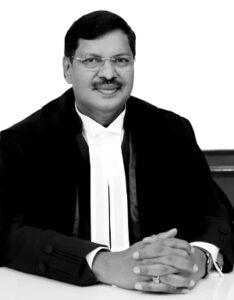
For one thing, there seems to be a kind of judicial activism, ever since the second Dalit and first Buddhist Chief Justice, Gavai, took charge on May 14, 2025, to keep up institutional momentum.
Last week, in an interview with a leading newspaper at his native place, Nagpur, Gavai spoke of his agenda before he retires in November 2025. He said his focus remains on reducing over 81,000 pending cases in the Supreme Court and improving infrastructure in rural courts. While stressing that he would not accept any post-retirement assignments as a matter of principle, Gavai made it clear that there is an urgent need to apply the “creamy layer” principle within SC/ST officers on a par with those from truly disadvantaged families. “Treating children of high-ranking SC/ST officers on a par with those from truly poorer sections dilutes the concept of social justice. Identifying the creamy layer ensures benefits reach the most deserving,” he said. Gavai authored nearly 300 judgments, including landmark rulings on Article 370, electoral bonds, and demonetization.
Chief Justice Gavai warned against judicial overreach. “Judicial activism will stay, but it should not become judicial adventurism or judicial terrorism. Parliament enacts laws, the executive implements them, and the judiciary ensures constitutional compliance. Overstepping disturbs this balance,” he said. “The Constitution is not just a legal document, it is a tool for social transformation.”
The collegium’s interview model, revived late last year under then-CJI Sanjiv Khanna, was a response to growing concerns around judicial conduct and suitability, especially in the wake of a controversy involving Justice Shekar Kumar Yadav of the Allahabad High Court. His inflammatory remarks targeting the Muslim community and invoking majoritarian themes at a Vishva Hindu Parishad event in December 2024 drew widespread condemnation for violating the principles of secularism and judicial impartiality. At that time, the collegium, which included Justices Gavai and Kant, had signalled the need for a more direct and holistic understanding of judges’ temperaments and outlooks, beyond what could be gleaned from service records or intelligence inputs.
The latest round of interactions, which are broader in scale and ambition, cements the personal interview model as a key feature of the collegium’s new approach. It also follows a controversy involving a sitting high court judge, Justice Yashwant Varma, who is battling allegations of a cash haul from his residence in Delhi in March 2025. On May 5, 2025, a three-member in-house enquiry committee submitted its report confirming that cash was indeed found at the residence of Justice Varma, who was then a Delhi High Court judge. This cash was kept in a storeroom where a fire broke out on March 14, 2025, following which fire service officials and police, engaged in dousing the flames, discovered half-burnt currency notes stacked in a sack. The then-CJI, Sanjiv Khanna, initiated the process for the removal of Justice Varma by writing to President Droupadi Murmu and Prime Minister Narendra Modi, stating that the allegations were serious and warranted the initiation of proceedings for his removal under the Constitution.
All said and done, this new approach is being welcomed by all, because the potential judges of the High Courts and senior judicial officers were asked wide-ranging questions to gauge their understanding of constitutional values, views on pressing legal issues, and their sense of ethics and institutional responsibility.
A senior lawyer of the Supreme Court Bar Council observed that these interviews are not binding, but they provide the collegium with valuable qualitative insight. Further, the senior judges’ involvement in candidates’ assessment shows the judiciary’s evolving approach to appointments, emphasizing integrity, personality, and balance, in addition to seniority and merit.