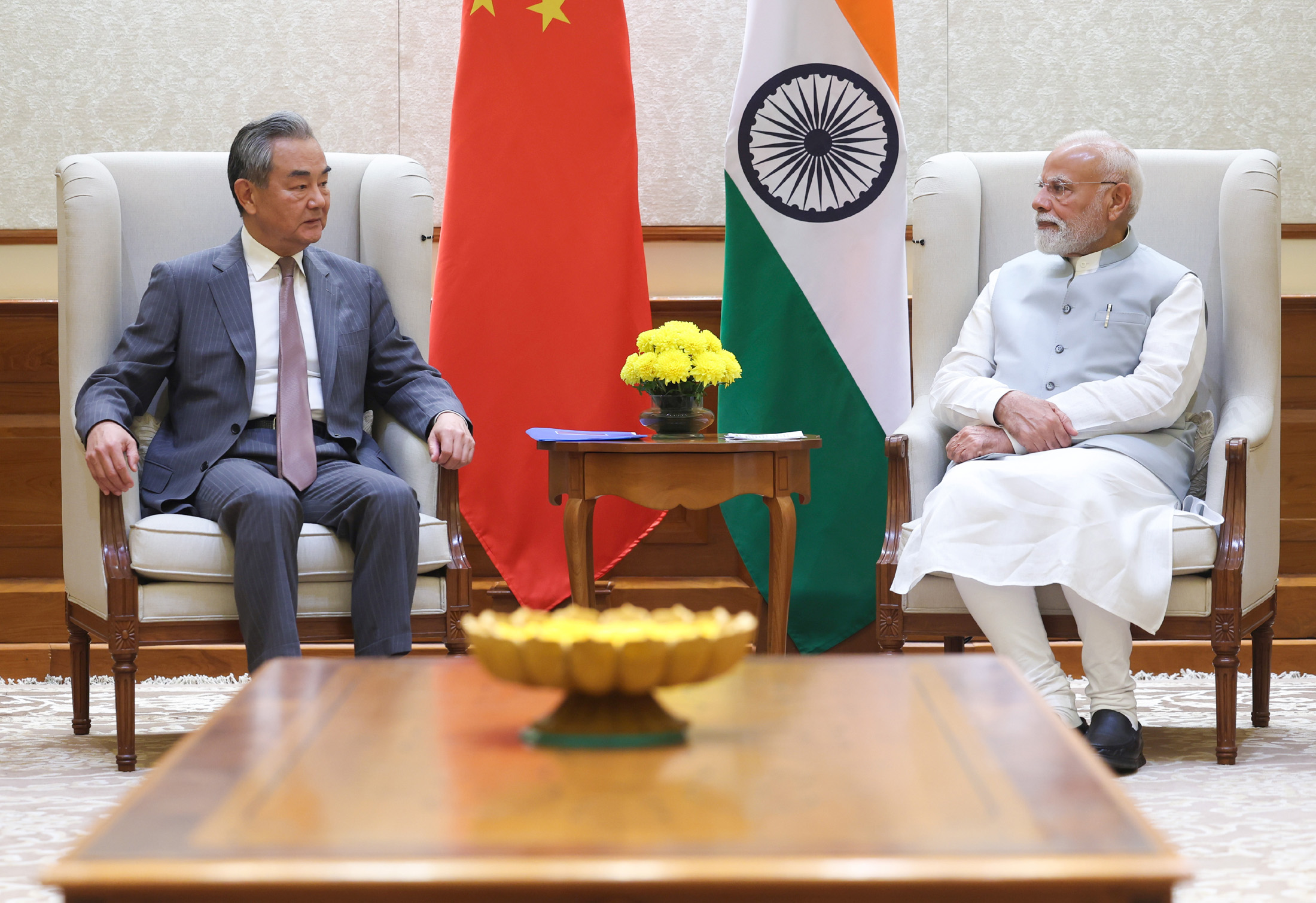
Chinese Foreign Minister Wang Yi calls on the Prime Minister Narendra Modi in New Delhi on August 19, 2025.

Wang Treads India-Pak Tightrope Amid US Trade Storm
New Delhi: As global markets reel from U.S. tariff shocks and Asia’s fault lines simmer, Chinese Foreign Minister Wang Yi’s whirlwind tour through India and Pakistan from August 18 to 22, 2025, laid bare the fragile promise of India-China détente.
In New Delhi, wrapping up a two-day visit on August 19, Wang engaged Prime Minister Narendra Modi, National Security Adviser Ajit Doval, and External Affairs Minister Dr. Subrahmanyam Jaishankar to stabilise ties scarred by the 2020 Galwan Valley clash, building on last October’s Kazan summit with Chinese President Xi Jinping.
Wang delivered an invitation from President Xi for Modi to attend the Shanghai Cooperation Organisation (SCO) Summit in Tianjin on August 31–September 1, which Modi accepted, expressing support for China’s SCO Presidency and anticipation for another meeting with Xi. Both countries committed to supporting each other’s diplomatic events, with China backing India’s 2026 BRICS Summit and India endorsing China’s 2027 edition. India firmly raised the issue of terrorism, emphasising cross-border threats and the SCO’s anti-terrorism roots; Wang agreed that countering terrorism is a priority. On Taiwan, China reiterated its stance, while India clarified that its economic, technological, and cultural ties with Taiwan—paralleling China’s own engagements—remain unchanged.
The India leg centred on restoring peace along the Line of Actual Control, the rugged border where 2020 clashes had plunged bilateral trust to a nadir. Modi told Wang that tranquillity in these frontier zones is the cornerstone of broader ties, reaffirming India’s commitment to a fair, reasonable, and mutually acceptable resolution of the boundary question.
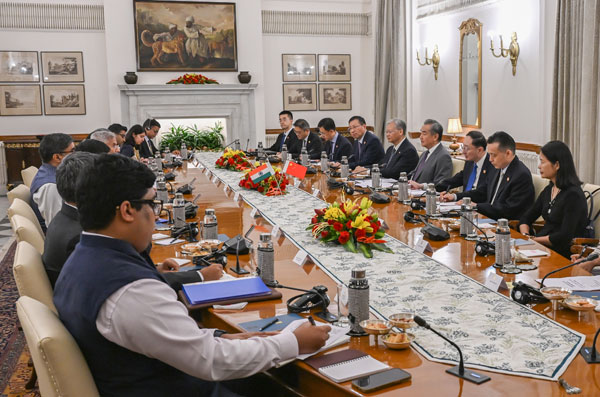
This urgency shaped the 24th round of the Special Representatives’ dialogue on August 19, co-chaired by Wang and Doval, which advanced progress from the 23rd round in Beijing last December. Both sides noted sustained calm in border areas and agreed to approach the issue with a political lens, guided by the 2005 Agreement on Political Parameters and Guiding Principles for Settlement of the India-China Boundary Question. They established an Expert Group under the Working Mechanism for Consultation and Coordination on India-China Border Affairs to explore early delimitation in less contentious areas and a Working Group to strengthen border management. New General Level Mechanisms were proposed for the Eastern and Middle Sectors, complementing the existing Western Sector framework, with an early meeting planned for the latter. Diplomatic and military channels were tasked with defining de-escalation principles, and the next round of talks was set for China at a mutually convenient time, signalling a structured approach to defusing tensions.
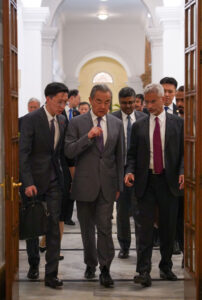
Wang’s talks with Jaishankar on August 18 focused on reviving economic and cultural ties, acknowledging that stable relations are critical for both nations’ development. Guided by mutual respect, mutual sensitivity, and mutual interest—Jaishankar’s “three mutuals”—they agreed to resume direct flights between mainland China and India, update their Air Services Agreement, and ease visas for tourists, businesses, and media. The resumption of the Kailash Mansarovar Yatra, enabling Indian pilgrims to visit Mount Kailash (Gang Renpoche) and Lake Mansarovar (Mapam Yun Tso) in China’s Tibet Autonomous Region, was hailed as a cultural bridge, with plans to expand its scale from 2026. Border trade was set to restart through Lipulekh Pass, Shipki La Pass, and Nathu La Pass, promising economic gains.
India raised concerns about China’s mega dam projects on the Yarlung Tsangpo, known as the Brahmaputra River, securing commitments to enhance transparency via the Expert Level Mechanism on Trans-border Rivers, maintain dialogue on renewing relevant agreements, and share hydrological data during emergencies on humanitarian grounds. Both nations pledged to facilitate trade and investment, plan events for the 75th anniversary of diplomatic relations in 2025, and hold the Third Meeting of the India-China High-level Mechanism on People-to-People Exchanges in India in 2026.
These engagements reflect a determined effort to move beyond the 2020 Galwan low, prioritising border peace to unlock trade—valued at roughly $100 billion annually despite tensions—and cultural exchanges rooted in shared heritage.
Wang’s immediate pivot to Pakistan, however, casts a shadow over India-China progress. From August 20 to 22, he would be meeting Pakistani leaders, including Dar, to deepen the “All-Weather Strategic Cooperative Partnership,” building on exchanges like Prime Minister Shehbaz Sharif’s China visit in June 2024 and President Asif Ali Zardari’s attendance at the Ninth Asian Winter Games in February 2025. The talks focus on strategic communication, practical cooperation, and international coordination, aiming to advance a closer bilateral community.
India’s concerns, voiced pointedly by Jaishankar during Wang’s visit, centred on cross-border terrorism, a clear reference to Pakistan’s role, given China’s deep defence and diplomatic ties with Islamabad. Hence, Wang’s swift pivot to Islamabad for the sixth China-Pakistan Foreign Ministers’ Strategic Dialogue with Deputy Prime Minister Mohammad Ishaq Dar is likely to sharpen India’s concerns about cross-border terrorism, testing Beijing’s sincerity.
Chinese Foreign Ministry spokesperson Mao Ning stressed in Beijing, China’s intent to maintain friendly cooperation with both nations and play a constructive role in their disputes. Yet, Wang’s Pakistan visit highlights a strategic duality that challenges India’s trust. Beijing’s deepening ties with Pakistan, a key ally on issues like Kashmir, risk reinforcing India’s perception that China’s regional strategy may indirectly enable the cross-border threats India seeks to counter, potentially stalling deeper bilateral confidence. India’s emphasis on combating terrorism in all forms, particularly in the SCO context, signals scepticism about China’s neutrality, given its strategic alignment with Pakistan, which India views as a facilitator of cross-border threats.
The takeaways are clear but layered. On the border, new mechanisms like the Expert and Working Groups provide a roadmap for incremental progress, potentially easing tensions in less disputed areas while managing hotspots through enhanced coordination. Economically, resumed flights, pilgrimages, and border trade could counter post-pandemic disruptions, fostering business and tourism, while hydrological transparency addresses India’s water security concerns. Culturally, initiatives like the Kailash Mansarovar Yatra strengthen people-to-people bonds. Multilaterally, India and China’s alignment within the SCO and BRICS amplifies their influence as developing powers, advocating for a rules-based trading system centred on the World Trade Organization (WTO). Yet, China’s Pakistan engagement tempers these gains, as India’s terrorism concerns highlight a trust deficit that could hinder progress unless addressed through tangible steps.
Globally, the visits gain urgency amid U.S. trade unpredictability. The Trump administration’s 50% tariffs on Indian imports, effective August 7, 2025, citing trade imbalances and India’s energy ties with Russia, have strained U.S.-India relations. A 90-day U.S.-China trade truce has paused duties up to 145% on Chinese goods, though adjustments to tariffs and transhipment penalties persist. Wang’s critique of U.S. “unilateralism and bullying acts” aligns with India’s concerns over economic instability, positioning their cooperation as a buffer against supply chain disruptions. By championing a multipolar world and multilateralism, India and China aim to stabilise Asia and advocate for developing nations, potentially mitigating transatlantic trade frictions.
In a world marking the United Nations’ 80th anniversary and calling for reformed multilateralism, Wang’s dual visits signal a pivotal moment. India and China’s pursuit of stable ties offers a path to anchor Asian stability and drive mutual development, but China’s deepening partnership with Pakistan tests this vision. Only through sustained dialogue and concrete actions to address India’s terrorism concerns can both nations forge a partnership that shapes a balanced Indo-Pacific future.
*Senior journalist