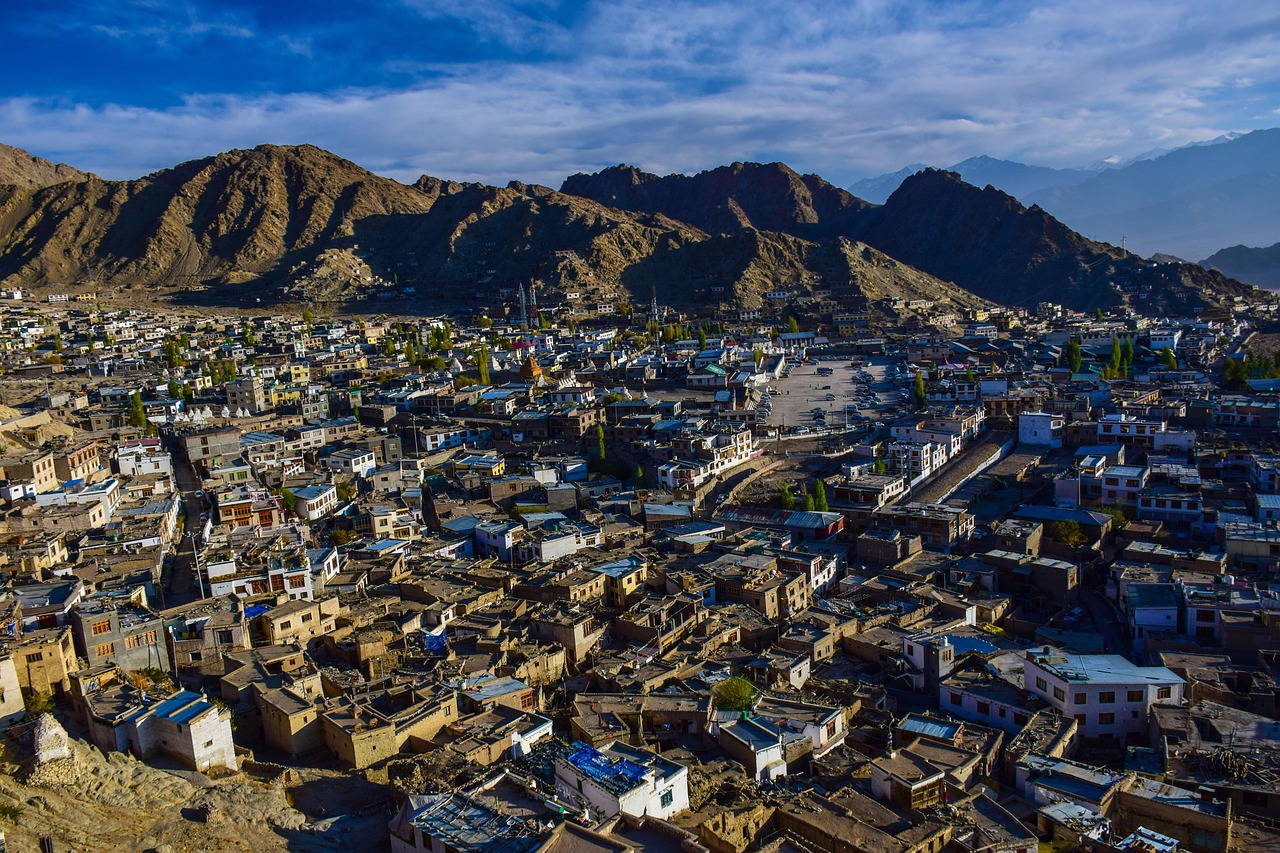
Leh, Ladakh
MHA Reaffirms Engagement With Leh, Kargil
New Delhi: Within hours after the Leh Apex Body announced it was suspending talks with the Centre until normalcy returns, the Ministry of Home Affairs today swung into action, reiterating its commitment to dialogue with Ladakh stakeholders, including the Apex Body Leh (ABL) and the Kargil Democratic Alliance (KDA). The statement emphasised that discussions through the High Powered Committee (HPC) on Ladakh and other forums remain open at any time to address regional concerns.
The release comes against the backdrop of violent protests in Leh on September 24, 2025, which left four civilians dead and dozens injured. Security forces imposed a curfew, suspended mobile internet in Leh and Kargil, and deployed additional personnel after demonstrators, including youth groups, torched offices of the Bharatiya Janata Party and police vehicles. Reports indicate over 70 civilians and 17 Central Reserve Police Force personnel sustained injuries from tear gas, baton charges, and live fire.
As curfews persist into their sixth day, the tourism industry in Ladakh, on which half the population of the UT is dependent, has taken a hit. Figures show that the tourism industry accounts for more than 60 per cent of the total revenue generated in Ladakh. The government’s emphasis on structured engagement and the High Powered Committee is viewed as crucial to preventing further unrest and ensuring stability in the strategically sensitive Himalayan region.
The unrest was sparked by long-standing demands for statehood and inclusion under the Sixth Schedule of the Constitution to safeguard land, jobs, and cultural rights in the Buddhist-Muslim enclave of Ladakh, which lost regional autonomy when it was carved out of Jammu and Kashmir in 2019.
The protests coincided with the arrest of Sonam Wangchuk, a 59-year-old climate activist and founder of the Students’ Educational and Cultural Movement of Ladakh, who had been on a 14-day hunger strike since September 10, pressing for these demands. Wangchuk ended his fast after the clashes but denied accusations that he incited the unrest through “provocative” speeches referencing the Arab Spring and youth protests in Nepal. Authorities invoked the National Security Act against him on September 26, revoked his NGO’s Foreign Contribution Regulation Act license for alleged financial irregularities, and transferred him to Jodhpur jail under 24-hour surveillance.
Ladakh’s Director General of Police, S.D. Singh Jamwal defended the detention, asserting that it prevented further escalation and that investigations were exploring possible foreign links, including with Pakistan.
The Home Ministry highlighted that prior engagements through the HPC had yielded tangible results: increasing Scheduled Tribe reservations from 45% to 84%, reserving one-third of seats for women in the Ladakh Autonomous Hill Development Councils (LAHDCs), recognising Bhoti and Purgi as official languages, and initiating recruitment for 1,800 government positions. The statement expressed confidence that ongoing dialogues, including a High-Powered Committee meeting scheduled for October 6, would address remaining issues.
Media reports and analyst assessments following the violence have drawn attention to the underlying causes of the unrest, including employment shortages, concerns over land rights, and perceived delays in fulfilling promises since Ladakh became a Union Territory. International outlets such as Reuters and The New York Times described the protests as a “Gen Z revolution” reflecting youth frustrations, while Al Jazeera and The Guardian highlighted Wangchuk’s detention as part of a broader crackdown on dissent under Prime Minister Narendra Modi’s administration. Security analysts have cautioned that localised unrest could exacerbate border tensions given Ladakh’s strategic location near China and Pakistan.
Political commentators, including Ladakh MP Haji Hanifa, criticised Wangchuk’s detention if it was based solely on peaceful activism, urging his release and calling for inclusive talks with all stakeholders. Local leaders conveyed mixed reactions: Leh Apex Body Chairman Thupstan Chhewang welcomed the government’s dialogue overture but insisted on restoring peace first, while Kargil Democratic Alliance member Sajjad Kargili demanded Wangchuk’s unconditional release and labelled statehood demands non-negotiable.
Supporters organised candlelight vigils in New Delhi, while online discourse on platforms like X amplified calls for justice. Some users circulated allegations of political motives behind the arrest, as well as unverified claims, including doctored videos, further intensifying debate.
The episode has renewed focus on Ladakh’s development path, with calls for accelerated infrastructure projects, job creation, and protection of cultural heritage tied to national schemes. Analysts note that effective engagement and resolution in Ladakh could serve as a governance model for other remote regions, while mismanagement risks alienating a population that initially supported the 2019 territorial changes.
Authorities have confirmed that recruitment for 1,800 government positions in the UT of Ladakh has begun, demonstrating the tangible benefits of prior discussions. The Ministry reiterated that it remains open to continuous dialogue with ABL and KDA to address lingering concerns, aiming for a de-escalation of tensions through consultative mechanisms.
– global bihari bureau