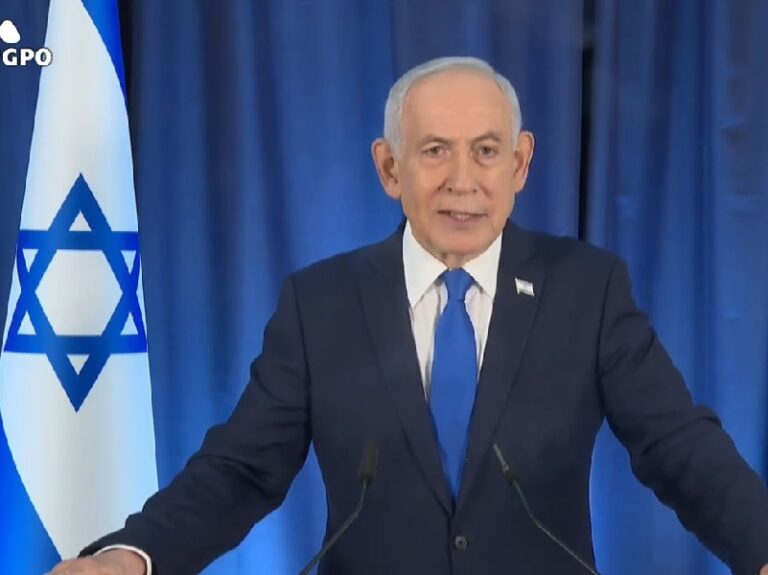


The U.S. imposition of sanctions on Francesca Albanese, United Nations Special Rapporteur on the occupied Palestinian territories, over her tweets criticising European nations for allowing Israeli Prime Minister Benjamin Netanyahu’s plane to use their airspace has sparked a global debate on the neutrality of UN rapporteurs.
Announced on July 9, 2025, the sanctions, including asset freezes and visa restrictions, accuse Albanese of engaging in a “campaign of political and economic warfare” against the U.S. and Israel, particularly through her support for International Criminal Court (ICC) actions. “Her actions, including those tweets, cross a line,” spokesperson Tammy Bruce said in Washington on July 10, referencing Albanese’s July 9 posts questioning Italy, France, and Greece’s compliance with the Rome Statute. When asked why the U.S. targeted Albanese specifically, Bruce responded, “She’s not just reporting; she’s pushing an agenda that undermines our interests and those of our allies”. Bruce further elaborated, “The United States has made it very clear that we will take whatever actions we deem necessary to protect our sovereignty and the sovereignty of our allies from illegitimate actions by the ICC. Francesca Albanese has abused her position as a UN Special Rapporteur to pursue an illegitimate campaign of political and economic warfare, including against American companies, and we’ve taken appropriate action under Executive Order 14203”.
Albanese’s tweets followed her report naming 48 companies, including U.S. firms, as complicit in Israel’s Gaza operations, prompting accusations of bias from Secretary of State Marco Rubio, who called her actions “unabashed antisemitism”. However, Albanese defends her actions as part of her mandate to monitor compliance with international law, arguing that her tweets raised a legitimate technical issue about European nations’ obligations under the Rome Statute to enforce ICC warrants.
On July 11, 2025, speaking in Slovenia, Albanese dismissed the sanctions as “calculated to weaken my mission,” vowing to continue documenting human rights violations.
During the U.S. State Department briefing, a reporter challenged Bruce on whether Albanese’s technical questions about airspace violated her role, to which Bruce replied, “It’s not just about technicalities; it’s the pattern of targeting our allies and pushing for actions that destabilise rather than inform”. Amnesty International’s Agnès Callamard condemned the sanctions as a “shameless attack” on international justice, arguing they threaten rapporteurs’ ability to address legal obligations fearlessly. Bruce countered concerns about UN independence, stating, “We’re not targeting the UN as a whole, but specific actions that go beyond reporting and into advocacy that harms our interests and our allies’ security”.
The debate over rapporteur neutrality is not new. Myanmar’s military junta has repeatedly barred UN Special Rapporteur Thomas Andrews from entering the country, accusing him of bias for documenting junta atrocities since the 2021 coup. A 2023 report by Andrews detailed extrajudicial killings and airstrikes, prompting Myanmar’s regime to label him “politically motivated”. Similarly, Iran has denied access to its UN rapporteur, Javaid Rehman, since 2018, citing his reports on protest crackdowns as prejudiced. These cases fuel arguments that rapporteurs, while mandated to be independent, often face accusations of partiality when their findings challenge powerful governments, highlighting the delicate balance between impartiality and advocacy. Supporters of Albanese, including European Parliament member Matjaž Nemec, argue she is being punished for fulfilling her role to expose violations, while critics contend her actions veer into political activism, undermining her credibility. Matjaž has gone to propose Francesca Albanese for the 2026 Nobel Peace Prize.
UN Special Rapporteurs, as independent experts under the Human Rights Council’s Special Procedures, are particularly vulnerable to retaliation from powerful nations and authoritarian regimes due to their mandate to investigate and report on human rights violations without financial compensation or robust institutional protection. They face intimidation, harassment, and sanctions, as seen in Albanese’s case, as well as threats to their safety and families, with the Coordination Committee of Special Procedures noting in 2024 that such attacks are “unacceptable” and hinder their ability to address crises. Rapporteurs often lack access to countries like Myanmar or Iran, relying on remote fact-finding, which limits their effectiveness and exposes them to accusations of bias from governments shielding their actions. The politicisation of the Human Rights Council, where powerful states protect allies or deflect scrutiny, further undermines rapporteurs’ work, as seen when the Council declined to investigate China’s Xinjiang abuses in 2022.
Despite these vulnerabilities, rapporteurs enjoy certain protections under international law, including immunity from legal processes under the 1946 Convention on the Privileges and Immunities of the United Nations, which some argue may render sanctions like those on Albanese legally questionable.
The Office of the High Commissioner for Human Rights (OHCHR) provides logistical support, and rapporteurs can issue urgent appeals or public statements to highlight violations, though these lack enforcement power. The Coordination Committee advocates for their safety, but the UN’s limited enforcement mechanisms leave rapporteurs reliant on member states’ cooperation, which is often withheld by powerful nations or dictators. Calls for stronger protections, such as a proposed World Court of Human Rights or enhanced accountability mechanisms, remain unimplemented, leaving rapporteurs exposed to retaliation.
The legal justification for sanctions against Albanese remains contentious, given her immunity under the 1946 Convention, which grants UN experts protection from legal processes related to their official duties. Critics, including UN rights chief Volker Türk, argue the U.S. sanctions violate this immunity, as Albanese’s tweets and reports fall within her mandate to address international law compliance. A legal analysis on X suggests the sanctions may be unlawful, as they target actions tied to her official role (X post). However, the U.S. justifies the sanctions under Executive Order 14203, claiming Albanese’s actions, including her ICC advocacy and company blacklist, exceed her reporting role and harm national interests (state.gov). When asked if the sanctions respect UN immunity, Bruce asserted, “We’re acting within our rights to protect our sovereignty from those who misuse their positions to target us”. Legal experts note that while immunity protects rapporteurs, powerful nations can exploit enforcement gaps, leaving sanctions’ legitimacy debated between sovereignty claims and international law.
The U.S.’s troubled relationship with the ICC further contextualises the sanctions on Albanese, whose advocacy for ICC actions against Israel intensified tensions. The U.S., not a party to the Rome Statute, has long opposed the ICC’s jurisdiction over its citizens and allies, notably imposing sanctions on ICC officials in 2020 under Executive Order 13928 for investigating U.S. actions in Afghanistan, and then in February 2025, for engaging in “illegitimate and baseless “actions targeting America and its close ally Israel.
This history reflects a pattern of resistance to ICC oversight, with the U.S. viewing Albanese’s support for ICC warrants as an overreach threatening its ally Israel. Critics argue this stance undermines international justice, while U.S. officials, including Bruce, maintain that the ICC lacks legitimacy to target non-members, framing Albanese’s actions as part of a broader anti-U.S. agenda. The Albanese sanctions thus highlight the U.S.’s ongoing battle with the ICC, raising questions about whether rapporteurs can engage with international tribunals without facing retaliation.
On July 11, 2025, UN rights chief Volker Türk called for the reversal of Albanese’s sanctions, warning of a “dangerous precedent” for the human rights system. The U.S. move, following a failed attempt to oust Albanese, underscores tensions with the UN, with critics like the Center for International Policy’s Dylan Williams labelling it “rogue state behaviour” (theguardian.com). The controversy highlights the complex role of rapporteurs, who must navigate technical legal issues while maintaining impartiality, raising questions about whether neutrality can coexist with their duty to confront violations.
*Senior journalist