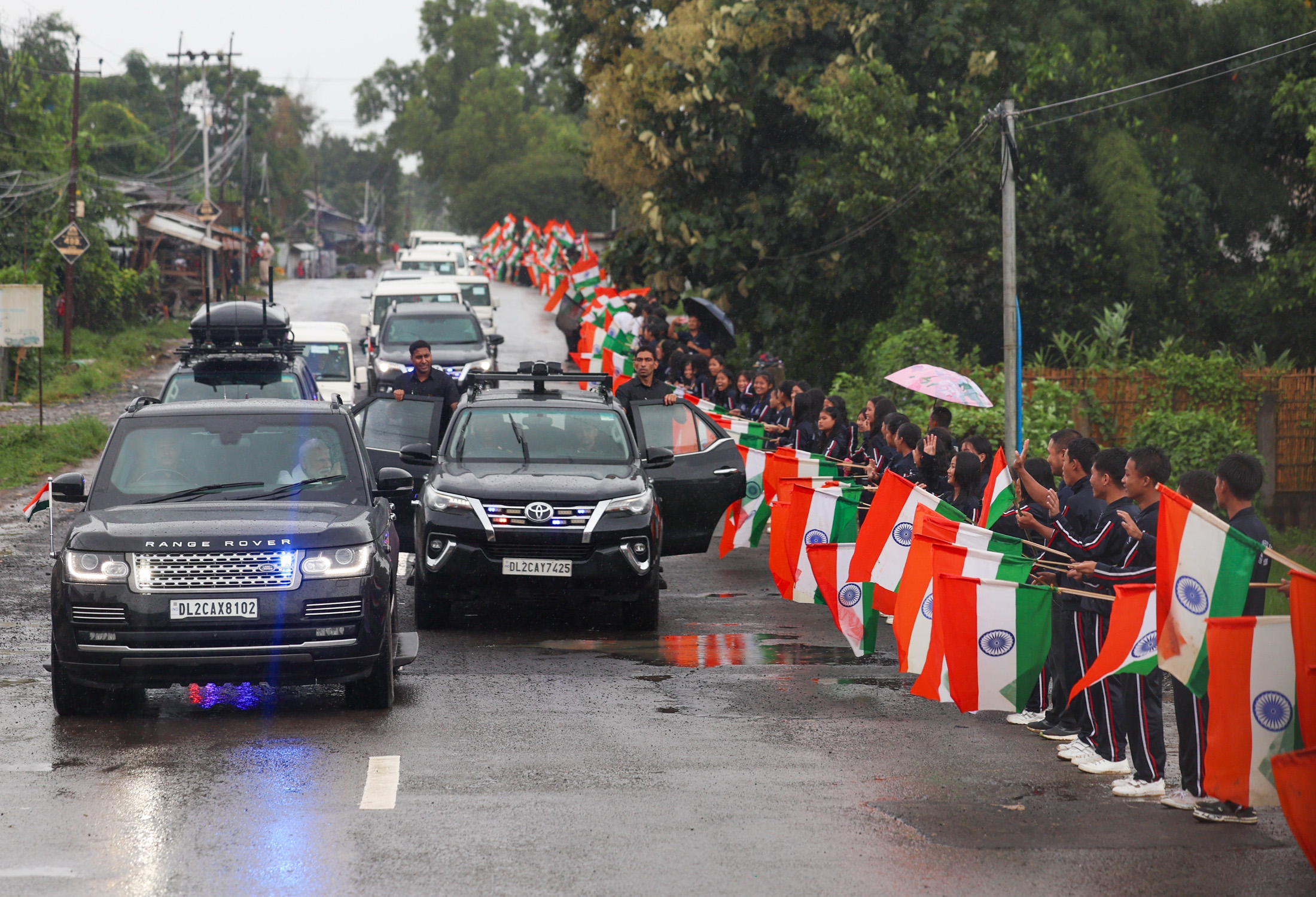
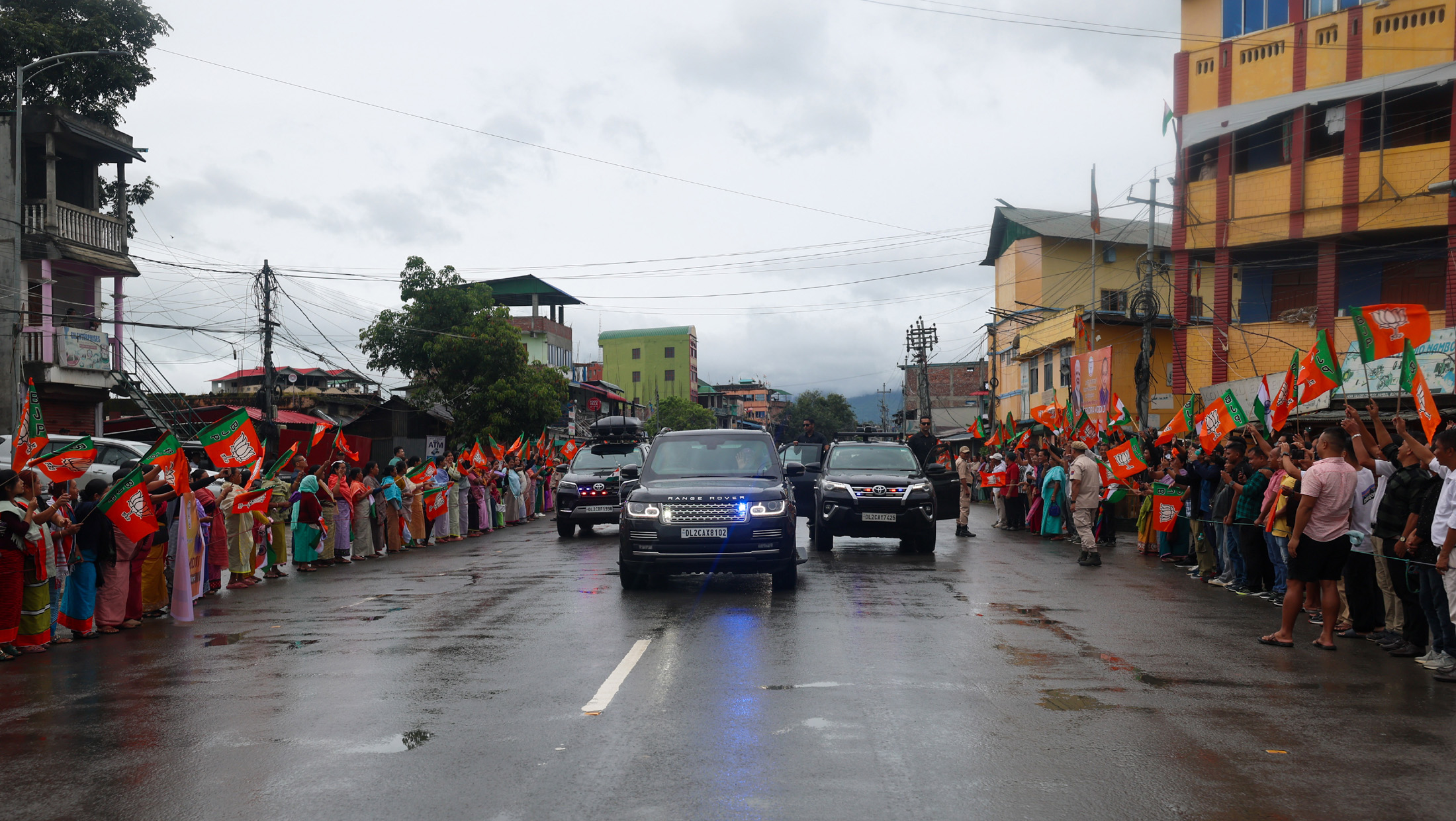
Prime Minister Narendra Modi's road show in Churachandpur, in Manipur on September 13, 2025.
Churachandpur/Imphal: Prime Minister Narendra Modi’s long-delayed return to Manipur, after 864 days of ethnic unrest between Meitei and Kuki-Zo communities, unfolded under extraordinary security today. The visit, his first since clashes erupted on May 3, 2023, after a Manipur High Court order on Meitei Scheduled Tribe status demands, combined the inauguration and foundation-stone laying of projects worth more than Rs 8,500 crore with gestures aimed at reconciliation in a state still fractured along ethnic lines.
Manipur has remained under President’s Rule since February 2025, following the resignation of Chief Minister N. Biren Singh. According to official figures, over 260 people have been killed, more than 60,000 displaced across 280–281 relief camps, and at least 1,500 injured in the violence. Relief camp conditions, particularly in Kuki-Zo-dominated areas like Kangpokpi, continue to draw attention, with local leaders alleging neglect in healthcare and rehabilitation.
Expectations for Modi’s three-hour itinerary were intense. Displaced families sought direct assurances on safe return and accountability for atrocities documented by rights groups, including instances of sexual violence and village burnings. Nine Kuki-Zo and allied Members of Legislative Assembly (MLAs), including Bharatiya Janata Party (BJP) legislators Vungzagin Valte and Paolienlal Haokip, submitted a memorandum alleging a “total cleansing” of minorities from valley areas, demanding a Union Territory with legislative powers. Meitei organisations, meanwhile, pressed for reaffirmation of Manipur’s territorial integrity and economic revival.
Political reactions reflected deep divides. Congress president Mallikarjun Kharge criticised the trip as a “pit stop” after 46 foreign visits in the same period, while Manipur Congress chief Keisham Meghachandra Singh called it “symbolic.” Member of Parliament Bimol Akoijam termed the delay in intervention an “insult.” Civil society groups, including the All Tribal Students’ Union of Manipur, called it a rare opportunity—the last prime ministerial visit to the state was nearly four decades ago—but street protests erupted in Imphal, where Youth Congress and Manipur Peoples’ Party activists tore down banners and shouted “Go Back.” In Naga-majority Ukhrul, 43 BJP grassroots leaders resigned, citing “lack of consultation and inclusiveness.”
Security was unprecedented. Officials reported that five suspected militants were neutralised and several improvised explosive devices (IEDs) were seized in the hours before Modi’s arrival. Around 5,000 personnel from the Indian Army, Assam Rifles, Intelligence Bureau, and Manipur Police secured his movements. Torrential rains forced the cancellation of his helicopter flight, leading to a 45-minute road convoy from Imphal Airport to Churachandpur’s Peace Ground, where crowds lined the route waving the Tricolour.
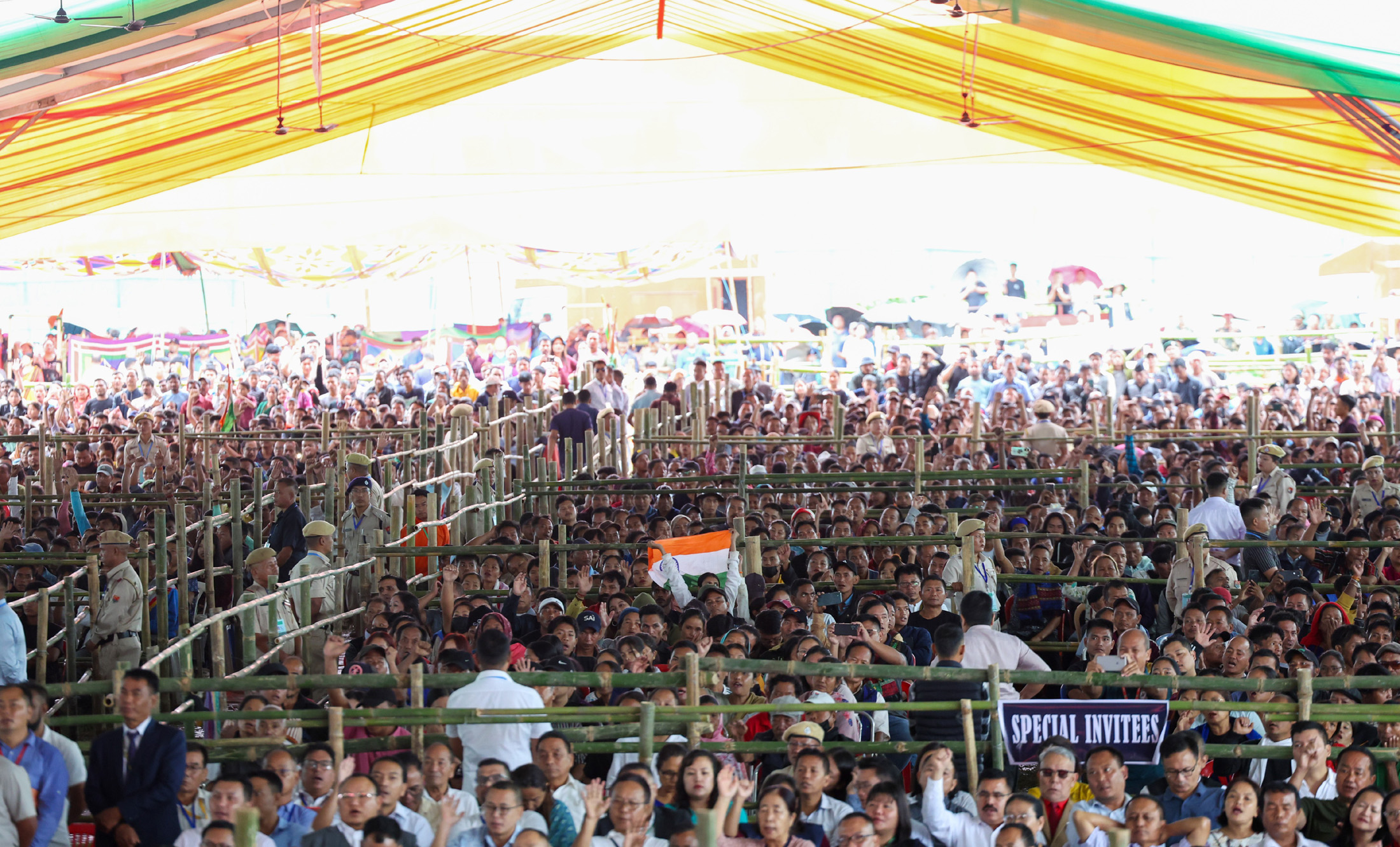
At Peace Ground, Modi laid the foundation stones for projects worth about Rs 7,300 crore. These included the Rs 3,647 crore Manipur Urban Roads and Drainage Project to improve connectivity from Kangla Fort to Bir Tikendrajit International Airport; five National Highway upgrades costing Rs 2,500 crore, including Rs 502 crore for the Tengnoupal section of National Highway 102A; the Rs 550 crore Manipur Infotech Development Project to support 500 startups and generate 5,000 jobs; Rs 200 crore for super-speciality healthcare facilities in five hill districts under the Pradhan Mantri Development Initiative for North East and Sikkim (PM-DevINE); Rs 150 crore for working women’s hostels at nine locations with capacity for 1,000 beneficiaries; and Rs 300 crore for upgrading 120 schools across 16 districts.
Later in Imphal, at Kangla Fort, Modi inaugurated 17 projects valued at Rs 1,200 crore. These included the Rs 538 crore Civil Secretariat at Mantripukhri; a Rs 101 crore new Police Headquarters; a Rs 200 crore Information Technology Special Economic Zone building; Rs 150 crore each for new Manipur Bhavans in Delhi and Kolkata with 100 subsidised rooms for students, especially women; Rs 50 crore for four Ima Markets in Thoubal and Bishnupur supporting 2,000 women vendors; Rs 100 crore for Phase-II of the Imphal River and Mall Road rejuvenation; and a Rs 36 crore multipurpose indoor stadium at Khuman Lampak Sports Complex.
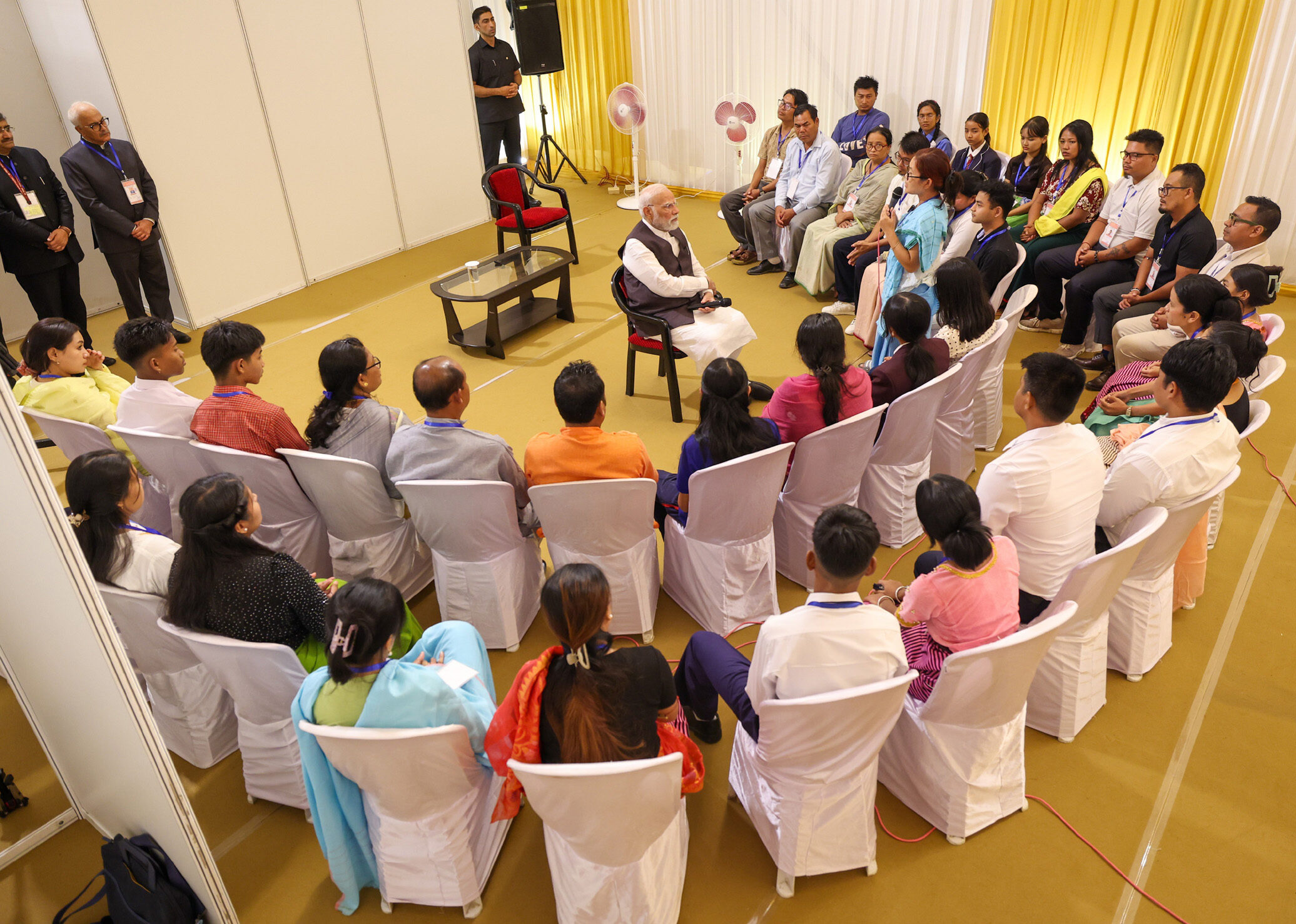
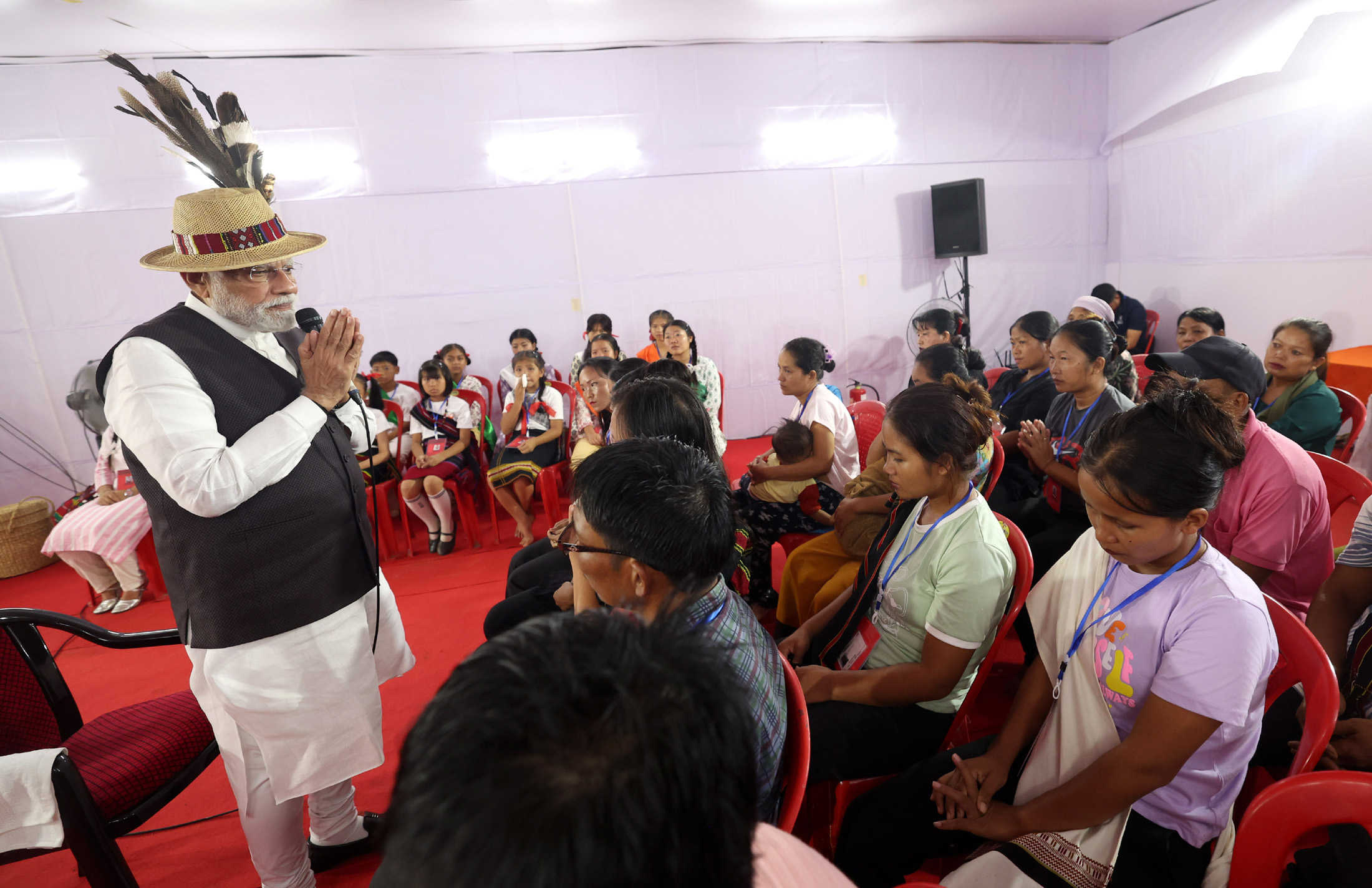
Modi also met with around 50 displaced persons from both communities in a relief camp, where he reportedly promised a “new dawn of hope and trust.” He appealed to armed groups to abide by the Suspension of Operations agreement, which the government recently extended, citing ongoing dialogues with about 20 organisations.
The Prime Minister reiterated development commitments already in motion. These include a Rs 3,000 crore special package, with Rs 500 crore earmarked for internally displaced persons (IDPs), and 7,000 prefabricated houses under a Rs 1,500 crore rehabilitation scheme. Infrastructure push projects—such as the Rs 22,000 crore Jiribam–Imphal railway line with 45 tunnels and 55 bridges, slated for completion by December 2026; Rs 3,700 crore spent on highways with Rs 8,700 crore ongoing; and Rs 400 crore for Imphal Airport expansion with new regional air routes under the UDAN (Ude Desh ka Aam Naagrik) scheme—were highlighted as evidence of sustained central focus.
Social welfare references included Jal Jeevan Mission (Har Ghar Nal Se Jal), which has expanded piped water access from about 30,000 households in 2017 to 350,000, targeting 95% coverage by 2026; 60,000 pucca houses under Pradhan Mantri Awas Yojana (PMAY); 100,000 free electricity connections under the Saubhagya scheme; Ayushman Bharat health coverage for 2.5 lakh patients, reportedly saving Rs 350 crore; Churachandpur Medical College, the first such institution in the hill districts; and 18 Eklavya Model Residential Schools with a budget of Rs 500 crore.
The Prime Minister also spoke of fiscal measures, including Goods and Services Tax (GST) cuts on items such as soap (from 18% to 12%), cement (28% to 18%), and hotels (18% to 5%), aimed at reducing household costs and spurring tourism. Sporting initiatives featured the National Sports University and the Marjing Polo Complex, home to the world’s tallest polo statue. Symbolic gestures included tributes to the Indian National Army’s 1944 campaign and the renaming of Mount Harriet in the Andamans as Mount Manipur.
Yet, gaps were evident. No timeline was given for inquiries into the violence, including the Justice Narasimhan Commission’s report on atrocities since 2023. Demands from Kuki-Zo leaders for a Union Territory or enhanced autonomy were not addressed. Opposition parties argued that the Rs 500 crore allocation for IDPs risks mismanagement without independent audits, citing earlier unfulfilled medical aid promises.
The visit formed part of an Rs 71,850 crore Northeast package, also covering Mizoram, Assam, West Bengal, and Bihar. In Manipur, the balance of Rs 7,300 crore for the hill districts and Rs 1,200 crore for the valleys was projected by officials as a signal of inclusivity. Chief Secretary Puneet Kumar Goel praised the visit as “paving peace and growth,” but camp residents in places like B. Phainom village voiced muted expectations, recalling recent burnings of villages and ongoing threats.
As part of a wider Act East vision, Modi’s presence marked both symbolism and substance. But in Manipur’s fragile landscape, survivors of violence say they measure promises not in crores, but in the return of safety, justice, and dignity. The foundations laid in Churachandpur and inaugurations in Imphal may shape an economic blueprint, yet whether roads and rails can mend mistrust remains unresolved. Can Modi’s projects truly heal Manipur’s fault lines—or will they stand as monuments amid unresolved grief?
– global bihari bureau