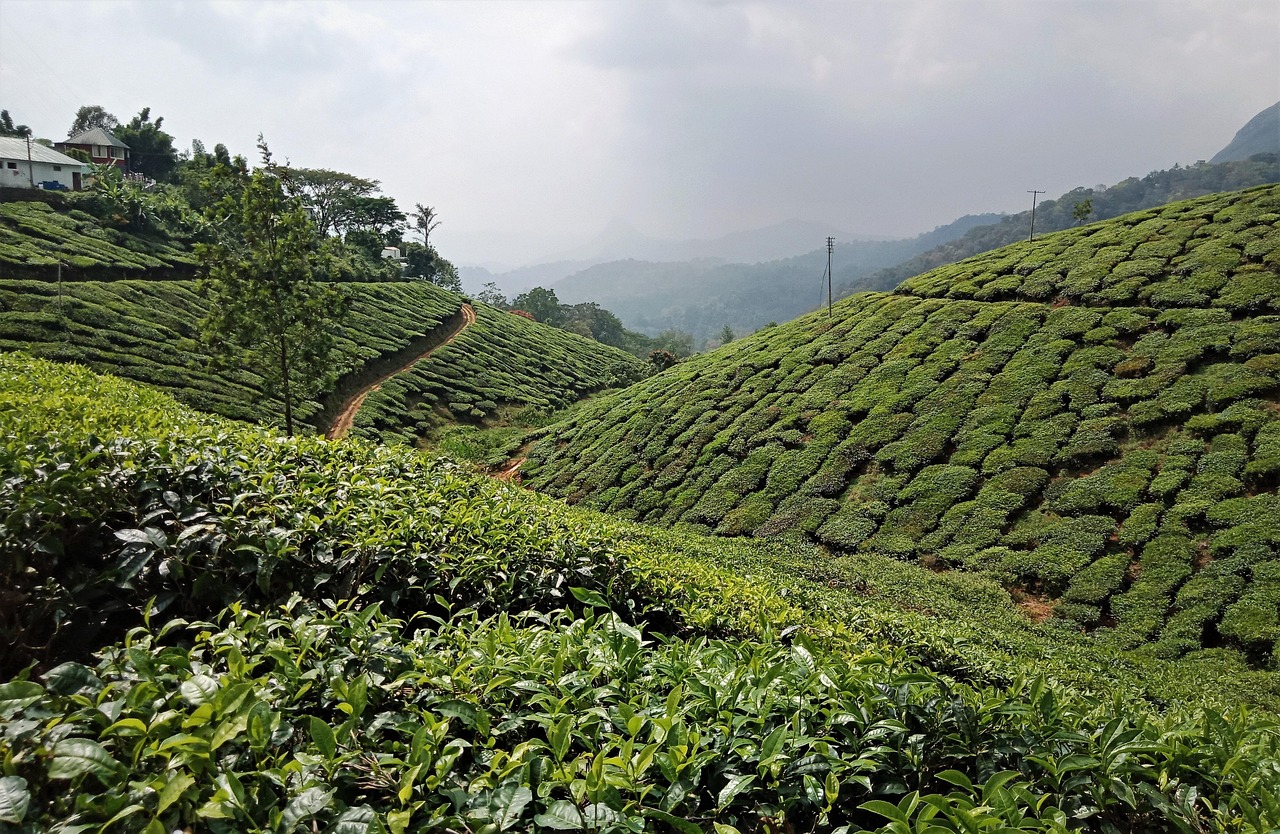
Munnar, Kerala
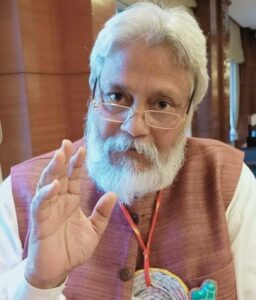 By Dr Rajendra Singh*
India Must Not Follow China’s Path on Its Mountains
Mountains Are Not Mining Corridors
India today stands at a historic crossroads. Across the world, the consequences of treating mountains merely as mineral reserves are becoming increasingly visible. India today appears to be standing at the edge of a path once taken by China. In Tibet, mountains were cut on a massive scale and nearly 80,000 natural springs dried up. The people there did not have the power to resist. In the pursuit of quick wealth, the very source of long-term life was destroyed — like slaughtering the hen to take the golden egg.
India is not Tibet, and Indian citizens are no longer silent spectators; they will not accept the fate imposed on Tibet’s mountains. When attempts were made to facilitate a Rare Earth Corridor in the Aravalli, public resistance ensured that the voice of the mountains was heard. This awakening in the Aravalli reflects a wider national conscience.
What is unfolding in the Aravalli is not an isolated struggle. The people of the Western Ghats, the Himalaya, the Satpura and the Vindhyachal ranges recognise the same danger to their own landscapes and futures. From the rainforests of the Western Ghats to the snow-fed slopes of the Himalaya, from the forested plateaus of Satpura to the ancient ridges of Vindhyachal, a shared understanding is emerging: India’s mountains are living systems that sustain water, forests, wildlife and cultures. They cannot be reduced to zones of routine excavation.
In this year’s Union Budget, special emphasis has been placed on rare earths and the proposed Rare Earth Corridor. Rare earths are placed at the centre of defence and security policy. Yet this cannot justify mining everything. Only the few minerals actually required should be extracted. There is no need to tear apart entire mountain ranges for this purpose. Governments must not feed people “golden eggs.” It is the natural eggs of living ecosystems that nourish society. Protecting the hen — the Earth and its mountains — ensures that life-giving resources continue for generations.
Also read: Rare Earths Take Centre Stage in Budget 2026-27
Environmental voices argue that a nationwide movement to protect mountain ecosystems is now inevitable. National security and strategic needs require only a limited set of minerals; they do not justify indiscriminate mining across entire mountain chains. True national strength lies in preserving the foundations of life rather than exhausting them.
India’s democratic tradition allows citizens from every mountain region to participate in decisions that affect their land and future. Activists and scholars maintain that policies concerning sensitive ecological zones must be guided by scientific assessment, transparency and public dialogue, instead of fragmented approaches that weaken protection over time.
This national debate is unfolding at the very moment when the world is redefining its relationship with forests and mountains. Globally, these ecosystems have moved to the centre of climate action. At COP30 in Belém, Brazil, held on 20 November 2025, countries adopted major decisions to honour those who conserve forests and mountain ecosystems and to discourage practices that lead to large-scale destruction. Indigenous and forest-dwelling communities were placed at the centre of these efforts, recognising them as long-standing custodians of nature.
Under these initiatives, funds meant for tribal welfare and conservation are to be transferred directly to community organisations. Germany’s pledge of one billion euros over ten years to Brazil’s Global Rainforest Fund reinforced the global resolve to protect what leaders described as the “lungs of the Earth.” Satellite monitoring will reward conservation efforts and identify excessive deforestation.
Against this international backdrop, the future of India’s mountain ranges has become a matter of national conscience. The Supreme Court has recognised that the Aravalli range, stretching from Gujarat to Delhi, is a single continuous mountain system and must be viewed in its entirety. Yet by allowing mining in areas below 100 metres, the same decision has effectively divided the Aravalli into fragments.
Environmental groups warn that this weakens the integrity of the mountain range and creates a dangerous precedent for India and for mountain systems across the world. A civilisation known for reverence toward nature cannot afford to dismantle its own ancient ranges piece by piece. Such steps could bring disrepute to India and weaken its standing as a country historically committed to protecting nature and culture. What happens in the Aravalli today could be repeated tomorrow in the Himalaya, the Western Ghats, the Satpura and the Vindhyachal.
It is acknowledged that these ranges contain minerals of strategic importance, and limited extraction for essential national security and atomic energy purposes has been permitted within regulatory frameworks. However, cutting mountains, destroying forests and inflicting new wounds on fragile ecosystems for ordinary minerals cannot be justified in any form.
For indigenous and local populations across these ranges, the struggle is not only environmental but cultural and existential. The hills are their home, their livelihood and their identity. The question they raise is simple and shared across regions: should ancient mountains be sacrificed for short-term extraction, or protected for generations yet to come?
Residents and environmental organisations from the Aravalli, the Western Ghats, the Himalaya, the Satpura and the Vindhyachal have declared that they will continue their efforts through peaceful and constitutional means. They describe this collective action as a Satyagraha — a non-violent assertion of the right to protect nature and uphold intergenerational justice.
The movement to save the Aravalli has thus become a wider call to save all of India’s mountain ranges. It reflects a deeper choice before the nation: between a development path driven by extraction and one guided by ecological wisdom.
As the world turns its attention to conserving forests and mountains, India must reaffirm its civilisational commitment to harmony with nature. The message rising from every mountain region is clear and united: the Aravalli, the Himalaya, the Western Ghats, the Satpura and the Vindhyachal must remain living landscapes — not mining corridors — for the people, the climate and the future of the country.
*Renowned water conservationist also known as the Waterman of India. Views are personal.