130,000 Flee Thai-Cambodia Fight
Bangkok: As the Thailand-Cambodia border conflict intensifies into its second day on July 25, 2025, the human toll has soared, with at least 16 confirmed deaths—15 in Thailand, including 14 civilians such as an eight-year-old boy, and one in Cambodia—and tens of thousands displaced.
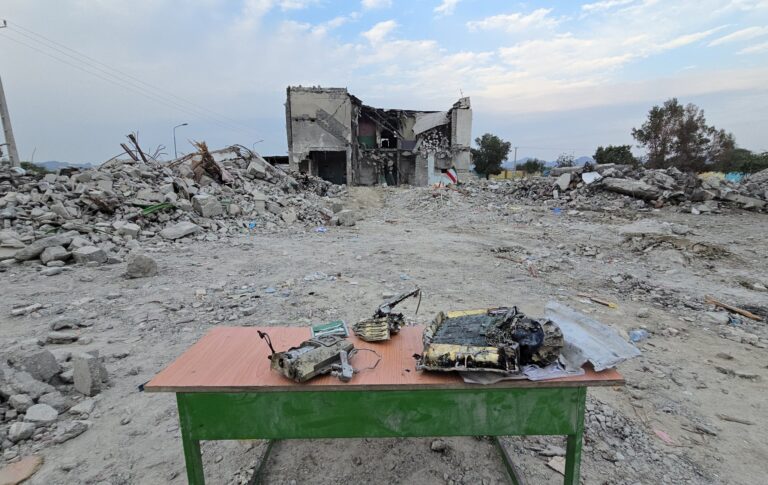
Over 130,000 Thai civilians have fled border provinces like Surin and Ubon Ratchathani, with martial law imposed in eight districts as acting Prime Minister Phumtham Wechayachai warns, “The situation has intensified and could escalate into a state of war.” Hospitals, including Phanom Dong Rak in Surin, have been damaged by shelling, leaving patients like 90-year-old Sirisa Bunmak’s father without critical care for hypertension.
The violence, triggered by a landmine explosion on July 23, 2025, that injured five Thai soldiers—one losing a leg—escalated when Thailand deployed F-16 jets to strike Cambodian military targets, prompting Cambodia to accuse Thailand of using banned cluster munitions, a charge Thailand has not yet refuted. Economic fallout is mounting, with trade halted and Cambodia’s earlier bans on Thai imports exacerbating tensions, while Thailand’s border closures disrupt regional supply chains, threatening the livelihoods of farmers and traders who depend on cross-border rice and seafood exchanges valued at $1.2 billion annually.
The immediate provocation traces back to a series of escalating incidents. On July 16, a Thai soldier lost a leg to a landmine near the disputed Ta Moan Thom Temple, followed by the July 23 blast in Nam Yuen district, Ubon Ratchathani, where five more soldiers were injured. Thailand condemned these as violations of the 1997 Ottawa Treaty, with Foreign Ministry spokesperson Nikorndej Balankura stating, “The Royal Thai Government calls upon Cambodia to take responsibility for the incidents that have occurred, cease attacks against civilian and military targets, and stop all actions that violate Thailand’s sovereignty.”
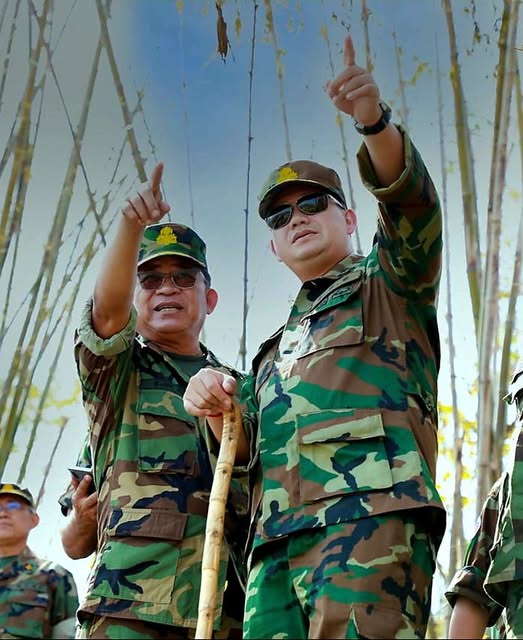
Cambodia denied laying new mines, attributing the explosions to remnants of its civil war, and countered with claims of Thai incursions. The situation deteriorated further when, on July 24 at 7:35 a.m. local time, Thai forces reported Cambodian drones and six armed soldiers approaching their base near the temple, leading to an exchange of fire that spread to six border areas.
Thailand’s subsequent airstrikes and Cambodia’s use of BM-21 rockets, including strikes on a Kantharalak gas station killing six civilians, marked a dramatic escalation from the May skirmish that killed a Cambodian soldier, when a Thai patrol clashed with Cambodian troops over a disputed water pump. Cambodian Prime Minister Hun Manet declared, “We have no choice but to respond with armed force against armed aggression,” while acting Thai Prime Minister Phumtham Wechayachai added, “We condemn this—using heavy weapons without a clear target, outside of conflict zones… what happened was a provocation and we had to defend ourselves.”
The conflict’s historical roots lie in the 1907 Franco-Siamese Treaty, when French colonial mapping placed the Preah Vihear Temple and adjacent areas under Cambodia, a decision affirmed by the International Court of Justice (ICJ) in 1962 but contested by Thailand. Past clashes, notably the 2008-2011 crisis that killed dozens and displaced over 50,000, highlight a pattern of nationalist fervour, now amplified by political instability. In Thailand, the political scene has been thrown into chaos due to the suspension of Prime Minister Paetongtarn Shinawatra on July 1, 2025. This trouble started when a private phone call she had with Cambodia’s former leader, Hun Sen, on June 15, 2025, was leaked to the public. In that call, Paetongtarn, who leads the Pheu Thai Party, was heard criticising her own country’s military, which many Thais see as a powerful and respected institution. This upset a lot of people, sparking widespread anger because it made her look disloyal to the military, a group that has a big say in Thai politics. As a result, her political group, the Pheu Thai coalition, which relies on support from various allies, has become weaker, making it harder for her to govern effectively amid the current crisis. Paetongtarn herself shared on social media, “All along, Thailand has made every effort to engage in diplomatic dialogue in order to avoid confrontation… I sincerely hope that the ongoing measures will bring an end to violence and bring back peace to the people at the earliest opportunity.” In Cambodia, Hun Sen, who was the country’s leader for nearly 40 years, stepped down in 2023 and handed power to his son, Hun Manet. Even though he’s no longer the official leader, Hun Sen still pulls the strings behind the scenes. To keep his influence strong, he’s been using strong nationalist language, rallying Cambodians by emphasising pride in their country, especially during this border conflict with Thailand. This tactic helps him stay relevant and popular. However, Cambodia is facing tough economic times, partly because the United States is threatening to impose a 36% tariff—a kind of extra tax on Cambodian goods entering the U.S. This tariff could hurt Cambodia’s economy, which relies heavily on exports like garments and rice, making Hun Sen’s leadership even more challenging as he tries to navigate these pressures.
Global reactions have been swift and varied. The United States, a treaty ally of Thailand, expressed grave concern on July 24, with Deputy Spokesperson Tommy Pigott stating, “We are… gravely concerned by the escalating violence along the Thailand-Cambodia border, and deeply saddened by reports of harm to civilians… The United States urges an immediate cessation of hostilities, protection of civilians, and a peaceful resolution of the conflict.” China, with significant investments in both nations—$5 billion in Thai infrastructure and $3 billion in Cambodian projects since 2020—offered mediation through Foreign Minister Wang Yi, emphasising dialogue to ease tensions, though Thailand has rejected third-party involvement to maintain sovereignty amid domestic criticism. Malaysia, as ASEAN chair, proposed a ceasefire, with Prime Minister Anwar Ibrahim engaging both leaders via a video call at 10:00 p.m. IST on July 24, noting, “I welcome the positive signals and willingness shown by both Bangkok and Phnom Penh to consider this path forward.” The United Nations Security Council scheduled an emergency meeting for Friday, July 26, following Cambodia’s request for intervention against Thai “aggression,” with Secretary-General António Guterres calling for restraint. France, the EU, Australia, and Canada have issued joint statements condemning the violence and urging de-escalation, while Vietnam and Japan, with historical ties to the region, pressed for peaceful resolution. India, a growing player in ASEAN, expressed concern at 11:00 p.m. IST on July 25, offering humanitarian aid, reflecting its interest in regional security as of 11:25 p.m. IST.
Peace efforts are unfolding at multiple levels. Bilateral talks, attempted on June 14 in Phnom Penh with a 12-member delegation from each side, failed to yield results, with both sides bolstering border security—Thailand deploying 5,000 troops and Cambodia 3,000—by July 20. Malaysia’s ASEAN-led initiative gained tentative support on July 17 but faltered as Thailand withdrew backing on July 23 after public protests against foreign mediation. China’s offer, leveraging its economic sway, remains a potential avenue, with a proposed Beijing summit on July 28, though Thailand’s acting Prime Minister insists on bilateral resolution, possibly to avoid appearing weak amid domestic calls for military action. Foreign Ministry spokesperson Nikorndej Balankura reiterated, “Ceasefire in Thai-Cambodian border conflict ‘too premature’, unless Cambodia ‘halts aggression’.” The UN’s impending meeting could pressure both sides, but historical resistance to ICJ rulings—Thailand’s rejection of the 1962 decision—suggests limited immediate impact. Local ceasefires, like the 2008 ASEAN-monitored zone near Preah Vihear, are absent, leaving civilians vulnerable as evacuations strain resources, with Red Cross teams reporting shortages of medical supplies by 6:00 p.m. IST on July 25. Analysts warn that without a breakthrough, the conflict could mirror the 2011 escalation, where pride prolonged suffering for months, with the cultural heritage of sites like Preah Vihear—alredy scarred by 2011 shelling—again at risk.
– global bihari bureau