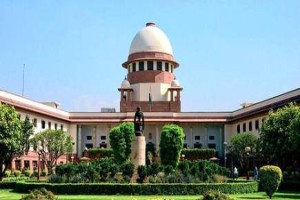
Supreme Court of India
 By Dr. Adish C. Aggarwala*
New Delhi: I am stunned to note that the Bharatiya Janata Party Member of Parliament Nishikant Dubey has criticised the Supreme Court and stated that, “If the Supreme Court has to make laws, then Parliament should be shut down.”
This statement has consequently drawn sharp reactions from the legal community, as such remarks from ruling party leaders can erode public trust in the Judiciary.
Under Articles 200 and 201 of the Constitution of India, no specific time limit is mandated for the President or the Governor to decide on Bills presented for assent. However, in view of inordinate delays, the Supreme Court, in its 2023 judgments in “State of Punjab vs. Principal Secretary to Governor of Punjab” prescribed a specific timeframe for the Governor and the President to take a decision on such Bills.
In its landmark 2023 judgments in State of Punjab vs. Principal Secretary to Governor of Punjab, and State of Tamil Nadu vs. Governor of Tamil Nadu, the Supreme Court acted within Constitutional bounds by prescribing a reasonable three-month timeframe for Governors and the President to take a decision on Bills, in the absence of any specific timeline under Articles 200 and 201 of the Constitution.
Also read: Ravi’s governor gig wobbles post-SC whack
The Supreme Court acted with caution and has not issued any direct orders to the Head of State or the Head of the Nation. It has merely held that if an unjustified delay exceeds three months, the Bill shall be treated as having received deemed assent.
The judgments in “State of Punjab vs. Principal Secretary to Governor of Punjab” and “State of Tamil Nadu vs. Governor of Tamil Nadu” do not amount to judicial overreach.
MP’s SC Critique: Legislate, Don’t Hate
It is well established that the Legislature holds the supreme power to amend legal provisions in case it disagrees with any judicial pronouncement. If the Government disagrees with the timeframe set by the Court, it retains the sovereign power to legislate and amend existing provisions. There may be a difference of opinion regarding the time limit, but the appropriate course of action is legislative amendment, not public criticism
The legal fraternity is fully aware that the government has consistently shown the highest regard for the judiciary and its decisions. There may, of course, be a difference of opinion regarding the time limit prescribed for granting assent by the President or Governor. If the Government believes that the three-month period prescribed by the Supreme Court is not sufficient, then the Legislature has the authority to amend the relevant provisions through proper legislative procedure.
Dubey’s Tirade Risks Public Confidence
Public criticism, particularly from leaders of the ruling party, has the potential to generate confusion and diminish public confidence in the judicial system. Furthermore, such remarks can jeopardise the amicable relationship that exists between the Judiciary and the Executive branches.
Hence, the Prime Minister should advise his party MPs to refrain from making public statements that undermine the foundational balance of powers established by the Constitution, undermine public confidence in our Judiciary, and hamper the cordial relationship between the Judiciary and the Executive.
*Senior Advocate and a former president of the Supreme Court Bar Association, and has written a letter to the Prime Minister on the above topic, urging the Prime Minister to rein in his party members from making remarks on the Judiciary.