Nitin Nabin
Youngest BJP President Nitin Nabin Set to Take Charge
Consensus Election Reflects BJP’s Generational Renewal
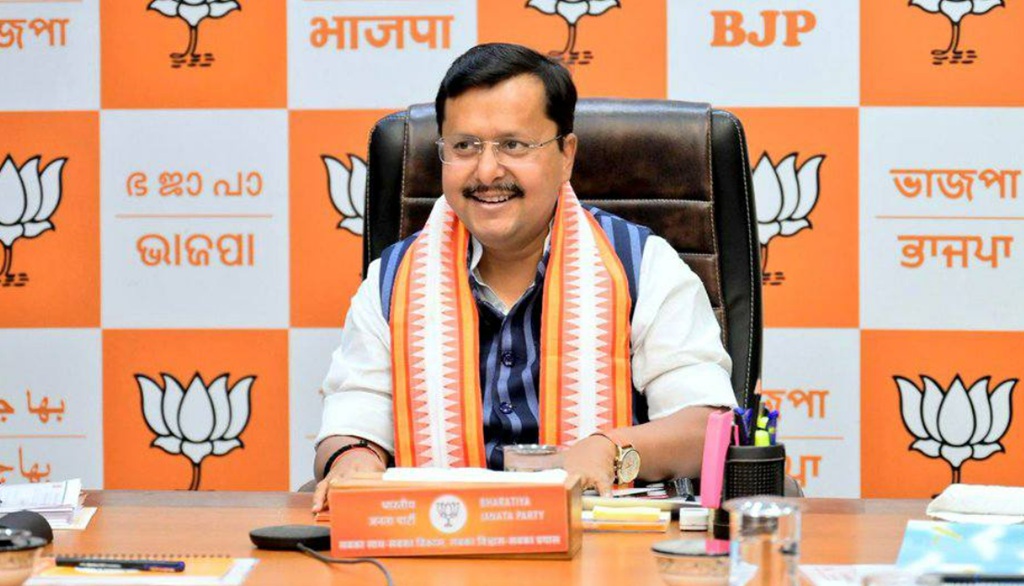
New Delhi: Bihar’s Nitin Nabin was elected unopposed as the national president of the Bharatiya Janata Party (BJP) today, marking a significant leadership transition within India’s largest political organisation. The 45-year-old leader, who was appointed national working president on December 14, 2025, will formally assume office on January 20, 2026, at a ceremony at the BJP headquarters in New Delhi, expected to be attended by Prime Minister Narendra Modi, Home Minister Amit Shah, Defence Minister Rajnath Singh, and other senior party figures.
The election was uncontested, reflecting a broad consensus across the party and a deliberate generational shift at the top. The BJP national president election process was initiated after the election of 30 state presidents out of 36 States, well above the required number of completing a minimum 50% of the States. On January 16, 2026, the notification of the schedule of events was announced, and the electoral roll was published. As per the schedule, today, the nomination process was completed between 2 PM and 4 PM. In all, thirty-seven sets of nomination papers filed in Nitin Nabin’s favour were deemed valid, and no rival candidates emerged before the deadline. On scrutiny, all sets of nomination papers were found to be “duly filled out” in the required format and were valid. After the period of withdrawal, in the capacity of national returning officer, Sangathan Parv, Bharatiya Janata Party, Dr K Laxman announced that only one name, that of Nitin Nabin, was proposed for the post of national president of Bharatiya Janata Party. The timing of the election coincided with the party’s Sangathan Parv, an organisational festival designed to reinforce internal discipline, train cadres, and provide a structured platform for leadership interaction. This integration of ceremonial activity and formal election underscores the BJP’s approach of combining procedural rigour with public organisational visibility.
At 45, Nitin Nabin becomes the youngest national president in BJP history. Born into a politically active family in Bihar, he entered electoral politics after the death of his father, veteran MLA Nabin Kishore Prasad Sinha, winning a by-election in 2006. Since then, he has been elected five times as a Member of the Legislative Assembly (MLA) from the Bankipur constituency in Patna and has held ministerial portfolios in the Bihar government, including law and justice, urban development and housing, and road construction.
Before he was appointed working president, Nitin Nabin gained substantial organisational experience through the Bharatiya Janata Yuva Morcha, the party’s youth wing, where he served as Bihar State President and later as National General Secretary. Analysts note that this combination of legislative experience, ministerial exposure, and grassroots organisational work positioned him to oversee national mobilisation, coordinate state-level units, and prepare the party for upcoming electoral challenges.
Senior BJP leaders, including Prime Minister Modi, Home Minister Shah, and outgoing President J. P. Nadda formally backed Nitin Nabin’s candidature. The absence of rival candidates reflected both the party’s internal discipline and a strategic decision to avoid a contest for its top post, ensuring unity at a critical juncture ahead of multiple electoral contests in 2026.
The BJP now faces a packed electoral calendar. Assembly elections are scheduled in Assam by March–April 2026, with polls also expected in Tamil Nadu, Kerala, West Bengal, and the Union Territory of Puducherry. These contests will test the BJP’s organisational machinery, voter outreach, and candidate strategy, particularly in states where it has historically faced strong regional opposition. Beyond state-level elections, the term “general election cycle” refers to the multi-year period culminating in the next Lok Sabha elections, expected in 2029. Nitin Nabin’s presidency is viewed as a preparatory phase for both immediate state-level contests and long-term national strategy.
The Sangathan Parv itself is a key component of the party’s internal ecosystem. It is more than ceremonial: it functions as a structured organisational programme integrating leadership renewal, cadre mobilisation, and public engagement. Through this festival, the BJP reviews internal structures, conducts strategy and training sessions, and projects unity among its rank-and-file members. The timing of Nitin Nabin’s election within this framework illustrates how the BJP blends formal procedural elections with organisational consolidation, ensuring that leadership transitions occur in a disciplined, visible, and strategically meaningful manner.
Internal presidential elections in the BJP follow a two-step mechanism. First, nominations are scrutinised by the national returning officer, ensuring candidates meet organisational criteria, including prior leadership experience and contributions to party work. Second, votes from state presidents and central office bearers are tabulated. In cases such as Nitin Nabin’s, where there is only one valid nomination, the candidate is declared elected unopposed, reflecting widespread acceptance across the party’s federal and state leadership. Analysts view this process as both procedural and symbolic, signalling internal consensus while highlighting continuity and generational renewal.
Political observers interpret Nitin Nabin’s elevation as a generational recalibration within the BJP, blending continuity with fresh energy. By promoting a younger leader with experience across legislative, ministerial, and organisational roles, the party aims to energise its base, maintain internal cohesion, and present a refreshed image to voters. His tenure is expected to emphasise grassroots mobilisation, youth engagement, disciplined coordination between state and central units, and strategic preparation for both the 2026 assembly elections and the 2029 general election cycle.
The BJP’s upcoming electoral strategy under Nitin Nabin is expected to integrate lessons from prior state and national campaigns, particularly in northeastern and southern states where the party faces competitive opposition. The party is likely to focus on candidate selection, mobilisation of youth and grassroots workers, and policy messaging to reinforce its electoral appeal. Analysts note that early organisational consolidation under a new president is a critical factor in ensuring both electoral performance and long-term strategic stability.
With his formal assumption of office on January 20, 2026, Nitin Nabin will take charge at a moment when the BJP is preparing for multiple electoral tests and seeking to integrate organisational discipline with strategic campaign planning. His leadership will define how the party navigates immediate state elections while laying the groundwork for national electoral contests, reflecting both a generational and structural recalibration in India’s dominant political formation.
– global bihari bureau