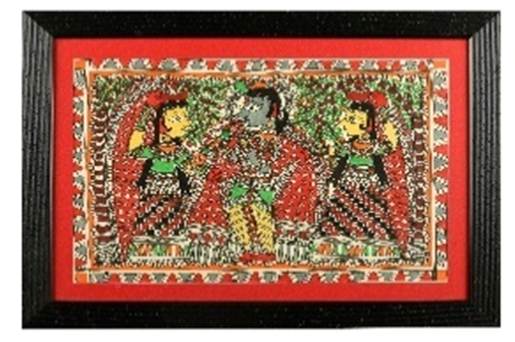
Madhubani Painting of Lord Krishna and Gopis
Bihar Heritage Fuels Ganga Fund Drive
New Delhi: Bihar’s vibrant folk art headlines the 7th Prime Minister’s Mementoes e-Auction, with 40 Madhubani and Sikki artworks, gifted to Prime Minister Narendra Modi, up for bids to fund the Namami Gange Project for Ganga River conservation.
Launched today by the Ministry of Culture through the National Gallery of Modern Art (NGMA) in New Delhi, the auction places Bihar’s cultural heritage in the national spotlight.
The auction’s timing, as the Election Commission prepares to announce poll dates, counters the Opposition narratives on unemployment and migration, strengthening the ruling National Democratic Alliance’s narrative of progress and cultural heritage under Chief Minister Nitish Kumar’s leadership.
The spotlight on 40 Bihar artworks, crafted primarily by rural women artisans, aligns with pre-election moves: PM Modi’s August 2025 launch of ₹7,000 crore infrastructure projects in Motihari, including a Ganga bridge and Nabinagar power plant; 69,000 government jobs; ₹2 lakh aid for women entrepreneurs; and the Bihar Industrial Investment Promotion Package (BIIPP) 2025 with free land and SGST reimbursements. The September rollout of the Medhasoft portal for student scholarships further highlights Bihar’s prominence.
Thus, this focus on these artworks conforms to the series of state-centric initiatives, suggesting a deliberate strategy to amplify regional pride and engage voters, especially in Ganga-belt constituencies. Bidding is open until October 2, 2025, at pmmementos.gov.in, with items displayed at NGMA.
Begun in 2019, the annual auction allows citizens to acquire mementoes gifted to the Prime Minister, ranging from handicrafts to sports memorabilia, with all proceeds supporting the Namami Gange initiative, a vital cause in Bihar’s riverine regions.
A key auction item is a Madhubani painting, gifted to the Prime Minister, depicting Lord Krishna with the Gopis in a vibrant portrayal of divine love, joy, and spiritual harmony. Originating from Bihar’s Mithila region, Madhubani painting (also known as Mithila painting) is a centuries-old folk art form renowned for its bold lines, intricate patterns, and use of natural colours derived from plants and minerals. Traditionally practised by women in rural households, it brings mythological narratives, such as Krishna’s divine interactions, to life through meticulous detail and vibrant hues, serving as a visual storytelling medium that preserves cultural and spiritual traditions. This piece exemplifies Madhubani’s role as a living heritage, passed down through generations in Bihar’s Mithila communities.
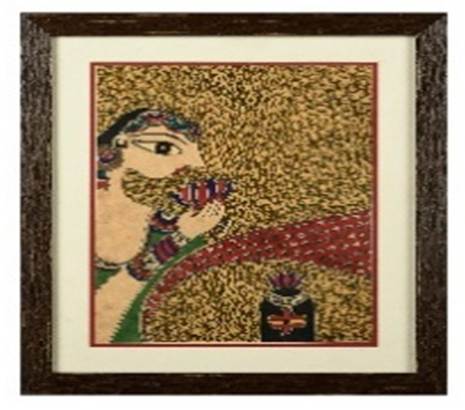
Another featured artwork is a Mithila painting on paper, created with poster colours, showing a woman in profile holding a lotus flower beside a Shiva Lingam, a symbolic representation of Lord Shiva, framed in brown textured wood. Like other Madhubani works, it showcases intricate line drawings filled with vibrant colours and traditional patterns, often depicting Hindu deities, nature, and daily life in the Mithila region. This art form, rooted in Bihar’s cultural fabric, reflects the region’s devotion to Hindu mythology and its integration of everyday life, with women artisans playing a central role in sustaining this tradition through detailed, symbolic compositions.

A Sikki art frame, presented by Sanjay Saraogi, Darbhanga MLA, portrays Lord Ram with his bow and arrow, symbolising strength and righteousness, alongside Sita’s grace, set against a dark background with golden hues. Sikki art, unique to Bihar, uses golden grass (sikki) woven into intricate patterns to create detailed designs, often depicting mythological figures or cultural motifs. The frame’s delicate patterns and striking contrast highlight the skilled craftsmanship of rural artisans, primarily women, who transform this natural material into vibrant artworks that carry Bihar’s cultural narratives. This piece underscores Sikki’s role as a traditional craft that blends utility and artistry, deeply embedded in the state’s rural communities.
The remaining 37 Bihar artworks in the auction encompass mythological tales, festivals, rituals, and community traditions, rendered in the symmetrical, colourful styles of Madhubani and Sikki art. These works, primarily crafted by women in rural Bihar, preserve oral narratives and social memory, serving as living symbols of the state’s cultural heritage. From depictions of Hindu deities to scenes of festivals and rural life, these artworks reflect the rich storytelling traditions of the Mithila region and beyond, making them accessible and meaningful to bidders unfamiliar with Bihar’s cultural landscape.
By tying the auction to Namami Gange, the event links Bihar’s cultural legacy to a cause central to the state’s electoral landscape, particularly in Ganga-belt constituencies. The emphasis on women artisans resonates with rural voters, reinforcing the ruling National Democratic Alliance’s focus on empowerment and heritage. The public can view these items at NGMA Delhi or bid online until October 2, 2025, connecting cultural ownership with environmental conservation.
– global bihari bureau