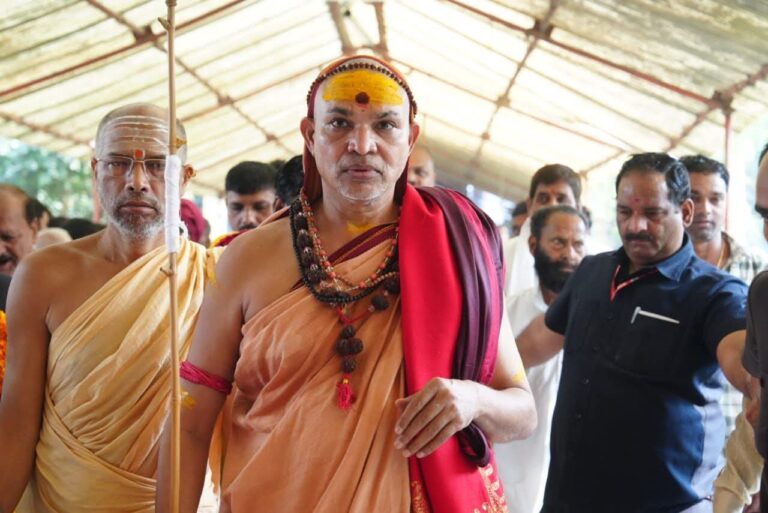
Ajit Anjum. Photo source: X
New Delhi: Senior independent journalist Ajit Anjum faces a First Information Report (FIR) in Begusarai, Bihar, filed on July 13, 2025, for exposing irregularities in the Election Commission of India’s Special Intensive Revision (SIR) of electoral rolls, a process under global scrutiny for risking voter disenfranchisement. Anjum’s July 14 X post alleged local officials, including the Block Development Officer and Sub-Divisional Officer, pressured him to delete a video showing forms accepted without photographs or details, prompting the FIR, which the Delhi Union of Journalists (DUJ) condemned as an attempt to suppress coverage of the SIR’s flaws in a state where systemic neglect leaves most citizens without essential documentation.
On July 14, 2025, Anjum claimed the FIR, lodged in the name of booth-level officer Mohammad Ansarul Haque, accused him of criminal trespass, obstructing a public servant, and inciting communal discord by questioning Muslim voter enrollments, allegations he denied, challenging the Election Commission of India to verify his reports. His YouTube series, including a 45-minute video from July 12, revealed incomplete forms in Sahebpur Kamal, leading the Begusarai administration to label his reporting misleading.
The Delhi Union of Journalists stated, “The fact is that the Bihar government has not cared to issue birth certificates to most of its citizens, few people have caste certificates or domicile documents, the majority do not own property or have documents to prove ownership of land, many are denied schooling, and migration is the major survival strategy. In these circumstances, people anxious to stay on the electoral roll are providing whatever they possess. The Election Commission initially refused to accept the basic documents that the majority do have: Aadhar cards and voter identity cards. After a Supreme Court ruling, they are now accepting copies of these documents, but not always providing receipts. The speed of the exercise means that many will be denied voting rights. It is evident that officials were rattled by the reports of irregularities in the entire process and resorted to the FIR against Anjum to deter other journalists from similar coverage.”
The Election Commission of India claimed today that 86.32% of Enumeration Forms (EFs), totalling 6,81,67,861 out of 7,89,69,844 electors, have been collected in the Special Intensive Revision, with 90.84% coverage after accounting for deceased, shifted, or duplicate voters. With 10 days remaining until the July 25 deadline, nearly 1 lakh Booth Level Officers (BLOs) will revisit households where electors were absent, supported by 1.5 lakh Booth Level Agents (BLAs) from political parties, each able to certify up to 50 EFs daily. Special camps in all 5,683 wards of Bihar’s 261 Urban Local Bodies (ULBs) and newspaper advertisements encourage form submission, with over 6.20 crore EFs uploaded via the ECINet App or https://voters.eci.gov.in, where electors can also check submission status. The Special Intensive Revision, launched on June 25, 2025, to verify 7.9 crore voters, has drawn criticism for initially rejecting Aadhar and voter identity cards, with inconsistent receipt issuance heightening fears of mass voter exclusion in Bihar, where poverty and migration limit access to formal records. The Delhi Union of Journalists emphasised that Anjum’s reporting exposed a process prone to errors due to its rushed timeline and lack of transparency, arguing that targeting Anjum with a First Information Report reflects an intent to suppress journalistic scrutiny.
The Delhi Union of Journalists further noted that the Special Intensive Revision’s demand for citizens to prove their right to vote, and by implication their citizenship, raises serious questions about fairness in a state where systemic neglect has left most without essential documentation. They pointed out that the majority of Bihar’s population, grappling with poverty and limited education, relies on migration, making compliance with the Special Intensive Revision’s requirements nearly impossible. The union stressed that Anjum’s reporting, alongside other media, has brought these irregularities to light.
The union “saluted” Anjum for his bold reporting, highlighting the Election Commission’s failure to ensure an inclusive process, and criticised the authorities for inconsistent receipt issuance, increasing voter exclusion risks. They called the First Information Report a deliberate move to intimidate journalists covering similar issues across Bihar and demanded its immediate withdrawal, urging that journalists be allowed to report freely without fear of reprisal, emphasising independent journalism’s critical role in safeguarding democratic processes under global watch.
– global bihari bureau