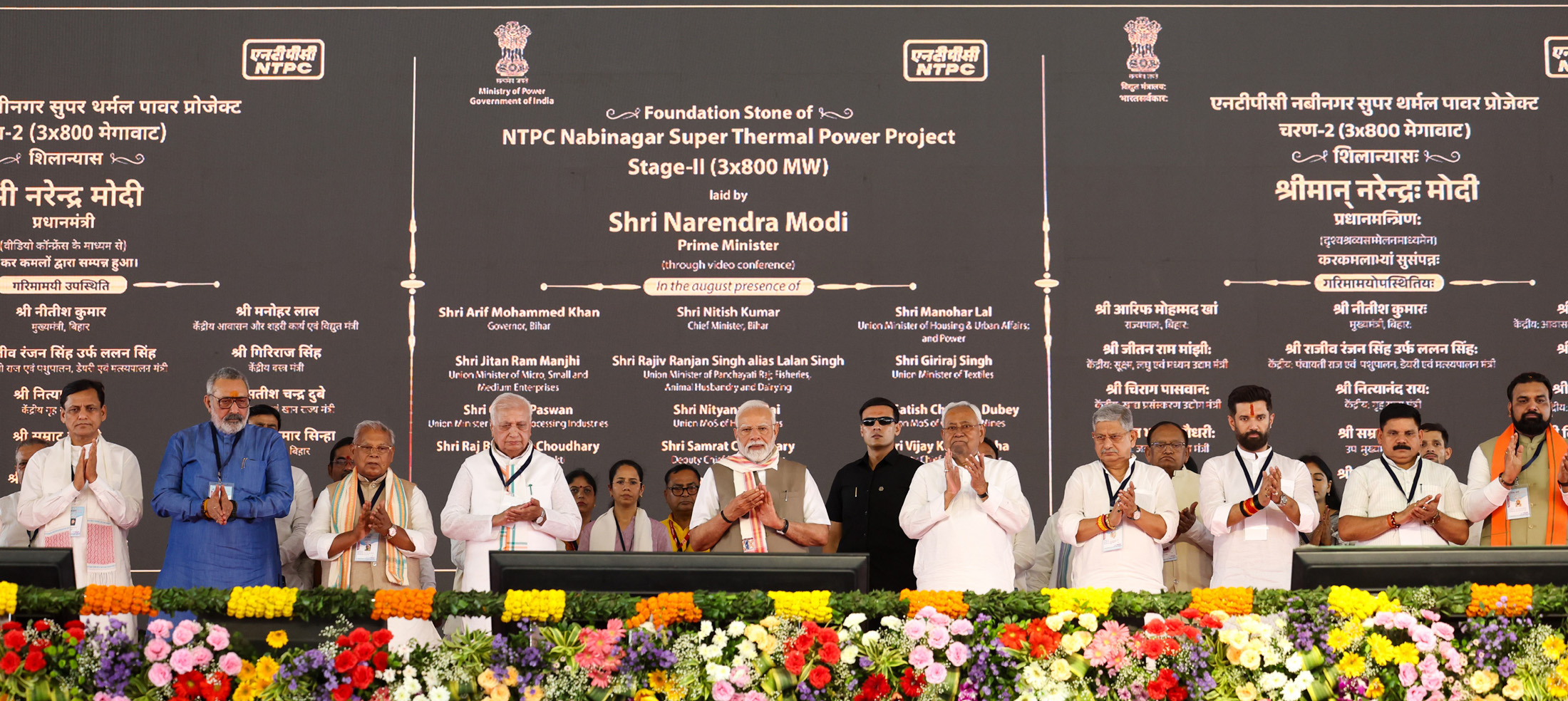
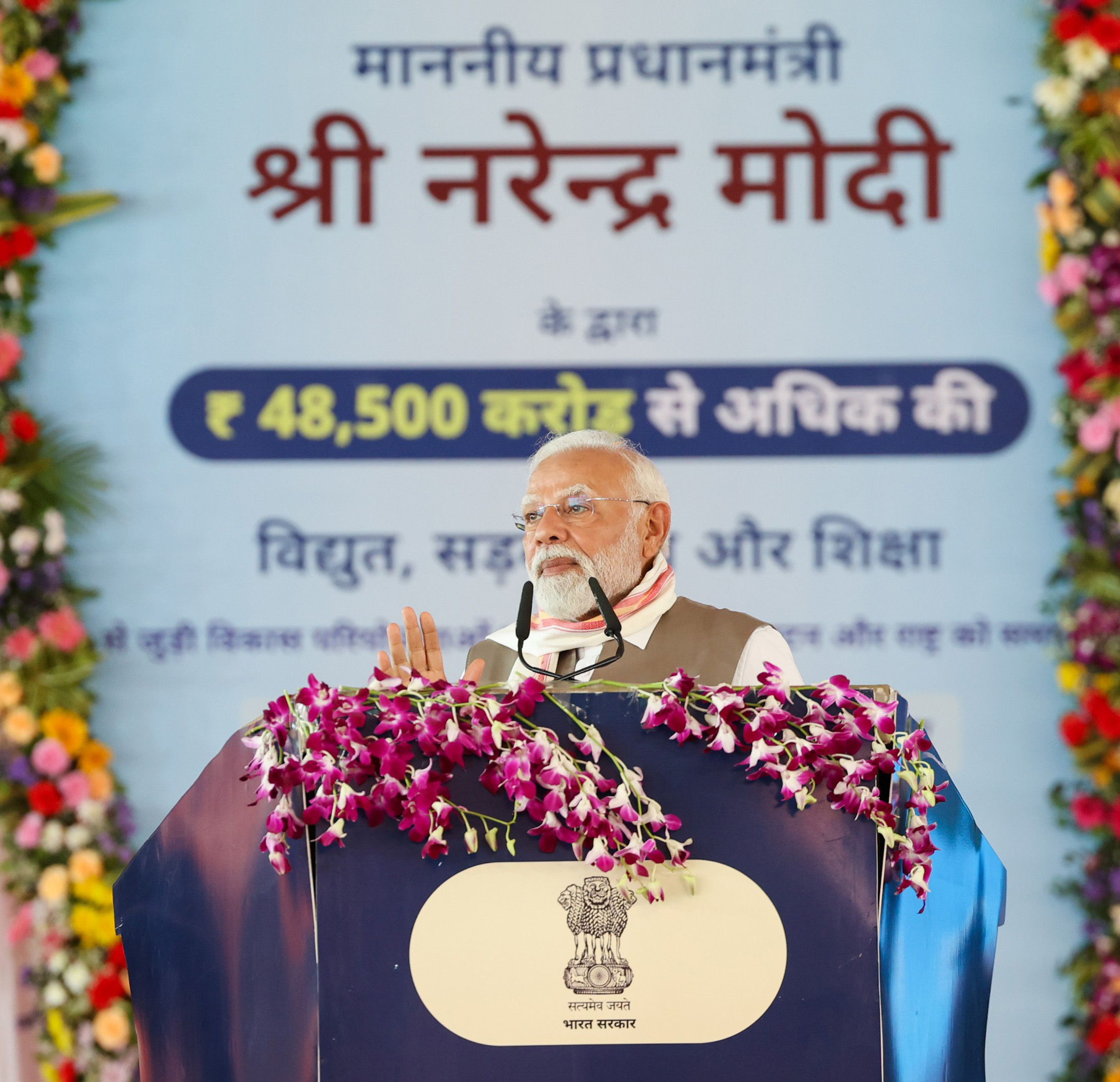
Prime Minister Narendra Modi at the stone laying foundation and dedication to the nation multiple development projects at Karakat, on May 30, 2025.
Karakat (Sasaram): In poll-bound Bihar, Prime Minister Narendra Modi laid the foundation stone and dedicated development projects worth over ₹48,520 crore in Karakat, Rohtas district, following the inauguration of a new terminal at Jay Prakash Narayan International Airport in Patna on May 29, 2025. The Karakat event in Sasaram, attended by a significant public turnout, outlined initiatives in infrastructure, connectivity, energy, agriculture, and social welfare, alongside discussions on national security and social justice, aimed at addressing regional needs and fostering economic growth.
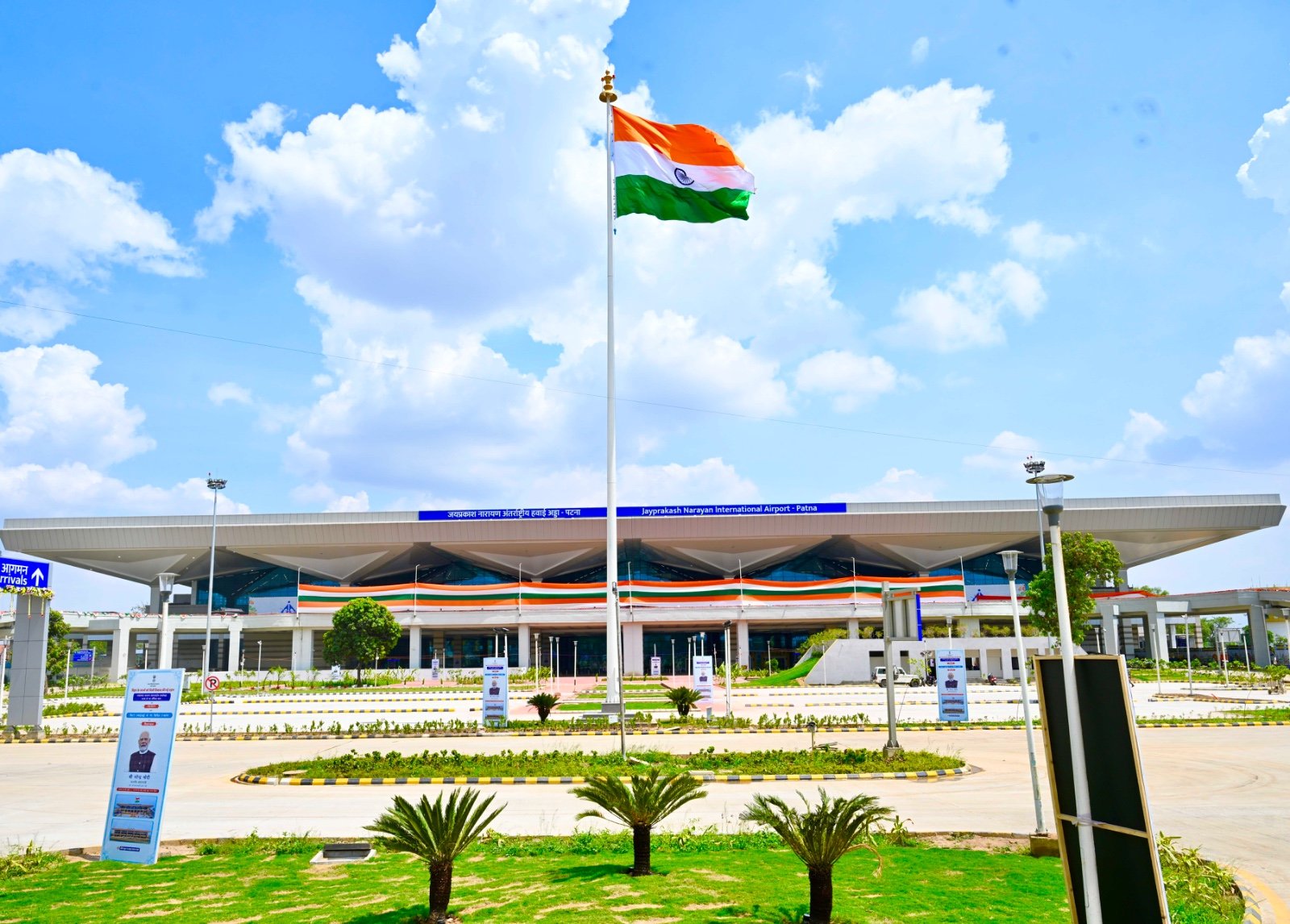
The Patna Airport terminal, built for ₹1,200 crore over 65,150 square meters, can handle 3,000 passengers during peak hours and up to one crore annually. It includes 64 check-in counters, nine Automatic Tray Retrieval Systems, five aerobridges, and parking for 1,100 vehicles. Featuring Mithila art and Nalanda Mahavihara-inspired architecture, it targets a 4-star GRIHA rating with sustainable elements like LED lighting, insulated roofing, and energy-efficient glazing. Civil Aviation Minister Ram Mohan Naidu, in an X post, called it a boost for connectivity, tourism, and employment. The Prime Minister noted it fulfils a long-standing demand for modernisation, complementing Darbhanga Airport’s flights to Delhi, Mumbai, and Bengaluru. The foundation stone for a ₹1,413 crore Civil Enclave at Bihta Air Force Station, 35 km from Patna, was also laid. Covering 68,000 square meters, it will serve 50 lakh passengers annually with 64 check-in counters, 16 self-check-in kiosks, 10 ATRS, and five aerobridges, inspired by the Mauryan, Gupta, Nalanda, and Vikramshila eras, aiming for a 5-star GRIHA rating with a sewage treatment plant.
In Karakat in Sasaram, the Prime Minister referenced the region’s link to Lord Ram and Veer Kunwar Singh, emphasising promise-keeping. On national security, he addressed the recent Pahalgam terrorist attack, detailing Operation Sindoor’s targeting of terrorist facilities in Pakistan, destroying airbases and military installations. He paid tribute to BSF Sub-Inspector Imtiaz, killed on May 10, 2025, and praised Bihar’s youth in the armed forces and Border Security Force for their role in national security, stressing a firm anti-terrorism stance.
Naxalism’s decline was highlighted, with Sasaram, Kaimur, and nearby areas improving from times when Naxal-affected villages lacked hospitals, mobile towers, and schools, and road workers were targeted. The Prime Minister noted that Naxal-affected districts nationwide fell from over 125 to 18 since 2014, crediting Chief Minister Nitish Kumar and youth integration efforts, anticipating the end of Maoist violence to ensure village-level peace, security, education, and development.
Infrastructure projects included roads like the four-laning of the Patna–Arrah–Sasaram section of NH-119A, six-laning of the Varanasi–Ranchi–Kolkata highway (NH-319B) and Ramnagar–Kacchi Dargah stretch (NH-119D), and a Ganga bridge between Buxar and Bharauli. The four-laning of the Patna–Gaya–Dobhi section of NH-22, costing ₹5,520 crore, and upgrades at Gopalganj Town on NH-27 were dedicated, alongside bridges over the Ganga, Son, Gandak, and Kosi rivers. Railway projects included a third rail line between Son Nagar and Mohammad Ganj, worth over ₹1,330 crore, and multi-tracking between Son Nagar and Andal, with over 100 trains stopping at Sasaram and work progressing in Chhapra, Muzaffarpur, and Katihar. Vande Bharat trains were noted as enhancing Bihar’s rail network. Past railway recruitment malpractices were mentioned, with a call for public awareness.
Energy projects featured the Nabinagar Super Thermal Power Project, Stage-II, at over ₹29,930 crore, set to generate 1,500 MW for Bihar and eastern India. Thermal plants in Buxar and Pirpainti, a solar park in Kajra, and the PM-KUSUM scheme, aiding farmers with solar income and renewable agriculture feeders, were included. Bihar’s electricity consumption has risen fourfold in a decade, reflecting improved access.
Agricultural initiatives included support for over 75 lakh farmers under the PM-Kisan Samman Nidhi scheme, a Makhana Board, and a GI tag for Bihar’s Makhana to boost incomes. Increased Minimum Support Prices for 14 Kharif crops, including paddy, were approved, and a National Institute for Food Processing was announced. The 2024 Bihar Business Summit attracted investments, reducing labour migration and improving farmers’ market access.
Social welfare included the Dr. Bhimrao Ambedkar Samagra Seva Abhiyan, with over 30,000 camps delivering 22 schemes to Dalits, Mahadalits, backward classes, and the poor. Nationwide, four crore houses, tap water for over 12 crore households, free medical treatment up to ₹5 lakh for those over 70, and the Lakhpati Didi initiative for three crore women were noted. Past governments were criticised for neglecting marginalised communities’ access to sanitation, banking, and housing, with a call to counter misleading social justice claims.
Attendees included Governor Arif Mohammed Khan, Chief Minister Nitish Kumar, Civil Aviation Minister Ram Mohan Naidu, Minister of State for Civil Aviation Murlidhar Mohol, Deputy Chief Ministers Samrat Choudhary and Vijay Kumar Sinha, and Union Ministers Jitan Ram Manjhi, Giriraj Singh, Rajiv Ranjan Singh, Chirag Paswan, Nityanand Rai, Satish Chandra Dubey, and Dr. Raj Bhushan Choudhary. The Prime Minister referenced Baba Saheb Ambedkar, Karpoori Thakur, Babu Jagjivan Ram, and Jayaprakash Narayan, noting Bihar’s contribution to India’s development, and thanked attendees, particularly women.
– global bihari bureau