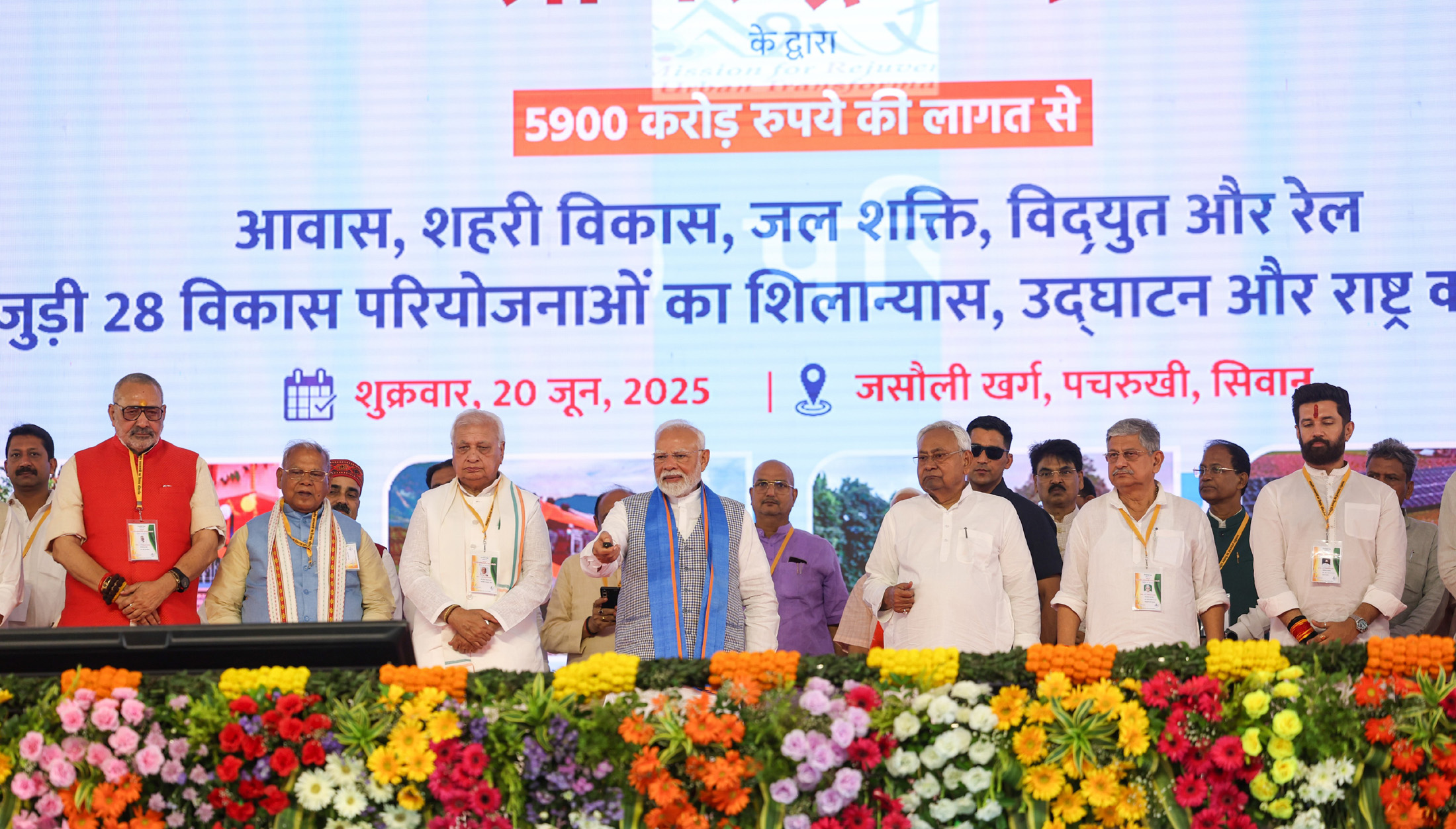
Prime Minister Narendra Modi lays the foundation stone and inaugurates various projects in Siwan, Bihar on June 20, 2025.
Siwan/Bhubaneswar: Prime Minister Narendra Modi today inaugurated and laid foundation stones for development projects worth over Rs 5,200 crore in Siwan, Bihar, and Rs 18,600 crore in Bhubaneswar, Odisha, targeting infrastructure, socio-economic welfare, and connectivity. With Bihar approaching crucial assembly elections, these initiatives underscore a strategic push for eastern India’s growth, though their success hinges on effective execution and equitable distribution amidst a charged political climate.
In Siwan, Modi paid tribute to Dr. Rajendra Prasad, India’s first President, and Braj Kishore Prasad, a women’s empowerment advocate, emphasising Bihar’s role in shaping the nation’s democratic framework. Projects include the Vaishali–Deoria railway line (Rs 400 crore), the Patna–Gorakhpur Vande Bharat Express, and six sewage treatment plants under the Namami Gange initiative (Rs 1,800 crore) to support Ganga conservation. A 500 MWh Battery Energy Storage System across 15 grid substations, including Muzaffarpur and Siwan, aims to stabilise the power supply. Under the Pradhan Mantri Awas Yojana (PMAY), over 53,600 beneficiaries received housing instalments, with 6,600 families marking homeownership, many in women’s names to promote gender equity. Over 1.10 lakh PMAY houses have been built in Siwan. The export of a locomotive from the Marhowra factory to Guinea positions Bihar as a global manufacturing hub. Modi invoked cultural figures like Baba Mahendra Nath and Maa Thawe Bhawani, resonating with local sentiments ahead of the polls.
Modi highlighted Bihar’s progress, stating four crore residents escaped poverty over the past decade, a claim backed by World Bank reports. Infrastructure advancements include 55,000 kilometres of rural roads, 1.5 crore electricity connections, and 1.5 crore water connections, with 45,000 Common Service Centres and start-ups signalling economic diversification. He credited Chief Minister Nitish Kumar’s governance but warned of political forces seeking to reverse gains, a pointed remark as Bihar’s elections loom. Critics argue this rhetoric risks polarising voters, and challenges like bureaucratic inefficiencies and ensuring benefits reach Dalit, Mahadalit, and backwards communities persist. The poll-bound context amplifies the stakes, with development projects potentially influencing voter perceptions, though opposition parties may question their timing and long-term impact.
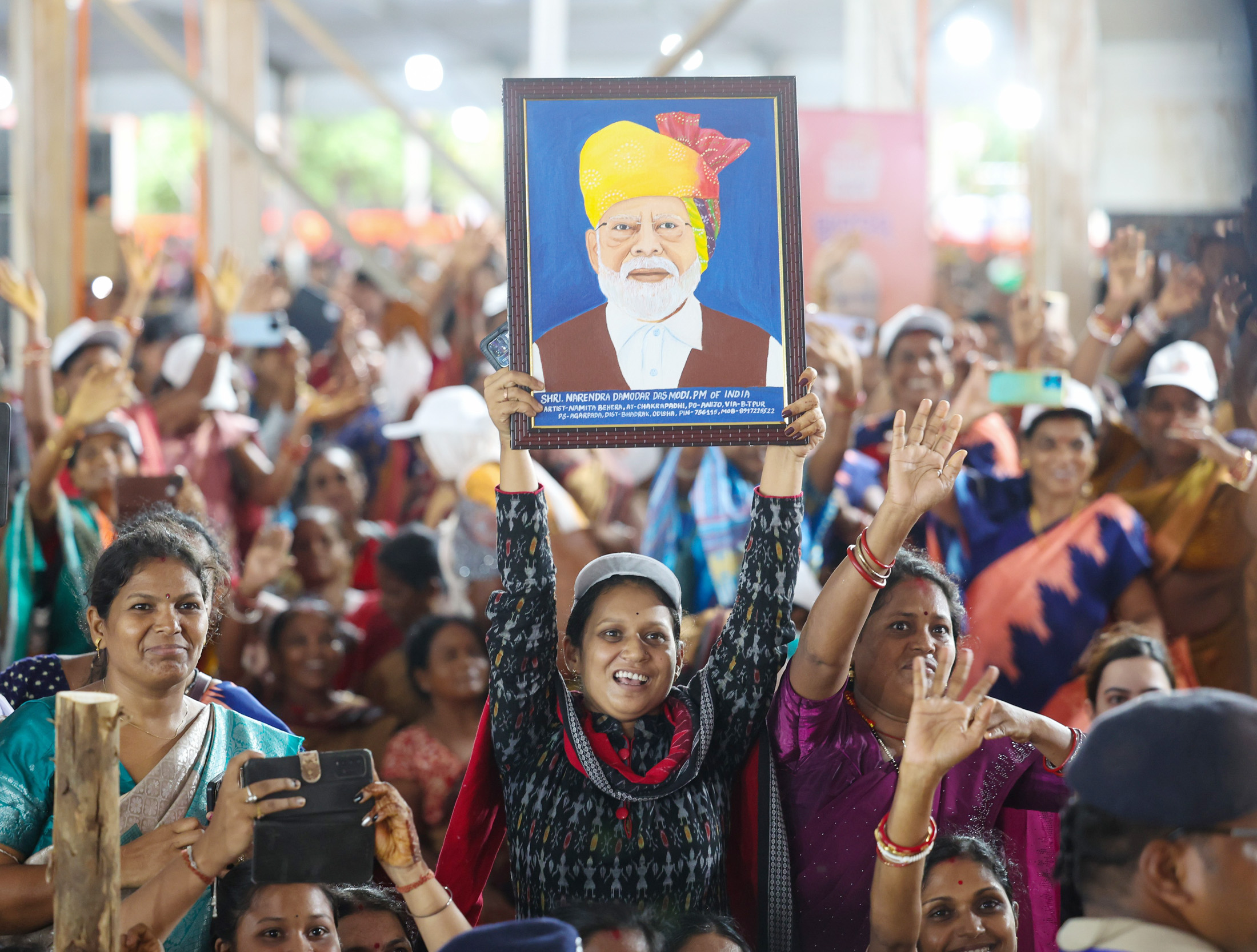
In Bhubaneswar, marking one year of Odisha’s Bharatiya Janata Party government under Chief Minister Mohan Charan Majhi, Modi launched projects spanning irrigation, health, transport, and cultural preservation. New rail services to the Boudh district and 100 electric buses under the Capital Region Urban Transport system enhance connectivity and sustainability. The Odisha Vision Document, targeting 2036 (Odisha’s centenary) and 2047 (India’s independence centenary), outlines long-term growth. The Baraputra Aitihya Gram Yojana will transform eminent Odias’ birthplaces into cultural hubs, boosting tourism. Over 16.50 lakh Lakhpati Didis were felicitated for economic self-reliance. Tribal schemes, inspired by President Droupadi Murmu, include the Dharti Aaba Janjatiya Gram Utkarsh Abhiyan for 60,000 tribal villages and PM Janman Yojana for vulnerable groups, with 40 residential schools planned in Odisha’s 11 districts. The PM Matsya Sampada Yojana and a Rs 25,000 crore fund support fishermen, extending Kisan Credit Cards to coastal communities.
Odisha’s economy benefits from Rs 1.5 lakh crore in petroleum and petrochemical investments, including a Paradip dual-feed cracker and Gopalpur LNG terminal, positioning it as an industrial hub. Modi noted a reduction in Naxal-affected districts from 125 to under 20, citing security and development efforts. Central and state schemes like Ayushman Bharat and Gopabandhu Jan Arogya Yojana provide healthcare to three crore Odias, with two lakh treated, including in other states. PM-KISAN enhancements and higher paddy prices support farmers, though past exclusions raise concerns. Modi highlighted cultural achievements like opening Shree Mandir’s gates and Ratna Bhandar, but critics note challenges in reaching remote areas and addressing disparities.
Both states align with the “Purvoday” vision for eastern India’s rise, with Bihar’s manufacturing and Odisha’s industrial ambitions signalling potential. In Bihar, the poll-bound atmosphere adds urgency, with projects potentially shaping electoral narratives. Sustaining development, balancing cultural preservation, and countering opposition require transparent execution, particularly for marginalised communities, to ensure inclusive growth.
– global bihari bureau