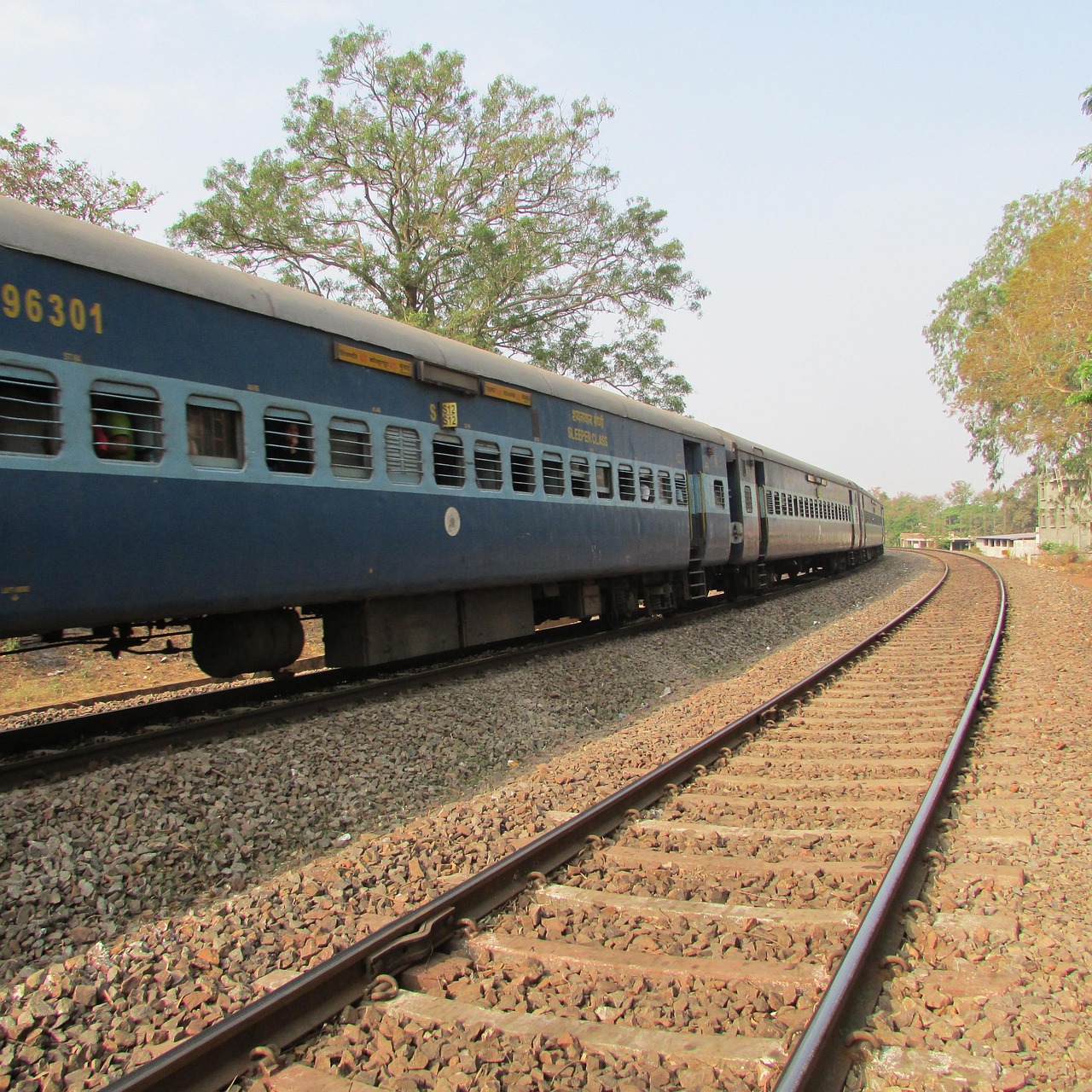
Cabinet Clears Multi-Tracking Projects Across Four States
New Rail Lines to Link 5,400 Villages Across Regions
New Delhi: With Bihar emerging as a key beneficiary, the Cabinet Committee on Economic Affairs, chaired by Prime Minister Narendra Modi, today approved three major multi-tracking projects of the Ministry of Railways aimed at expanding capacity across critical corridors in Bihar, Jharkhand, Maharashtra and Madhya Pradesh. The projects, with a combined estimated cost of ₹9,072 crore, will add about 307 kilometres to the existing rail network and are scheduled for completion by 2030–31.
Among the approved corridors, the Punarakh–Kiul section in Bihar will be developed with third and fourth railway lines, significantly strengthening one of the state’s most vital rail links. Alongside this, the Gondia–Jabalpur doubling project and the Gamharia–Chandil third and fourth line expansion will together cover eight districts across the four states, enhancing connectivity for nearly 5,407 villages with a combined population of about 98 lakh.
Officials said the expansion of line capacity would substantially improve mobility and operational efficiency for Indian Railways, easing congestion on heavily used passenger and freight routes. By enabling more trains to run with greater reliability, the projects are expected to streamline operations and strengthen service delivery across eastern and central India, with Bihar positioned as a critical transit hub in this network.
The government has linked the rail expansion to its broader vision of regional development and self-reliance. According to the Cabinet decision, the projects align with the Prime Minister’s emphasis on building a “New India” through infrastructure-led growth that can generate employment and self-employment opportunities in adjoining districts. Improved rail connectivity is expected to support local economies by facilitating the smoother movement of people and goods and by attracting ancillary industrial and commercial activity along these corridors.
All three projects have been planned under the PM Gati Shakti National Master Plan, which seeks to integrate rail development with roads, logistics hubs and other modes of transport through coordinated planning and stakeholder consultations. The objective, officials said, is to create seamless multi-modal connectivity and enhance overall logistics efficiency, particularly in regions that link mineral belts, industrial clusters and consumption centres.
Beyond commercial and commuter benefits, the capacity enhancement is projected to strengthen tourism access to several prominent destinations located along these routes. These include the Kachnar Shiv Temple in Jabalpur, Kanha National Park in Balaghat, Pench National Park, the Dhuandhar waterfall, Bargi Dam, Chandil Dam, Dalma Hill Top and Dalma Wildlife Sanctuary, among others. Improved rail connectivity is expected to make these locations more accessible to domestic travellers while supporting local tourism-driven livelihoods.
From a freight perspective, the corridors are described as essential arteries for transporting bulk commodities such as coal, steel, iron ore, cement, ballast and stone chips, fly ash, fertilisers, limestone, manganese, dolomite, foodgrains and petroleum products. The additional track capacity is estimated to generate incremental freight traffic of about 52 million tonnes per annum, reinforcing the railways’ role as the backbone of India’s logistics system.
The environmental dimension has also been highlighted as a significant outcome of the projects. Rail transport, being more energy-efficient and less carbon-intensive than road haulage, is expected to contribute to lower logistics costs and reduced dependence on imported fuel. The capacity augmentation is projected to save nearly six crore litres of oil and cut carbon dioxide emissions by around 30 crore kilograms, an impact officials equated to planting about one crore trees.
Taken together, the three multi-tracking projects represent a convergence of infrastructure expansion, economic integration and environmental objectives. With Bihar at the centre of this rail upgrade, the Cabinet decision underscores how strategic investment in railway capacity is being used not only to relieve congestion and boost freight movement, but also to anchor regional development and advance India’s longer-term goals of connectivity, competitiveness and climate responsibility.
– global bihari bureau