 By Onkareshwar Pandey*
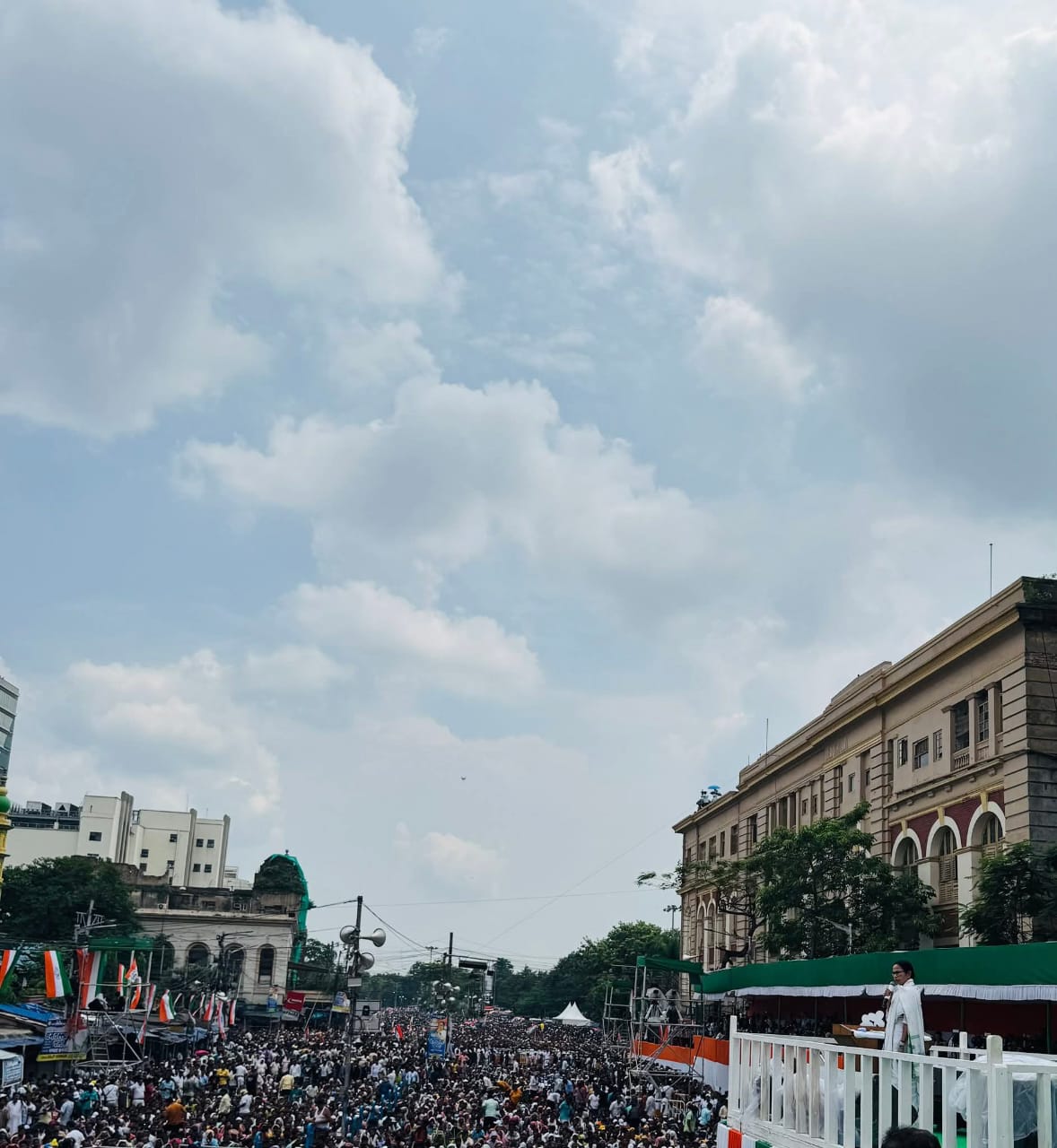
Kolkata: West Bengal Chief Minister and Trinamool Congress (TMC) leader Mamata Banerjee launched a “Bhasha Andolan” (Language Movement) at the Shahid Dibas rally in Kolkata on July 21, 2025, accusing the Bharatiya Janata Party-led Central government of orchestrating an “assault on the Bengali language and identity.”
Addressing the TMC supporters gathered to commemorate the 13 youth Congress workers killed in police firing during a 1993 protest, Banerjee alleged the BJP is using Central agencies to influence political outcomes. “Failing to win the people’s mandate through democratic means, BJP is now weaponising the Central agencies to tilt the scales in their favour. But this is Bengal, where even bullets failed to break our resolve. We will not be cowed into submission,” she roared from the rally stage.
Banerjee claimed that workers from Bengal in BJP-ruled states are being branded as “Bangladeshis” or “Rohingyas,” served NRC notices, detained, and even deported, pointing to policies like the National Register of Citizens (NRC) in Assam, where Bengali-speaking individuals, particularly Muslims, have faced scrutiny over citizenship status, with some sent to detention camps. She framed these actions as a deliberate attack on Bengali identity, resonating with historical sensitivities from movements like the 1950s Bhasha Andolan, which fought for Bengali as an official language. “Such attacks on our identity and language will not be tolerated. From July 27, every Saturday and Sunday, joined by people from all walks of life, we will launch Bhasha Andolan against this assault on our dignity. And if these injustices do not cease, we are prepared to take this fight to Delhi,” she warned. Banerjee concluded with a call for change: “Bodol chai, bodla noi (We want change, not revenge). But to those who mistake our humility for weakness, I say—Jobdo hobe, stabdho hobe! (You will be defeated, silenced).”
The rally turned into a call to arms against what the party alleges is a systematic targeting of Bengali language, culture, and people across the country under BJP rule. This narrative draws on perceptions of cultural homogenization, fueled by debates over the National Education Policy’s language provisions and the promotion of Hindi in official communications, which many Bengalis view as marginalising their linguistic heritage. TMC Rajya Sabha MP and former journalist Sagarika Ghose posted on Facebook: “Stop attacking the Bangla language and Bengali speakers. Every language has its own heritage and identity. Massive Shahid Dibas rally in Kolkata. All India Trinamool Congress, Mamata Banerjee sounds the bugle: Bengal’s Bhasha Andolan begins.” Photos shared by Ghose showed vast crowds holding placards reading “Bangla Amar Ma” (Bengali is my mother) and “Bhashar Opor Akramon Bondho Koro” (Stop the attack on our language).
Shahid Dibas, historically significant for West Bengal politics, has evolved into more than a remembrance event. Since 1993, Banerjee has turned it into a political platform, marking the beginning of major movements—from her break with the Congress to the launch of TMC, and the 2011 Poriborton (Change) campaign that ended 34 years of Left Front rule. This year’s rally laid a new political roadmap leading up to the 2026 Assembly and 2029 General Elections. “Bengal witnessed a historic Poriborton in 2011. Now, it is Delhi’s turn. The foundation stone for that change was laid today, and our democratic struggle will continue until those who peddle hate, division, and fear are compelled to step aside,” Banerjee declared.
The Bhasha Andolan serves as a strategic move to counter the BJP’s growing electoral influence in Bengal, where it has challenged TMC’s dominance in recent polls, while deflecting attention from corruption charges and investigations against TMC leaders. By framing the BJP as anti-Bengali, Banerjee aims to consolidate her voter base ahead of the 2026 elections and position herself as a national opposition leader, aligning with other non-BJP state leaders to champion federalism and regional identities. The rally’s emotional tone struck a chord among many Bengalis who feel sidelined in the national discourse, amplifying the movement’s appeal. Critics, however, argue that the accusations lack specific evidence of direct attacks on the Bengali language, such as explicit policies banning or restricting it, suggesting the “assault” is more about perceived cultural and political targeting. They also warn that framing the issue as a cultural attack risks escalating regional tensions, potentially deepening political divides. The rally’s passion, poetry, and political fire have added a new chapter to Bengal’s long history of language and identity-based movements, with its trajectory likely to shape electoral dynamics in the state and beyond as 2026 approaches.
*Senior journalist