India Welcomes Key Outcomes at UNFCCC CoP30
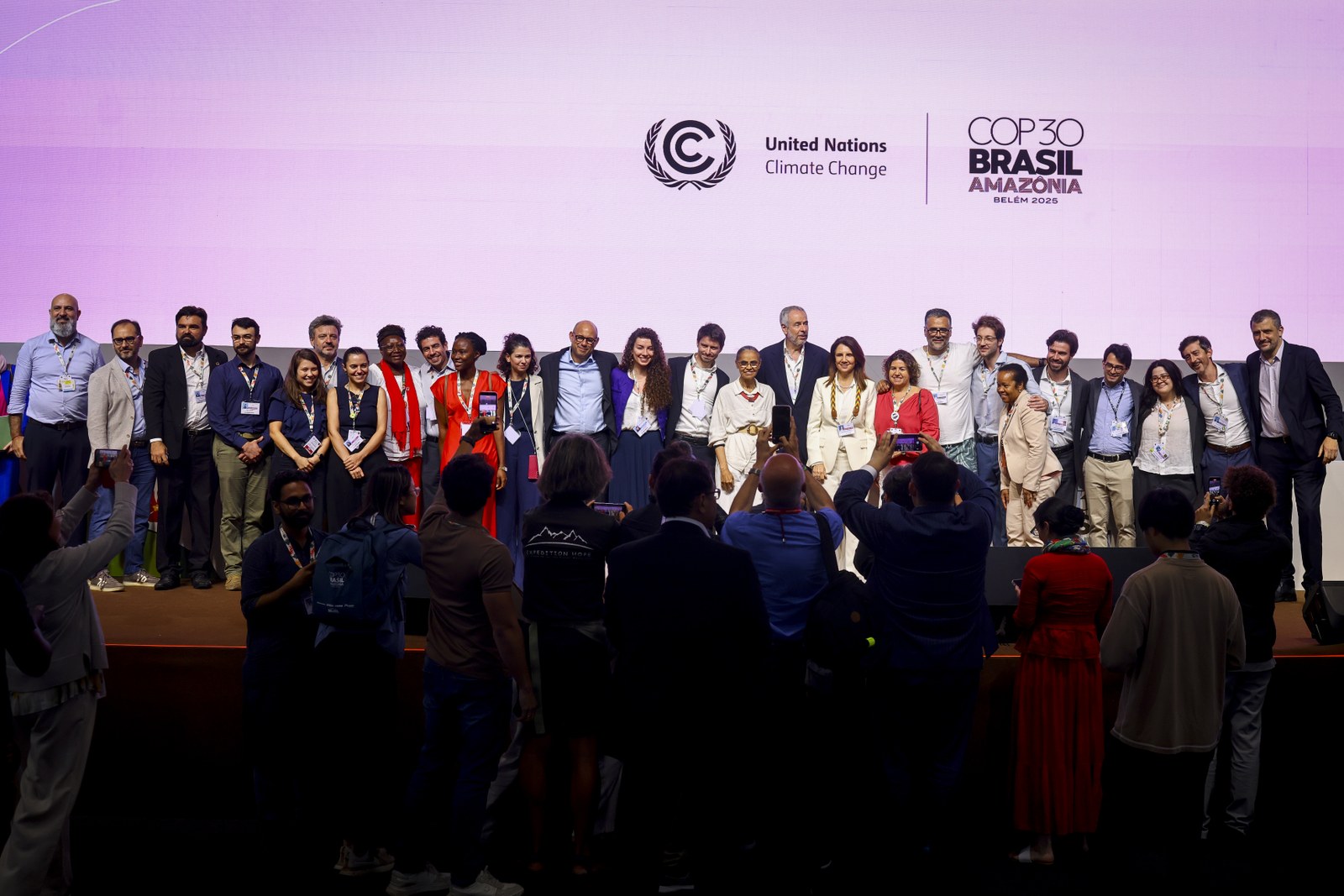
Belém: The closing hours of the United Nations Climate Change Conference (COP30) produced a rare moment of near-unanimous resolve as 195 Parties approved what is now being described as the Belém Package—a dense suite of 29 decisions that seeks to shift the world’s climate machinery decisively from negotiation to implementation. The agreement arrives at a time when the credibility of the multilateral system has been under increasing strain, yet the consensus in Belém also reflected an unmistakable urgency following months of extreme weather events and a bruising debate over global ambition, finance and equity. That sense of fragility became momentarily physical earlier in the week when a small electrical fire in the heavily crowded Blue Zone forced the evacuation of delegates and the treatment of several individuals for smoke inhalation, an unsettling reminder of the vulnerabilities that haunt both the planet and the process meant to protect it.
The 29 Decisions of the COP30 Belém Package
- Mutirão Decision – Global mobilisation for climate action.
- Global Goal on Adaptation (GGA) – Operational framework with 59 voluntary indicators.
- UAE Just Transition Work Programme – Equity-centred transition pathways.
- Sharm el-Sheikh Mitigation Ambition & Implementation Work Programme – Follow-up actions to raise global mitigation efforts.
- Global Stocktake (GST) – Procedural Arrangements – Institutional and reporting modalities.
- GST – 2024 Dialogue Report – Synthesis and documentation requirements.
- GST – 2025 Dialogue Report – Continuation of assessment cycles.
- Finance: UAE Dialogue on Implementing GST Outcomes – Structured discussions on scaling finance.
- Article 9(5) Finance Communications Workshop Report – Compilation and synthesis for transparency.
- Sharm el-Sheikh Dialogue on Article 2(1)(c) – Aligning financial flows with Paris Agreement goals.
- Response Measures Forum Report – Impacts of climate measures on economies and communities.
- Standing Committee on Finance – Guidance on strengthening the climate-finance architecture.
- Green Climate Fund Report & Guidance – Programming and policy directions.
- Global Environment Facility Report & Guidance – Alignment with climate priorities.
- Loss and Damage Fund Report & Guidance – Operational instructions for the fund.
- Adaptation Fund Matters – Access modalities and programme direction.
- Technology Implementation Programme – Enhancing technology development and transfer.
- Paris Agreement Article 13 Transparency Support – Reporting and capacity-building for developing countries.
- Belém Gender Action Plan – Strengthened gender-responsive climate action.
- GST Follow-up Decision I – Inputs, modalities and next steps.
- GST Follow-up Decision II – Institutional arrangements.
- GST Follow-up Decision III – Technical components and implementation support.
- Market & Non-Market Mechanisms – Rules and institutional functions.
- Capacity-Building for Paris Agreement Implementation – Training and institutional strengthening.
- Transparency Framework: Biennial Transparency Reports Syntheses – Compiled reporting outputs.
- Constituted Bodies Reports & Guidance to Funds – Cross-cutting directions for climate institutions.
- Technology Mechanism / CTCN Review – Operational review and guidance.
- NDC Synthesis Report Response – Addressing the ambition and implementation gap.
- Climate & Trade Dialogue Decision – Cooperation on trade-related unilateral climate measures.
For Brazil, the host of COP30, the stakes were unusually high. Belém, set in the Amazonian gateway of Pará, offered more than a symbolic backdrop: it projected the political, cultural and ecological identity that President Luiz Inácio Lula da Silva’s administration has tried to embed into global climate negotiations. Brazil’s diplomats, led by COP30 President André Corrêa do Lago, worked to position their country as a convenor capable of balancing climate urgency with long-standing questions of equity. This extended Brazil’s historical role as a bridge-builder between developed and developing blocs, a role that dates back to earlier negotiations on forest governance, common but differentiated responsibilities and climate finance. Hosting the conference in the Amazon was therefore a calculated statement, amplifying the region’s ecological importance and Brazil’s political intent to push for a climate regime more deeply connected to people’s lives and local realities.
The Belém Package itself draws heavily on this ambition. It includes a commitment to triple adaptation finance by 2035, reflecting widespread recognition that developing countries—and especially forest, coastal and agrarian communities—are confronting escalating impacts. Parties also concluded the Baku Adaptation Roadmap, which sets out activities from 2026 to 2028 until the next Global Stocktake of the Paris Agreement. For the first time, countries collectively agreed to use a unified framework of 59 voluntary and non-prescriptive indicators under the Global Goal on Adaptation. These indicators span water, food, public health, infrastructure, ecosystems, early-warning systems and climate-resilient livelihoods, while embedding cross-cutting issues such as technology, finance and capacity-building. Negotiators framed this standardisation as a turning point, especially for regions like the Amazon basin, where adaptation needs are rising faster than funding flows.
The political pulse of COP30 was also shaped by the energy transition debate. The most contentious arena, unsurprisingly, was energy. More than eighty countries called for explicit fossil-fuel phase-out language, often invoking scientific assessments from the Intergovernmental Panel on Climate Change (IPCC), the International Energy Agency (IEA) and growing public pressure. Resistance from several fossil-fuel producers and energy-dependent economies kept the negotiations tense well into the final hours. Brazil, which remains heavily invested in hydropower and biofuels while also expanding offshore oil production, positioned itself as a mediator. It supported ambitious energy pathways but avoided language that could alienate key partners, instead endorsing the Transitioning Away from Fossil Fuels Roadmap as a forward-looking, politically feasible compromise. In parallel, the Climate Transition Roadmap emerged as one of the most closely watched elements of the Belém Package. Developed with inputs from the IPCC, IEA and the International Renewable Energy Agency (IRENA), it outlined steps toward renewable energy expansion, energy-efficiency gains, power-grid modernisation, electrification, green hydrogen, sustainable biofuels and sustainable aviation fuel (SAF). The roadmap is not a legally binding instrument, but it does create a technical scaffold against which national actions can be assessed, especially as countries move from pledging ambition to demonstrating implementation.
Mitigation efforts were reinforced by an unprecedented round of updated Nationally Determined Contributions. A total of 122 countries submitted new or revised commitments, which the United Nations Framework Convention on Climate Change (UNFCCC) secretariat estimated could collectively reduce global emissions by approximately twelve per cent by 2035 compared with 2019 levels. While insufficient for a 1.5°C pathway, negotiators argued that these updated NDCs offer a more credible baseline for accountability. The conference also featured more than 120 Plans to Accelerate Solutions under an Action Agenda that, in total, now consists of over 480 initiatives across clean energy, forests, oceans, agriculture, health and local governance.
Finance, as in every COP, became both the fulcrum and the fault line. Finance negotiations placed Brazil in the centre of a complex geopolitical balancing act. The Global Climate Finance Accountability Framework and the Baku-to-Belém Roadmap to USD 1.3 trillion annually by 2035 sought to reorient climate finance away from fragmented pledges toward transparent, measurable and equitable flows. Several financial commitments were highlighted to underscore early momentum: USD 6.7 billion mobilised for the Tropical Forests Forever Facility (TFFF), designed to provide long-term results-based payments for conserving standing forests across the Amazon, Congo Basin and Southeast Asia; USD 1.4 billion from the Bill & Melinda Gates Foundation for strengthening smallholder agriculture, climate-resilient health systems and disease surveillance; USD 300 million through the Belém Health Action Plan for climate-linked health vulnerabilities; and nearly USD 6 billion mobilised through Brazil’s RAIZ (Reflorestamento Ambiental Integrado e Zonal) and EcoInvest programmes to restore up to three million hectares of degraded farmland. Ocean initiatives also advanced significantly, with seventeen countries joining the Blue Nationally Determined Contributions (NDC) Challenge and endorsing a plan to mobilise USD 20 billion and generate twenty million blue jobs by 2030 through regenerative seascapes and integrated coastal economies.
A breakthrough came through the Mutirão Decision, named after the Brazilian concept of community-led collective action. The decision reaffirms the need to enhance global ambition across mitigation, adaptation and investment, while establishing two complementary implementation platforms: the Global Implementation Accelerator, which will support countries in executing their NDCs and National Adaptation Plans (NAPs), and the Belém Mission to 1.5°C, an initiative of the COP29–COP31 troika dedicated to maintaining alignment with the Paris Agreement temperature goal. Brazil framed both mechanisms as a transition from negotiation to national delivery, emphasising that climate ambition must now be measured by real-world outcomes rather than the number of pledges.
COP30’s people-centred framing was amplified by unusually strong civil-society participation, especially from Indigenous communities. Civil society and Indigenous communities were more visible at COP30 than at most previous conferences. More than nine hundred Indigenous representatives took part in formal negotiations in the Blue Zone. Outside, the Belém Climate March turned into one of the largest demonstrations in COP history, drawing tens of thousands who demanded climate justice, equitable transitions and stronger accountability from governments. Delegates widely acknowledged that holding the conference in the Amazon reshaped the tone of the negotiations, centring voices that are often marginal to global forums yet disproportionately affected by ecological loss, land conflicts, illegal mining and forest degradation.
India, in its closing statement, welcomed the COP Presidency’s inclusionary approach and reaffirmed the principles of equity, climate justice and national sovereignty. It praised progress under the Global Goal on Adaptation, emphasising that adaptation remains a priority for developing countries that bear the least responsibility for causing climate change. India also underscored the centrality of climate finance, noting that promises made in Rio de Janeiro thirty-three years ago remain unmet, and urged developed countries to fulfil their long-standing obligations under Article 9.1 of the Paris Agreement. New Delhi welcomed the establishment of the Just Transition Mechanism and appreciated the space created in Belém to address unilateral climate-related trade restrictions, arguing that such measures risk violating equity principles and disproportionately harming developing economies.
Despite these extensive outcomes, negotiators acknowledged that the road ahead is riddled with political, financial and institutional friction. Multilateral development banks require substantial reform to increase concessional flows. Private-sector mobilisation remains far below the levels required for the 1.5°C pathway. Several least-developed countries still struggle with absorptive capacity, complicating the deployment of large-scale finance. Meanwhile, the presence of a record number of fossil-fuel lobbyists fuelled concerns that political compromises made in Belém could falter once governments return home and face domestic pressures.
Yet, for Brazil, COP30 ended with its diplomatic profile significantly elevated. Belém delivered an agreement that fused scientific urgency with a distinctly Amazonian ethos of collective responsibility. It also marked one of the most comprehensive attempts yet to align negotiation outcomes with real-world implementation, whether through finance frameworks, adaptation indicators, forest mechanisms or transition roadmaps. For many observers, the Belém Package now stands as a litmus test for whether multilateralism can still deliver meaningful climate action in a fractured world.
For now, Belém will be remembered as a COP that attempted to square political will with scientific warning, that placed forests and frontline communities at the moral core of climate diplomacy, and that tried to shift the global conversation from aspirational negotiation to measurable implementation.
If countries follow through, Belém could be remembered as the moment when the centre of gravity in global climate governance shifted to the Global South—toward regions that understand both the fragility and the irreplaceable value of the ecosystems on which the planet depends. If not, COP30 may ultimately be seen as another powerful warning—clear, data-rich and morally urgent—left unheeded.
– global bihari bureau