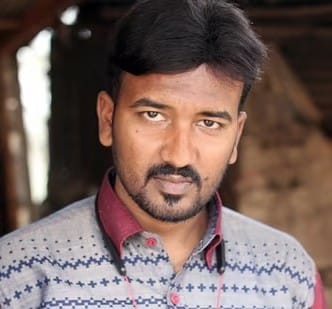
Rana Pratap Bairagi
Hindu Journalist Killed in Bangladesh Amid Minority Attacks
Geneva: Amid continuing political uncertainty and heightened security concerns in Bangladesh, journalist Rana Pratap Bairagi was shot dead on January 5, 2026, in the south-western Jashore (Jessore) district, prompting strong condemnation from the international media rights body Press Emblem Campaign (PEC), which has demanded a credible and time-bound investigation to identify and punish those responsible.
Bairagi, who served as acting editor of the Bengali daily Dainik BD Khabar and also ran an ice-manufacturing business in Kopalia (Kapalia) Bazaar under Monirampur upazila, was killed in what police described as a targeted attack carried out in public view. According to multiple local media reports and initial police statements, unidentified assailants arrived on a motorcycle, called Bairagi out of his workplace, dragged him into a nearby alley and shot him at close range, primarily in the head. He died on the spot. Some early reports also mentioned that his throat was slit, a detail authorities have said remains under investigation.
Police sources have identified Bairagi as a resident of Arua village in Keshabpur upazila. While his exact age has been reported differently across outlets, investigators have confirmed that he was in his late thirties to early forties. He was the son of a Hindu schoolteacher, and his killing has drawn particular attention in the context of recent attacks on members of Bangladesh’s religious minorities, though officials have not confirmed any motive so far.
The Press Emblem Campaign, a Geneva-based organisation that tracks violations against journalists worldwide, said Bairagi’s killing makes him the first journalist globally to be killed in 2026 in the line of duty. In a statement, PEC president Blaise Lempen strongly condemned the murder and appealed to Bangladesh’s interim leadership to ensure justice. Lempen urged Nobel laureate Dr Muhammad Yunus, who currently heads the interim administration in Dhaka, to personally intervene so that the investigation is conducted transparently and the perpetrators are brought to account under the law.
PEC’s South and Southeast Asia representative, Nava Thakuria, noted that the killing occurred at a time when Bangladesh has been under intense international scrutiny due to ongoing socio-political unrest and uncertainty surrounding the electoral roadmap. He added that journalists and religious minorities have increasingly found themselves vulnerable amid a deteriorating law-and-order environment in parts of the country, which has a population exceeding 170 million.
Police have confirmed that a criminal investigation is underway, with efforts focused on identifying the attackers and determining the motive. Authorities have said they are examining possible professional, personal or criminal angles, but stressed that no conclusion has yet been reached. While some reports have referred to previous legal cases involving Bairagi, officials have not provided detailed public clarification on their relevance to the killing.
The murder has revived concerns about press safety in Bangladesh, which last year witnessed the deaths of five media professionals: Assaduzzaman Tuhin (Dainik Pratidiner Kagoj), Bibhuranjan Sarkar (Ajker Patrika), Wahed-uz-Zaman Bulu (Dainik Ajker Kagoj), Khandahar Shah Alam (Dainik Matrijagat) and Imdadul Haque Milon (Bartaman Somoy). Media rights groups say the lack of swift convictions in past cases has contributed to a climate of impunity.
As investigations continue, PEC and other watchdog organisations have reiterated that the credibility of Bangladesh’s commitment to press freedom and rule of law will be judged by the outcome of this case, particularly at a moment when political stability and institutional trust remain fragile.
– global bihari bureau