India Advances Global Standardisation of Traditional Medicine
WHO Approves Module for Ayurveda, Siddha, Unani Integration
Landmark Step for Global Recognition of Indian Healthcare
New Delhi: For the first time, traditional Indian healthcare systems are set to gain formal global recognition, as the Ministry of Ayush and the World Health Organization advance efforts to integrate Ayurveda, Siddha, and Unani into the International Classification of Health Interventions (ICHI). The move, discussed at a two-day Technical Project Meeting on December 20–21, 2025, in New Delhi, aims to create a dedicated module for traditional medicine within the global standard that classifies healthcare interventions. This development enables worldwide standardisation, documentation, and scientific validation of traditional Indian health practices.
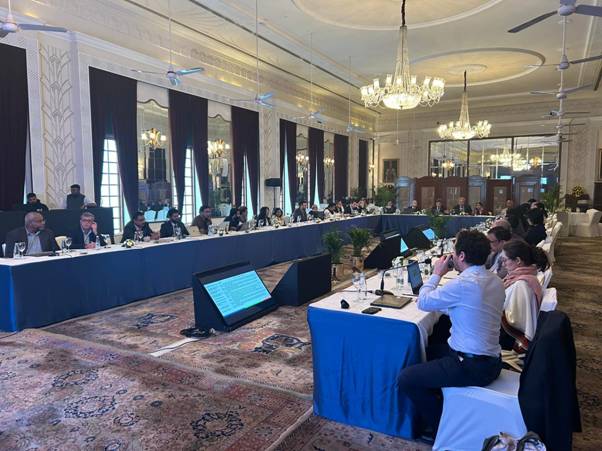
The meeting, held at the Hotel Imperial, brought together representatives from all six World Health Organization regions — Africa, Americas, Eastern Mediterranean, Europe, Southeast Asia, and Western Pacific — ensuring a comprehensive global perspective on traditional medicine. Delegates from member states, including Bhutan, Brazil, India, Iran, Malaysia, Nepal, Mauritius, South Africa, Sri Lanka, the Philippines, the United Kingdom, and the United States, participated in reviewing their national status and harmonising intervention descriptions. Key WHO officials, including Robert Jakob, Nenad Kostanjsek, Stéphane Espinosa, and Dr Pradeep Dua, led the classification discussions, alongside Dr Geetha Krishnan from the WHO Global Traditional Medicine Centre in Jamnagar and Dr Pawan Kumar Godatwar from the WHO Southeast Asia Regional Office in Delhi.
The initiative follows the Memorandum of Understanding and Donor Agreement signed between the Ministry of Ayush and WHO on May 24, 2025, which provided both the financial and technical frameworks for developing a dedicated Traditional Medicine module within ICHI. The technical sessions were chaired by Kavita Garg, Joint Secretary at the Ministry of Ayush, who led the Indian team in developing national health intervention codes for Ayurveda, Siddha, and Unani medicine. Experts such as Prof. Rabinarayan Acharya, Director General of the Central Council for Research in Ayurvedic Sciences, Prof. N. J. Muthukumar, Director General of the Central Council for Research in Siddha, and Dr Zaheer Ahmad, Director General of the Central Council for Research in Unani Medicine, contributed to the deliberations.
By integrating traditional medicine into ICHI, a global standard for classifying healthcare interventions, countries will gain a uniform language for documenting and analysing the frequency, effectiveness, and safety of traditional treatments. The standardisation is expected to support clinical research, inform evidence-based policies, and facilitate the inclusion of Ayurveda, Siddha, and Unani in national and global health information systems.
This development aligns with the Union Government’s vision of expanding the global reach of traditional Indian healthcare in a scientific and structured manner. In his Mann Ki Baat address, the Prime Minister, Narendra Modi, emphasised that standardisation through ICHI will provide global recognition and credibility to Ayush systems. Vaidya Rajesh Kotecha, Secretary of the Ministry of Ayush, highlighted that the dedicated ICHI module would enable international validation of Ayush interventions, reinforcing WHO’s commitment to inclusive, safe, and evidence-based healthcare.
The technical project meeting marked a significant step in positioning Indian traditional medicine within global health frameworks, reflecting both India’s growing leadership in promoting AYUSH and WHO’s commitment to integrating diverse healthcare systems into international standards.
– global bihari bureau