24 Million-Year-Old Leaf Links Assam to Ghats
Guwahati: Tucked within the coal-black seams of Assam’s Makum Coalfield, a delicate fossil leaf has emerged from a 24-million-year slumber, whispering tales of a lost world where Northeast India bloomed with tropical splendour.
Accompanied by a diagram charting Nothopegia’s retreat from Northeast India and survival in the Western Ghats, the study is a clarion call for conservation. In Assam’s Makum Coalfield, a leaf from 24 million years ago has spoken, urging us to heed the lessons of deep time to protect the green legacy of our planet.

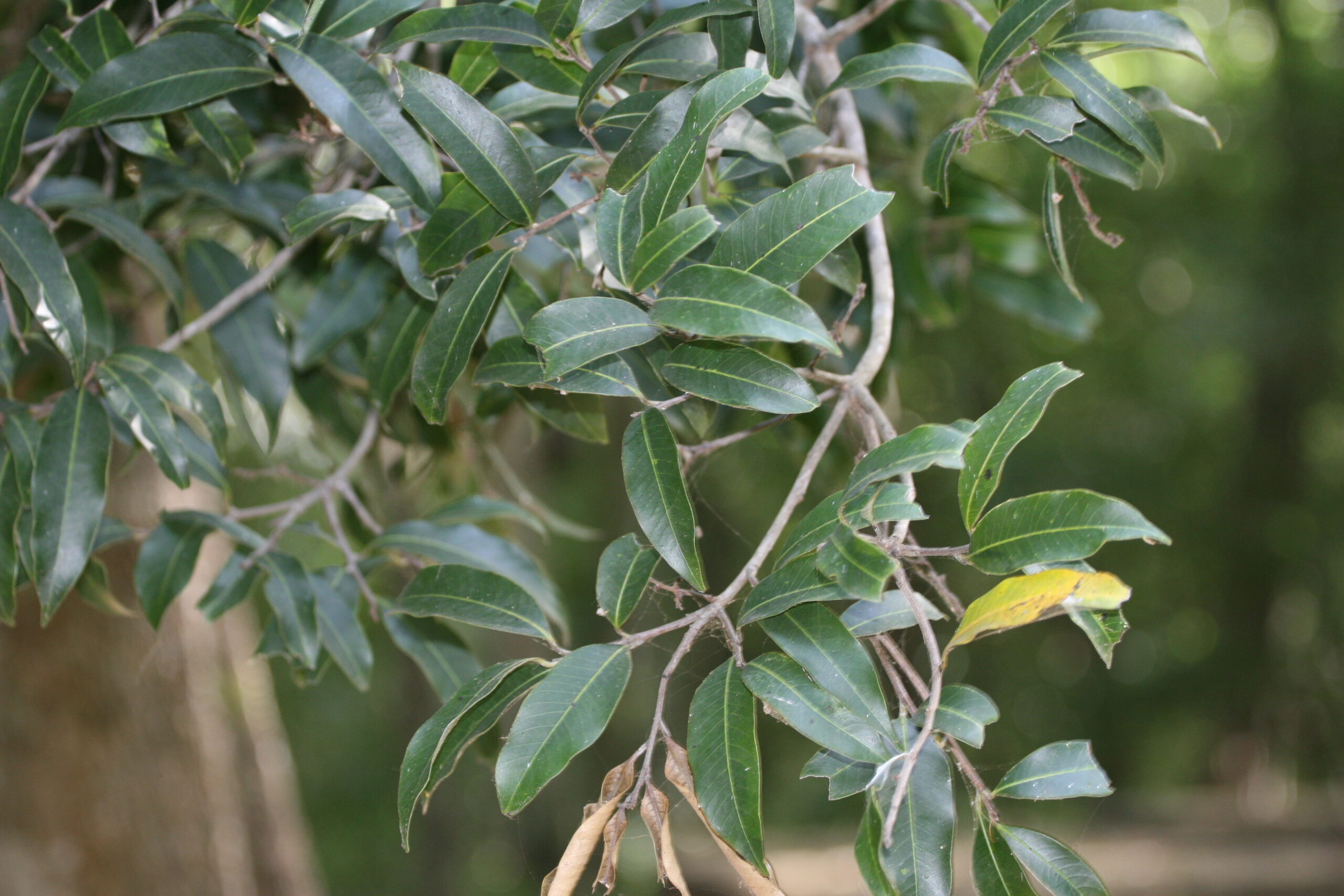
This find, stumbled upon by keen-eyed scientists, has unveiled the oldest known fossil record of the Nothopegia genus, a plant now thriving far away in the rain-soaked Western Ghats. More than a botanical curiosity, this leaf is a portal to an ancient epoch, revealing how plants danced with climate upheavals to survive—and offering a poignant lesson for our warming planet.
The discovery unfolded when researchers from the Birbal Sahni Institute of Palaeosciences (BSIP) in Lucknow, an autonomous arm of the Department of Science and Technology, sifted through Assam’s fossil-rich Makum Coalfield. Struck by the leaves’ familiar outlines, the team, guided by experts like Dr. Harshita Bhatia, embarked on a meticulous quest. They scrutinized morphological traits, compared the fossils to modern herbarium specimens, and employed cluster analysis, concluding that these leaves, from the late Oligocene epoch (24–23 million years ago), belonged to Nothopegia—a genus mysteriously absent from Northeast India today but flourishing in the Western Ghats, a UNESCO World Heritage Site and biodiversity beacon.
To conjure the world these leaves once knew, the researchers wielded the Climate Leaf Analysis Multivariate Program (CLAMP), painting a picture of a warm, humid Northeast India, a mirror to the Western Ghats’ modern rainforests. This lush cradle nurtured Nothopegia until the Earth’s tectonic drama intervened. The Himalayas’ rise, a colossal upheaval, reshaped the region’s climate, cooling temperatures, shifting rainfall, and altering wind patterns. Northeast India grew inhospitable, and Nothopegia vanished, its fossilised leaves locked in Assam’s coal. Yet, in the Western Ghats’ stable embrace, the genus persisted, a living testament to an ancient past.
Published in the Review of Palaeobotany and Palynology, the study traced Nothopegia’s epic migration from Northeast to South India through a fusion of palaeobotany, systematics, and climate modelling. This multidisciplinary lens illuminated how tectonic and climatic forces sculpted India’s ecosystems, driving some species to extinction while others, like Nothopegia, found refuge. The fossil leaves, their veins etched in stone, weave a broader saga of resilience, showing that climate-driven migration and extinction have moulded Earth’s biodiversity for millions of years.
This ancient tale resonates sharply today. Unlike the Oligocene’s gradual shifts, modern climate change races forward, fueled by human activity. Nothopegia’s journey offers scientists a roadmap to predict how plants might navigate today’s warming world, underscoring the urgency of protecting biodiversity sanctuaries like the Western Ghats, where ancient lineages endure. As Dr. Harshita Bhatia, a co-author, poignantly stated, “This fossil discovery is a window into the past that helps us understand the future,” framing the find as a vital clue for safeguarding India’s biodiversity against looming climatic threats.
– global bihari bureau