
India’s 9th Asia Cup Win Sparks Dubai Drama
Kuldeep’s Spin, Tilak’s Grit Seal Epic Final
Dubai: The night Dubai saw cricket transformed into a story bigger than sport itself. India claimed their ninth Asia Cup title, chasing down 147 against Pakistan with two balls to spare in a nail-biting final, outlasting Pakistan by five wickets.
But the real drama unfolded off the pitch. The trophy presentation became a moment of silent protest: India refused to lift it from Mohsin Naqvi, head of the Pakistan Cricket Board and Asian Cricket Council, citing political sensitivities. Handshakes were skipped, medals politely declined, and the floodlights reflected a stadium alive with emotion and intensity.
The victory was pure elation for the Men in Blue, but the off-field drama cast its own sharp edge: India’s boycott of the trophy presentation from Naqvi stretched the wait to 45 minutes, the silverware left stranded on its plinth.
The Dubai International Cricket Stadium thrummed with a fever that turned cricket into something primal, a clash where every boundary echoed like thunder and every wicket landed like a blow.
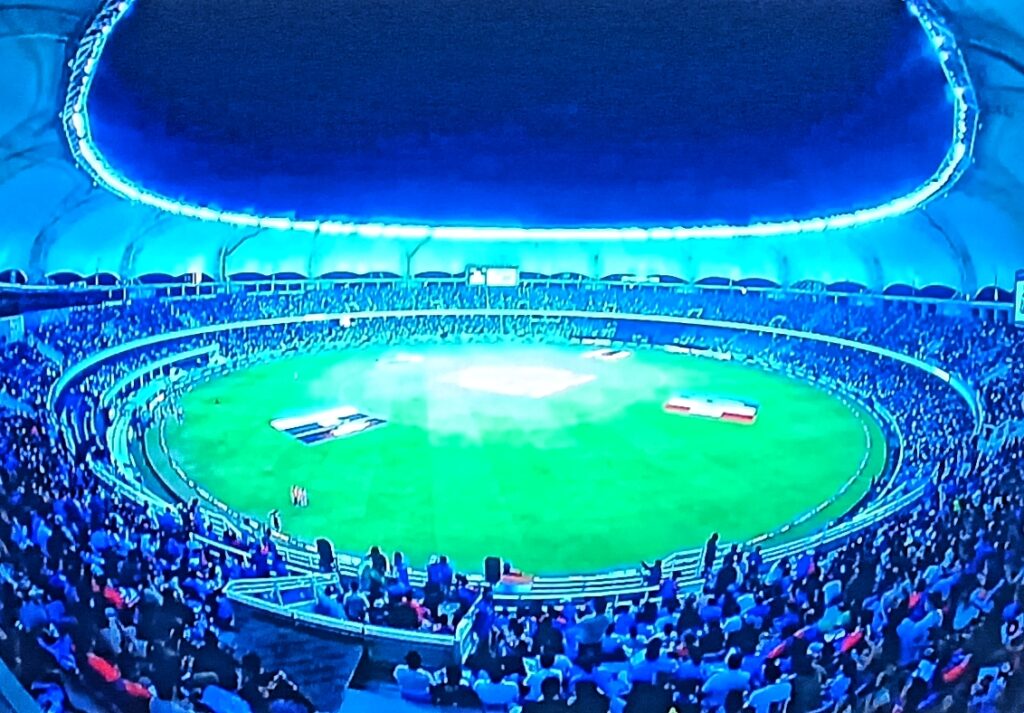
The crowd lived every ball. Diving stops, boundary saves, and acrobatic throws turned the field into a stage of relentless drama. Each wicket sent blue stands into a frenzy, each boundary a green spark of defiance. The stadium wasn’t just a venue—it was a living, breathing pulse of the rivalry, every chant a heartbeat. The tension had been building since the toss, where captains Suryakumar Yadav and Salman Ali Agha locked eyes but not hands, his third snub of the tournament after the group-stage and Super Four encounters. Salman stood alone with the gleaming trophy minutes before, Suryakumar absent from the pre-toss photoshoot, the floodlights casting long shadows over a gesture loaded with subtext. Pressed on the avoidance, Suryakumar’s response cut clean: “Some things in life are bigger than sportsman spirit.” His words hung in the humid air, a quiet acknowledgement that this rivalry carried weights beyond the boundary rope.
Pakistan, electing to bat first after Suryakumar’s call to field, began aggressively. Openers Sahibzada Farhan and Fakhar Zaman blazed through the powerplay, racing to an 84-run opening stand that left Indian fielders chasing shadows. Boundaries flowed crisply, running between the wickets was sharp, and for a while, it seemed Pakistan would post a total that would intimidate any opponent.

But then, Kuldeep Yadav took charge. With his wrist-spin, guile, and deception, he dismantled Pakistan’s middle order. His spell of 4 wickets for 30 runs in 4 overs reduced the visitors from 113 for 1 to 146 all out, his variations including googlies, sliders, and wrong’uns bamboozling batsmen at crucial moments. The performance pushed his tournament tally to 17 wickets, a new record in T20 Asia Cup history.
Indian bowlers complemented Kuldeep’s heroics perfectly. Jasprit Bumrah returned 2/25, his yorkers piercing the tail, while Varun Chakravarthy and Axar Patel tightened the screws in the death overs. By the time Pakistan’s innings concluded, the momentum had decisively swung toward India, though the chase promised its own tension.
India’s reply ignited with a stutter, the air thick with doubt as Abhishek Sharma, the tournament’s 314-run dynamo, edged Faheem Ashraf for 5 off 7, his turf-kick a flash of Delhi fire doused too soon. Early wickets fell, including the captain Suryakumar, leaving the team precariously placed at 20 for 3. The stadium leaned forward with bated breath, knowing the balance of the match rested on the middle order.

Enter Tilak Varma, calm and composed, who anchored India’s innings with an unbeaten 69 off 42 balls, crafting a masterclass in shot selection, running between wickets, and composure under pressure. “If I get a start, my team should win. Sometimes you are going to fail, but you have to follow the process,” he reflected later, summarising his approach.
Alongside him, Shivam Dube brought power and aggression, striking 33 off 20 balls, including towering sixes that reminded everyone of his explosive potential. Their 61-run stand swung momentum back to India, as fans erupted with every boundary and dive. The crowd seemed to breathe with the players, each save and near-miss intensifying the drama.
As the final over approached, India needed 10 runs, and Dube holed out on the first ball. The stage was set for Rinku Singh, who had not faced a ball in the entire tournament. Against Haris Rauf, he dispatched a wide yorker over midwicket for four, igniting pandemonium. “Team won and I am really happy,” Rinku said after, his modest words belying the enormous drama of the moment.
Rinku’s boundary unleashed pandemonium: Tilak, stoic through 42 balls, finally yelled, flashing heart signs to the frenzied blue tide; Kuldeep sprinted from the ropes, arms wheeling like a whirlwind; the dugout emptied in a blur of hugs and leaps, blue jerseys a human wave crashing the field. Across the divide, Shaheen Afridi bowed his head, Haris Rauf kicked the turf, and Salman Agha trudged off, his 2 for 28 a lone spark in Pakistan’s fade from 113 for 2.

Tilak Varma emerged as a stabilising force, pairing calm strategy with audacious strokeplay. Shivam Dube provided the acceleration, and Rinku Singh’s last-ball boundary became the emblematic conclusion of India’s thrilling journey. Kuldeep Yadav, the architect of India’s win, displayed mastery over spin, removing key batsmen at pivotal moments. Jasprit Bumrah added: “I had to respond in the moment. It was a symbolic gesture, nothing more,” reflecting the intensity of his contribution.

The final wasn’t just a game—it was a collision of skill, heart, and history. Pakistan’s early fire faded under Kuldeep’s spin and India’s relentless chase. The green camp’s silence contrasted with the blue tide’s euphoria, a divide as stark as the flags in the stands.
Analysts pored over every moment—field placements, bowling changes, the missed chances that cost Pakistan. But the story was clear: India’s blend of youth, nerve, and tactical nous had prevailed. Tilak’s steady hand, Dube’s explosive spark, and Rinku’s final flourish became the brushstrokes of a masterpiece painted under pressure.

India’s strategy was surgical. Suryakumar’s captaincy rotated bowlers with precision, fields set like traps, forcing Pakistan into rushed shots and missteps. Tilak’s composure, Dube’s power, and Rinku’s clutch finish were the fruits of a team that thrived under pressure, their unity a silent rebuke to the off-field tensions.
Pakistan’s captain, Salman Ali Agha’s post-match words carried the sting: “It’s a tough pill to swallow. We lost wickets while batting, were outstanding with the ball but didn’t have enough runs. We didn’t rotate strike and lost too many wickets. We have to sort out our batting very soon.”
Off the field, tension mirrored the drama on it. “I have been informed by the Asian Cricket Council (ACC) that the Indian cricket team will not be collecting their awards tonight,” Simon Doull, the presenter for the host broadcaster, said at the ceremony. “So that does conclude the post-match presentation.” At the press conference after the ceremony, India captain Suryakumar Yadav said, “I think this is one thing which I have never seen since I started playing cricket, started following cricket, that a champion team is denied a trophy, that too a hard-earned one. I feel we deserved it. I can’t say anything more; I’ve summed it up really well. If you tell me about trophies, my trophies are sitting in the dressing room, all the 14 guys with me, the support staff, those are the real trophies throughout this journey in the Asia Cup.” He asserted that the team had taken the decision not to receive the trophy and that “no one told us to do it.”
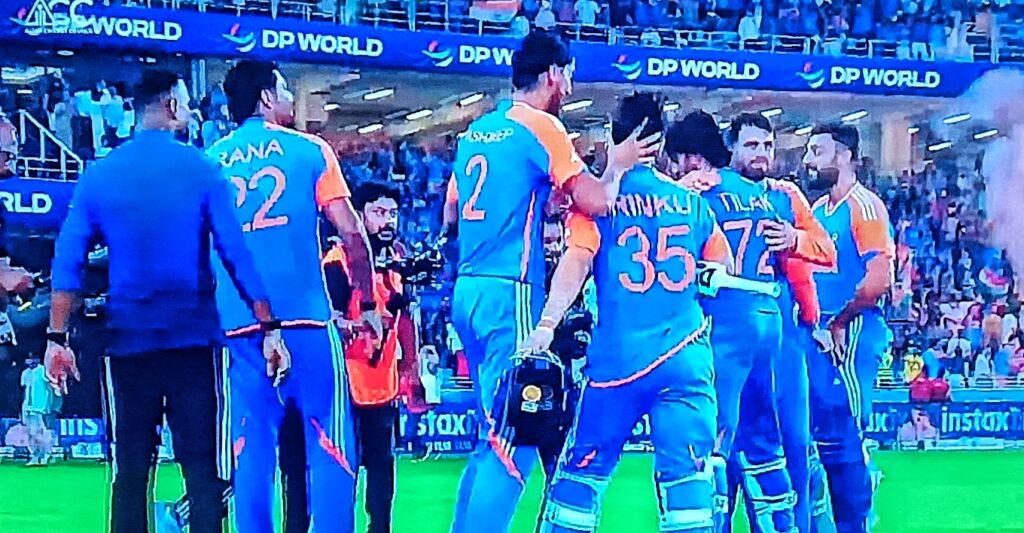
The tournament had seen India undefeated, defeating Pakistan in all three encounters: the group stage, Super Four, and now the final. Abhishek Sharma, with 314 runs, was named Player of the Tournament. “If I get the spinners in the power play, I will try to use the power play. Even for premium fast bowlers, I would go from the first ball no matter who’s the bowler,” he remarked, explaining his aggressive yet controlled strategy.
Throughout the tournament, Abhishek’s consistency, Kuldeep’s destructive spin, and the middle-order resilience underscored India’s dominance. The blue stands erupted while the green supporters reflected on a narrow loss. Analysts debated every tactical choice, reviewing field placements and missed opportunities, but the overarching story was clear: India’s mix of skill, youth, and mental toughness had triumphed under immense pressure.
The Asia Cup 2025 will echo beyond the scorecards. It was a stage where sport and sentiment intertwined, where every run and wicket carried the weight of a billion hopes. India’s ninth crown wasn’t just a trophy—it was a testament to their grit, a defiance etched in every dive and boundary.
As the floodlights dimmed, the Dubai night held its breath. Fans, players, and the game itself had woven a narrative of courage and conviction. This wasn’t just cricket—it was a saga of pride, rivalry, and a legacy that will burn bright for years to come.
– global bihari bureau