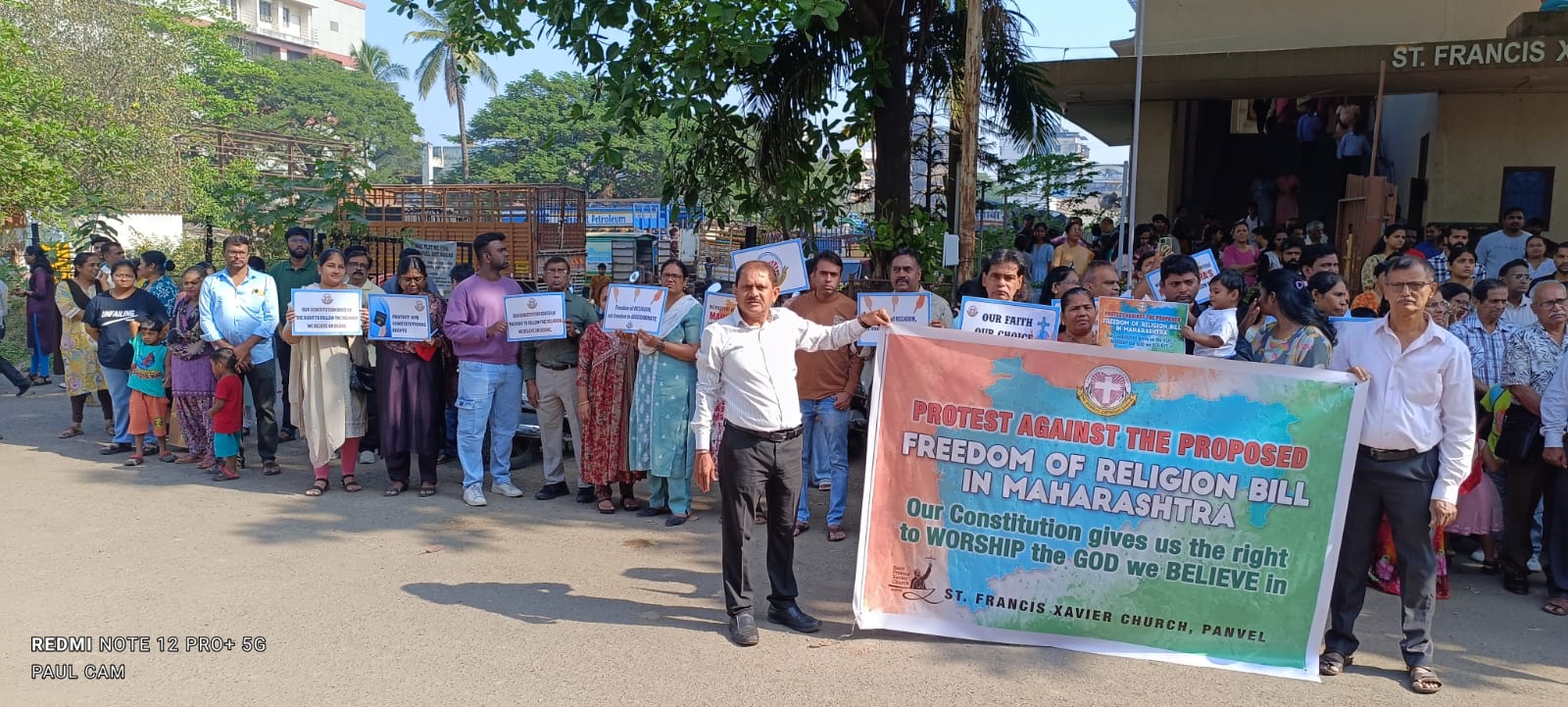
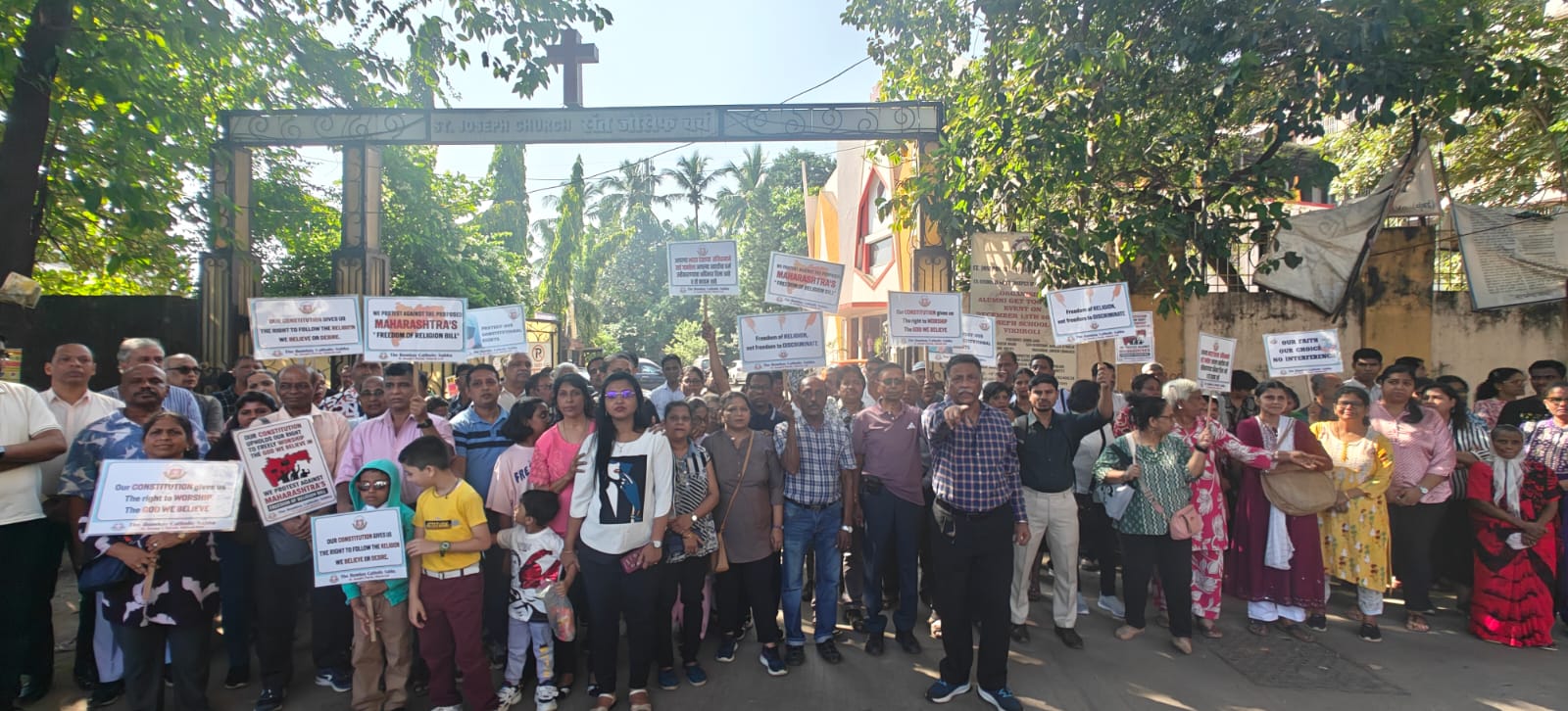
BCS protest at St. Francis Xavier, Panvel, in Mumbai today.
Religious Freedom on Streets: Mumbai Protest Against Anti‑Conversion Bill
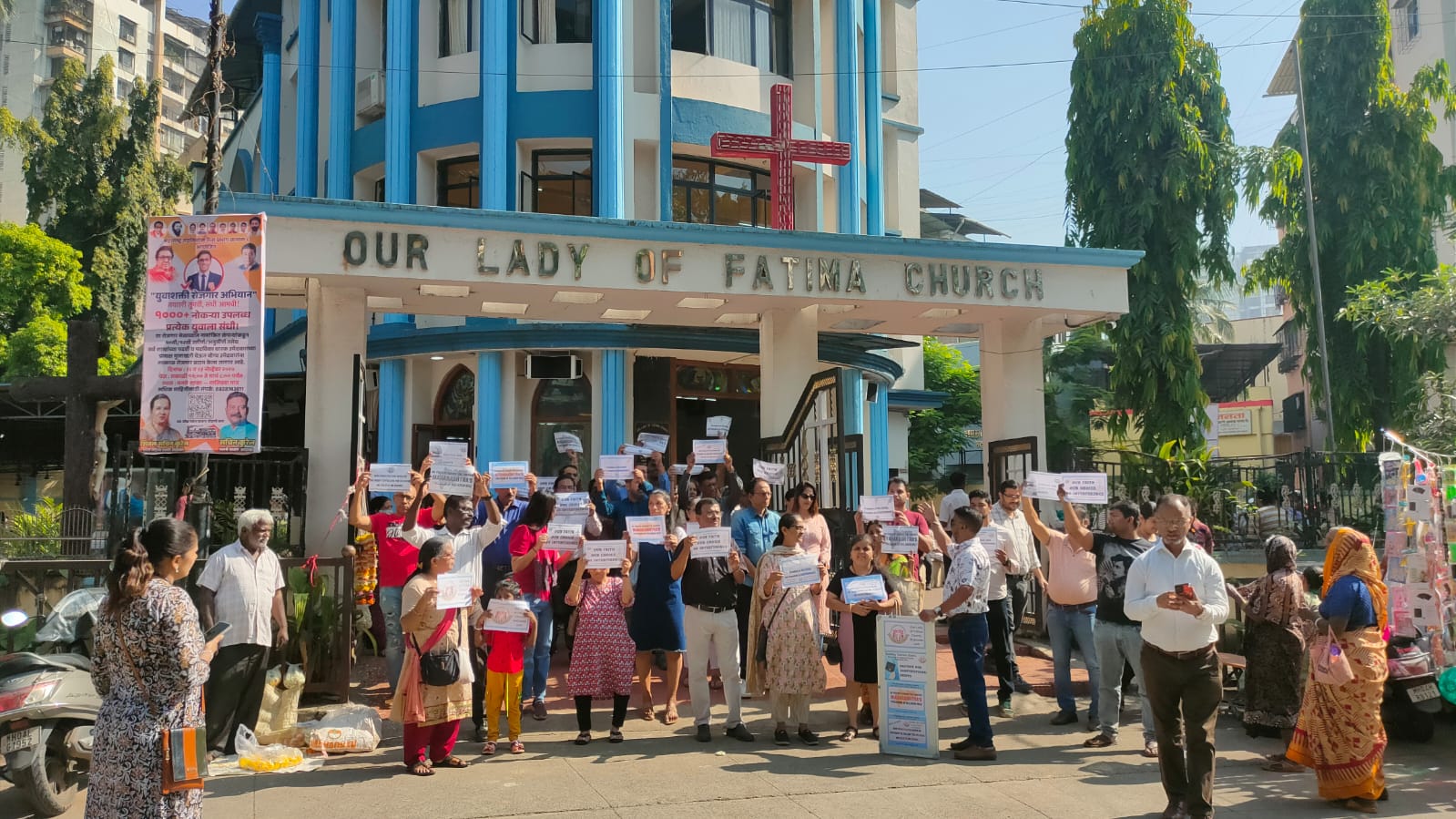
Mumbai: The calm of a Sunday morning in Mumbai’s parishes was broken as hundreds of citizens gathered under the banner of the Bombay Catholic Sabha (BCS) to protest Maharashtra’s proposed “Freedom of Religion (Anti‑Conversion) Bill”, which they say threatens fundamental constitutional guarantees of religious freedom.
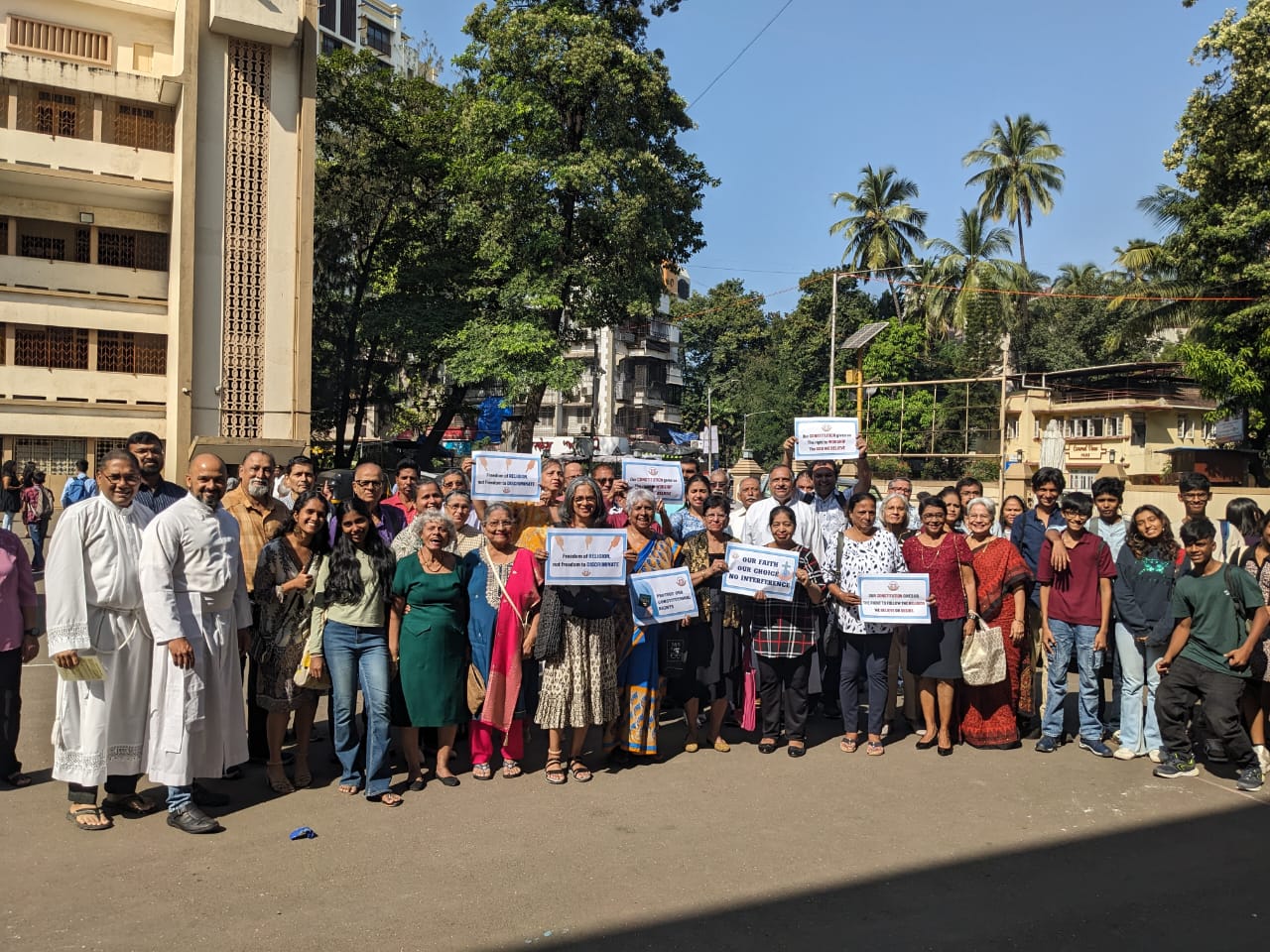
In coordinated demonstrations across 35 locations in Mumbai, Thane, and Navi Mumbai, participants carried banners reading “My Faith, My Right” and “Don’t Criminalise Compassion”, prayed, and read a resolution addressed to Chief Minister Devendra Fadnavis and the Governor, urging them to drop the legislation that, according to the Sabha, “threatens to stifle the very spirit of compassion … every act of kindness could be mis‑interpreted or maliciously portrayed as an attempt at conversion through inducement and allurement” and “jeopardises the right to freely follow or change one’s faith.” The BCS formally thanked citizens, stating, “We thank the citizens who joined in raising their voices” in these peaceful protests.
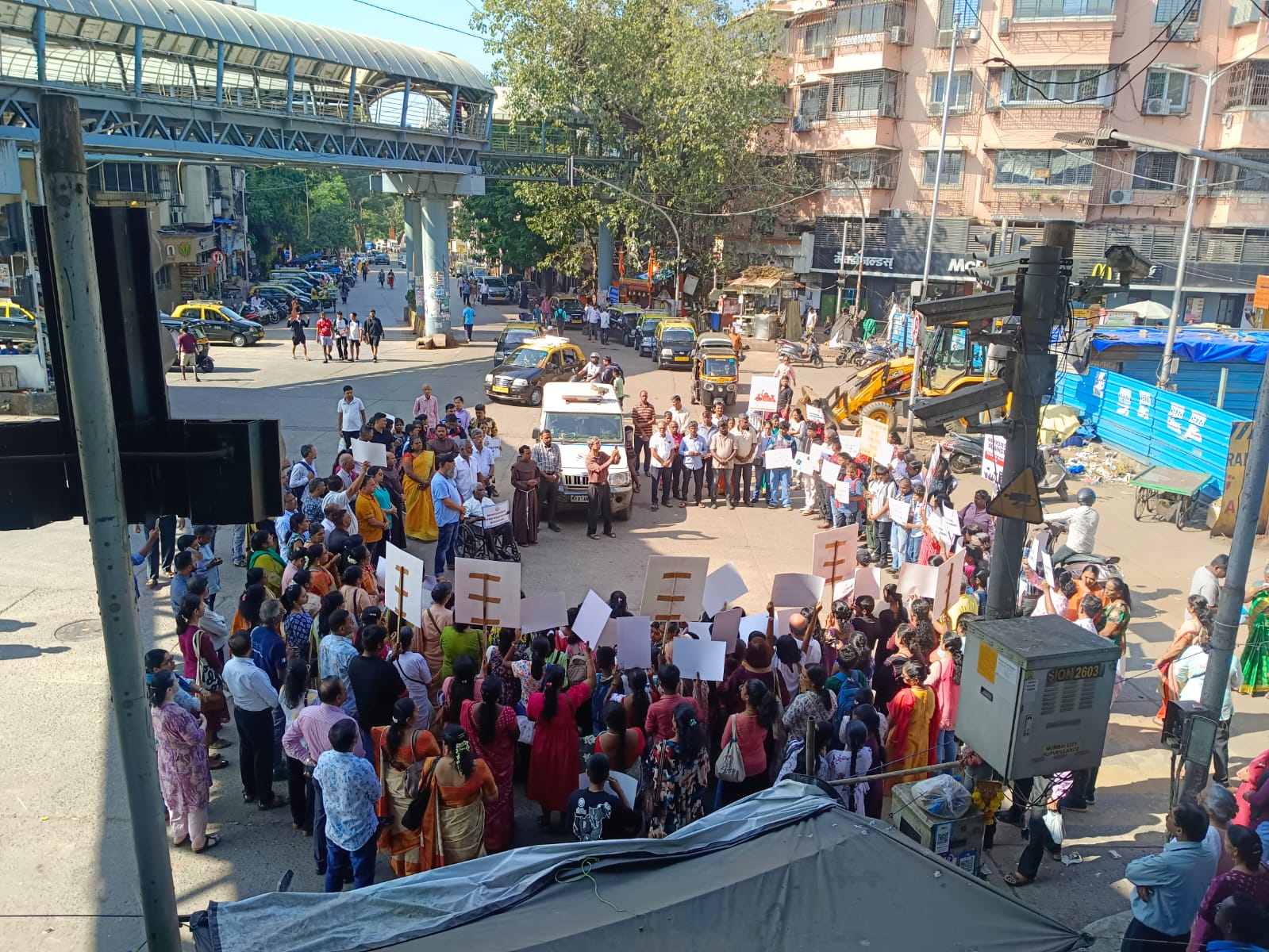
The Bill, expected to be introduced in the forthcoming winter session in Nagpur this December, remains largely undisclosed. Speaking to Global Bihari, BCS spokesperson Dolphy D’Souza said, “The details of the proposed Bill are not in the public domain. We demand transparency. We are apprehensive because of our past experiences on such matters in different states of the country.” These apprehensions are informed by experiences in Uttar Pradesh, Madhya Pradesh, Gujarat, and Uttarakhand, where vaguely worded anti-conversion laws have frequently led to selective enforcement, arrests, and legal challenges.
The Sabha’s press release outlined several specific concerns. The Bill, they argued, criminalises voluntary religious conversions, interfering with personal choice and violating Article 25 of the Indian Constitution, which guarantees the freedom of conscience and the right to profess, practise, and propagate religion. The Sabha warned that “every act of kindness could be misinterpreted or maliciously portrayed as an attempt at conversion through inducement and allurement,” highlighting the potential criminalisation of ordinary charitable, educational, or humanitarian work. It emphasised that vague terminology such as ‘inducement’ or ‘coercion’ could be misused to target minority communities, harass faith-based groups, or restrict the free practice of religion.
The release also pointed to risks for charitable and social-service activities. “Many Christian organisations emphasise that their work (education, healthcare, social welfare) is offered to all, irrespective of faith, and is motivated by faith and humanitarian concerns. The proposed Bill could deter or restrict such outreach — because any service activity may be characterised as inducement and allurement to convert.” The BCS highlighted that such measures could deepen polarisation rather than promote interfaith dialogue and communal harmony. The organisation further noted that the Bill’s focus was misplaced, given rising economic inequality and unemployment: “On one side, we have rising economic inequality and unemployment, which should be the focus of governance rather than such misplaced priorities. At least allow us to follow and live one’s Religion in peace as mandated by our Constitution. Silence fuels oppression, and no longer an option now! We need to take a stand and speak up.”
The BCS underscored that its campaign would continue, and the next programme is scheduled for November 16, 2025, at I.C. Colony, Borivali. “Our efforts to campaign against this Maharashtra ‘Freedom of Religion’ Bill [the title itself is a misnomer and another form of harassing the minorities] will continue. We will network with other Religious communities and citizens of goodwill to join in the campaign.”
The apprehensions of the BCS are reinforced by precedents in other states. In Uttar Pradesh, the Prohibition of Unlawful Conversion of Religion Act, 2021, criminalises conversion by force, misrepresentation, allurement, coercion, or marriage. Multiple FIRs have been filed under the law, and the Supreme Court in May 2024 observed that some provisions “may seem to be violative of Article 25 of the Constitution,” staying further proceedings in certain FIRs pending the next hearing. In Madhya Pradesh, the Freedom of Religion Act, 2021, required individuals intending conversion to submit a declaration to the District Magistrate under Section 10. In November 2022, the Madhya Pradesh High Court ruled Section 10 prima facie unconstitutional, preventing the prosecution of adults marrying voluntarily under that provision, and the Supreme Court in January 2023 refused to stay the High Court order. Gujarat’s Freedom of Religion (Amendment) Act, 2021 and Uttarakhand’s Freedom of Religion Act, 2018, are similarly under judicial scrutiny, with petitions consolidated by organisations such as Citizens for Justice & Peace (CJP). In Uttarakhand, bail orders have been granted for arrests made under the Act, highlighting procedural concerns, though large-scale public protests have been limited.

For BCS leaders, these experiences in other states form the basis for their demand that Maharashtra publish the Bill’s text, ensure transparency, and consult stakeholders before any introduction. Today’s demonstrations in Mumbai, Thane, and Navi Mumbai, therefore, were not just protests but a preemptive plea to safeguard constitutional rights, religious freedom, and humanitarian service. As the participants dispersed, the message was clear: faith does not require permission, acts of compassion are not crimes, and Constitutional safeguards must be respected before legislation is enacted.
– global bihari bureau