India’s New Learning Curve
AI Becomes a Basic Skill in Schools from 2026
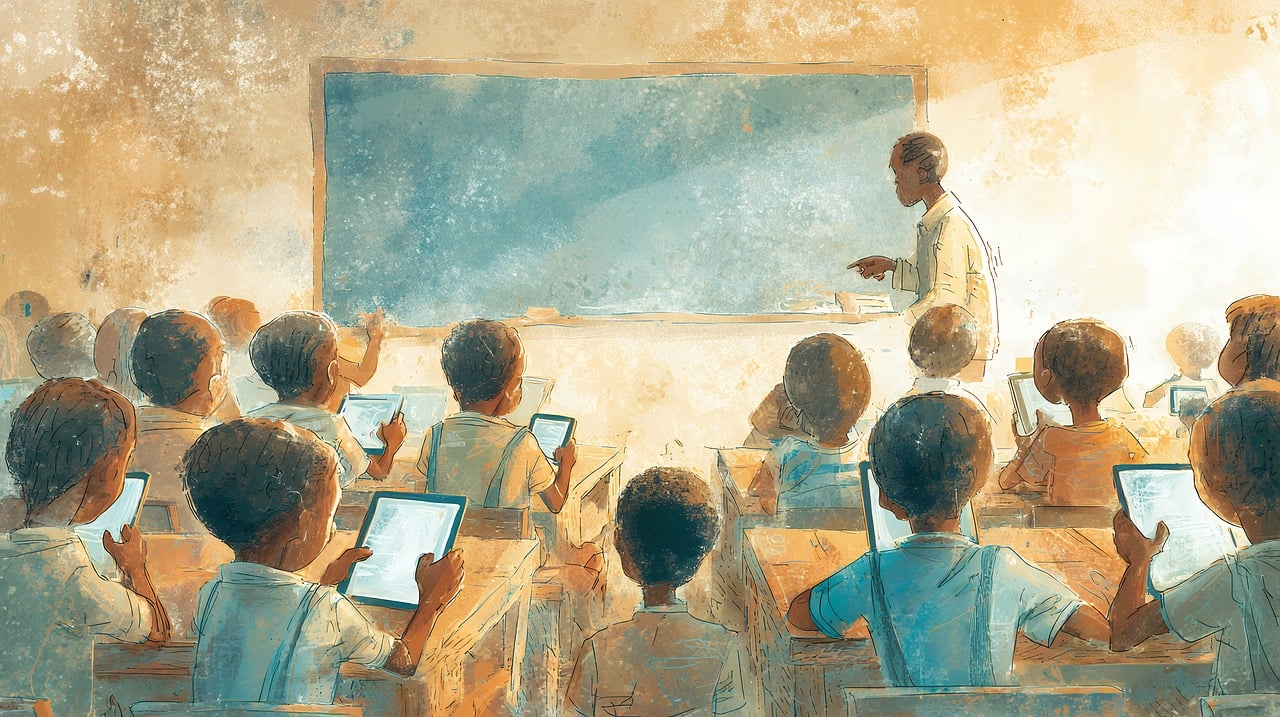
New Delhi: Starting next year, Indian schoolchildren will learn to understand and use Artificial Intelligence (AI) just like they learn to read, write, or count. The Ministry of Education has announced that lessons on Artificial Intelligence and Computational Thinking (AI & CT) will be introduced from Class 3 onwards in all schools, making India one of the few countries in the world to teach AI at such an early stage.
The new AI curriculum will begin from the 2026–27 academic year and is being designed under the National Curriculum Framework for School Education (NCF SE) 2023. It will be developed by the Central Board of Secondary Education (CBSE) and National Council of Educational Research and Training (NCERT), with support from the Kendriya Vidyalaya Sangathan (KVS), Navodaya Vidyalaya Samiti (NVS), and state education boards.
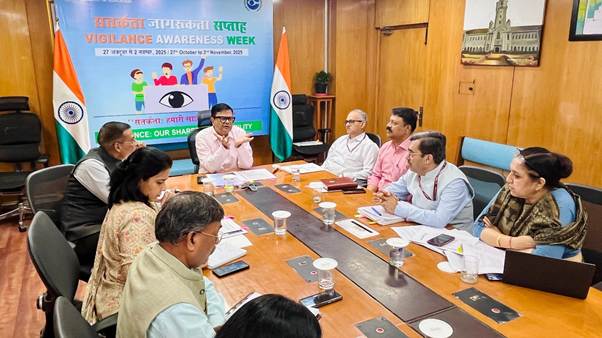
At a consultation meeting held on October 29, 2025, Secretary of School Education Sanjay Kumar said that AI education must be treated as a “basic universal skill linked to the world around us.” He explained that the aim was not to turn every child into a programmer but to help them understand how technology shapes everyday life. “Every child’s potential is unique,” he said. “Our job is to set the foundation and keep updating it as the world changes.”
Under this plan, students will first learn through play and stories — for example, by recognising patterns, solving puzzles, and observing how machines make simple decisions. As they grow older, they will move to more advanced ideas like ethical AI, responsible technology, and how computers “learn” from data. The focus, officials say, is on curiosity, creativity, and responsibility — not on coding jargon.
For parents wondering what this means in the classroom, the Ministry clarified that AI will not be a heavy technical subject. Instead, it will be woven into existing lessons — a part of science, mathematics, or even social studies — helping students think critically, understand cause and effect, and develop empathy for how technology impacts people and the planet.
To prepare teachers for this change, large-scale training will begin through the National Initiative for School Heads’ and Teachers’ Holistic Advancement (NISHTHA). New video lessons, activity kits, and digital learning tools will be developed by December 2025, ensuring that schools have the materials ready before rollout.
The curriculum design team, chaired by Professor Karthik Raman of IIT Madras, is working on age-appropriate content. “AI is not just a topic—it’s a way of thinking,” said an official familiar with the project. “From predicting weather to using voice assistants, children are already surrounded by AI. It’s time we help them understand it safely and smartly.”
The Ministry’s initiative builds on the National Education Policy (NEP) 2020, which called for introducing computational thinking and digital literacy early in school. Experts say India’s approach — starting from the foundational stage — is distinctive because it treats AI as a life skill, not a luxury. The goal is to make students “AI-ready citizens” who can use technology to solve real problems in health, agriculture, the environment, and community life.
Parents will also notice a shift in how their children learn. Classrooms are expected to use AI-powered learning tools, interactive exercises, and project-based assessments that encourage teamwork and innovation. By secondary school, students may create simple AI models to understand social or environmental issues, with an emphasis on ethical use and cultural sensitivity.
Joint Secretary (Innovation & Technology) Prachi Pandey has asked all boards and institutions to adhere to deadlines so that the first books and training modules are ready by the end of 2025. “We want students to see AI not as something distant and difficult but as part of their daily life — something they can question, improve, and use for good,” she said.
For families, this means India’s schools are preparing children for a future where understanding AI is as essential as reading and writing. As one teacher attending the consultation put it, “We are teaching children to think like problem-solvers, not just computer users.”
The introduction of AI in schools from Class 3 marks the beginning of a generational transformation — one where technology becomes a friend and teacher, not a mystery. For students, it’s the start of a journey from curiosity to creativity; for parents, a glimpse of how India’s classrooms are preparing young minds for a world powered by intelligence — both human and artificial.
– global bihari bureau