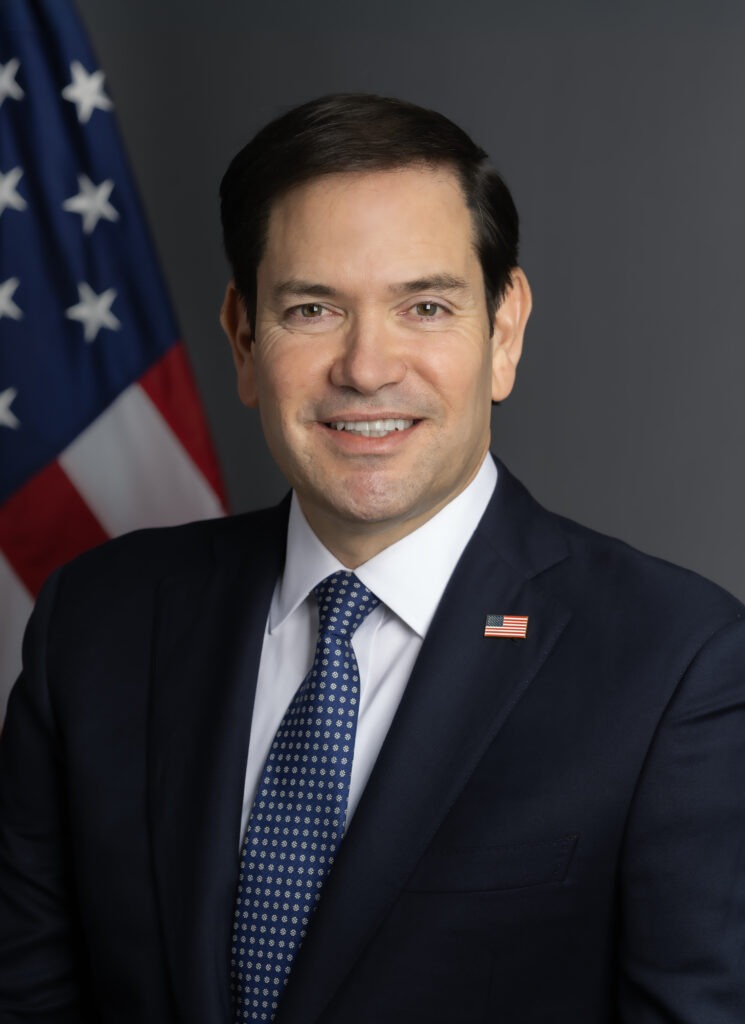
Marco Rubio
AI Deception Shakes Up US State Department
Washington: A fake artificial intelligence (AI) voice of the United States Secretary of State, Marco Rubio, has rattled the US State Department. In a press briefing at the US State Department on 8 July 2025, the State Department spokesperson Tammy Bruce addressed the sophisticated cybersecurity breach that saw an imposter deploy AI to impersonate Rubio. The audacious scheme, which involved a fake Signal account mimicking Rubio’s identity, targeted high-ranking officials, including three foreign ministers, a US governor, and a member of Congress, using AI-generated voice and text messages. The incident, which began in mid-June, has raised alarm bells about the fragility of secure communication channels in an era dominated by cutting-edge technology, prompting urgent questions about the robustness of the US government’s cybersecurity measures.
Bruce opened the briefing with her trademark levity, joking about her fondness for cabinet meetings and their “fabulous transparency,” which drew chuckles from the press corps. However, the mood shifted when a journalist, with a playful nod to the AI angle, asked for an explanation “in her own voice” about how such a breach could occur. Bruce confirmed the department’s awareness of the incident, stating, “The State Department, of course, is aware of this incident and is currently monitoring and addressing the matter. The department takes seriously its responsibility to safeguard its information and continuously takes steps to improve the department’s cybersecurity posture to prevent future incidents.” Citing the ongoing investigation and security concerns, she withheld further details, leaving journalists pressing for more clarity.
According to reports, the imposter created a Signal account under the display name “Marco.Rubio@state.gov” to execute the deception. The perpetrator’s messages, bolstered by AI-generated voice and text that closely mimicked Rubio’s style, were designed to trick recipients into sharing sensitive information or granting access to secure systems. The attacker’s familiarity with State Department naming conventions and internal processes made the impersonation alarmingly convincing, highlighting the growing threat of deepfake technology in diplomatic communications. The scheme was uncovered after suspicious activity was flagged, though Bruce declined to specify whether the discovery was made by the State Department, another government agency, or an external entity.
When asked if the breach resulted in any security violations or damage, Bruce remained guarded, saying, “I will not, whether that’s the case or not, go into any of the details. This, of course, is the State Department; it’s the United States Government. We live in a technological age that we are well enmeshed in, and I’ll leave it at that.” She also sidestepped questions about Secretary Rubio’s reaction to being impersonated, noting, “The Secretary—great news is, of course, he is very transparent, quite transparent, and he’s direct with everyone. I think that any description of his reaction, of course, belongs to him, and I would suspect that at some point we’ll have that for you.” This reticence underscores the sensitivity of the incident, which has sparked concern about the potential exposure of classified information.
The impersonation is part of a broader wave of cyberattacks targeting US officials. The FBI’s Internet Crime Complaint Center has reported a surge in “smishing” (SMS phishing) and “vishing” (voice phishing) attacks since April 2025, with malicious actors using AI to impersonate senior government figures. A similar incident in May 2025 saw White House Chief of Staff Susie Wiles’ phone hacked, leading to fraudulent communications with senators and business leaders, as reported by The New York Times. That breach, downplayed by President Donald Trump, nonetheless intensified scrutiny of the government’s digital vulnerabilities. Rubio himself has been a repeated target; in spring 2025, a deepfake video falsely depicted him advocating for cutting Ukraine’s access to Starlink, a critical communication network, according to a Bloomberg report.
The State Department’s reliance on Signal, an encrypted messaging app, has also come under fire. A March 2025 incident, detailed by The Atlantic, revealed a security lapse when then-National Security Advisor Michael Waltz accidentally added a journalist to a Signal group discussing a US bombing campaign in Yemen. The Pentagon later issued warnings about the app’s vulnerabilities, a concern now amplified by the Rubio impersonation. The Washington Post reported that the current breach is one of two active investigations, with a separate Russia-linked campaign targeting Gmail accounts of think tank scholars and activists since April, further illustrating the multifaceted cyber threats facing the US.
When pressed on whether the State Department views such activities as an ongoing threat from China, Bruce demurred, stating, “That would require me to speculate or talk about an opinion framework, which I can’t do certainly at this point.”
This high-tech hoax has ignited a broader conversation about the challenges of securing diplomatic communications in the digital age. With AI capable of cloning voices and crafting convincing forgeries, the potential for disruption in international relations is immense. The State Department’s ongoing investigation will likely shape future cybersecurity protocols, as the US grapples with the reality of operating in a “technological age” where even the most secure systems are at risk. For now, Bruce assured the press that any significant developments would be shared promptly, but the incident serves as a sobering reminder of the vulnerabilities lurking in the shadows of innovation.
– global bihari bureau