The secret of the chacra’s success are the Kichwa Indigenous women, like Magdalena, who are seed guardians, preserving and maintaining native seeds, and the unique mountain plateaus, whose different altitudes and microclimates are crucial to the array of crops grown here. © FAO/ Johanna Alarcón
Secrets of the Andean Chakras:
How Kichwa Women Guard Seeds, Sustain Ecuadorian Highlands
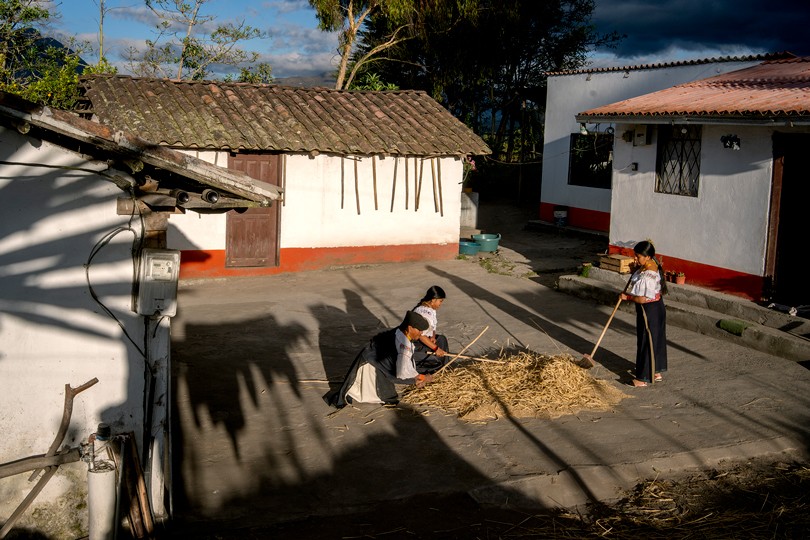
Cotacachi, Ecuador: Before dawn breaks over the Ecuadorian Andes, Magdalena Laine, a 59-year-old Kichwa Indigenous farmer, is already at work. The roosters have begun their morning chorus, but Magdalena’s hands move faster, sieving maize flour on the only lighted corner of her patio. Outside, the chill of the high-altitude air stings, yet inside, the scent of freshly ground maize fills the space, a sensory promise of the day ahead.
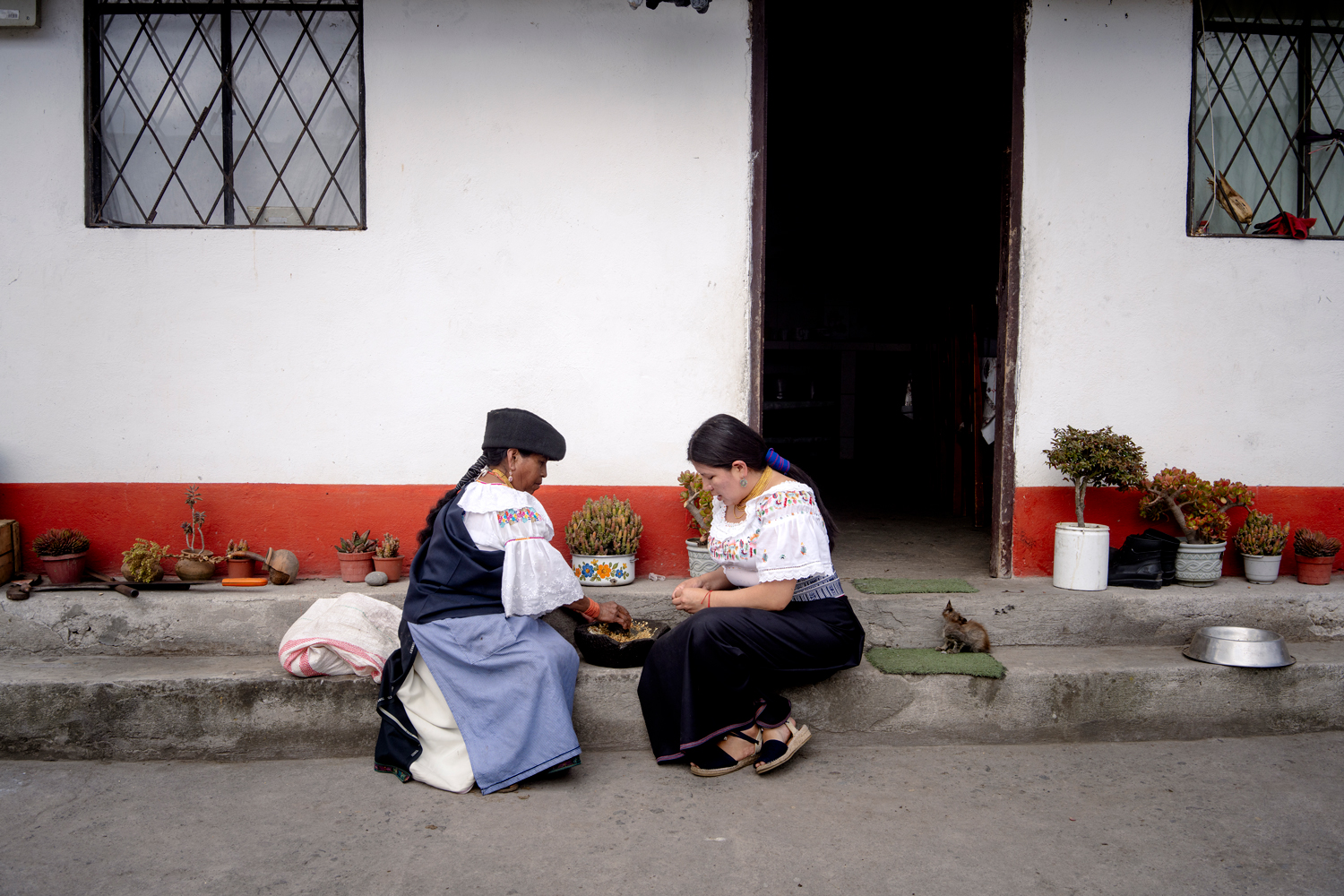
“I woke up at 1:30 a.m. because clients come very early,” she says, referring to visitors at the Sunday market, La Pachamama nos alimenta (“Mother Earth feeds us”), where some 300 Kichwa women gather weekly to sell produce harvested from their chakras—the traditional biodiverse farms of the Andean highlands. Magdalena’s daughter, Verónica Cumba Laine, 29, moves around the kitchen alongside her father and younger sister, carefully preparing baskets of vegetables, lemons, lupins, quinoa, and eggs, as well as maize flour and native maize kernels. While some kernels are sold, the choicest are preserved for planting next season, a critical step in conserving genetic diversity and food sovereignty.
“Right after the harvest, we select the healthiest, cleanest kernels for the next planting,” Magdalena explains. “I am a seed guardian, preserving many native varieties. I teach my daughter everything about crops.” Verónica echoes the sentiment: “My mother is teaching me how to continue this knowledge. These seeds are part of our family, our culture, and our survival.”
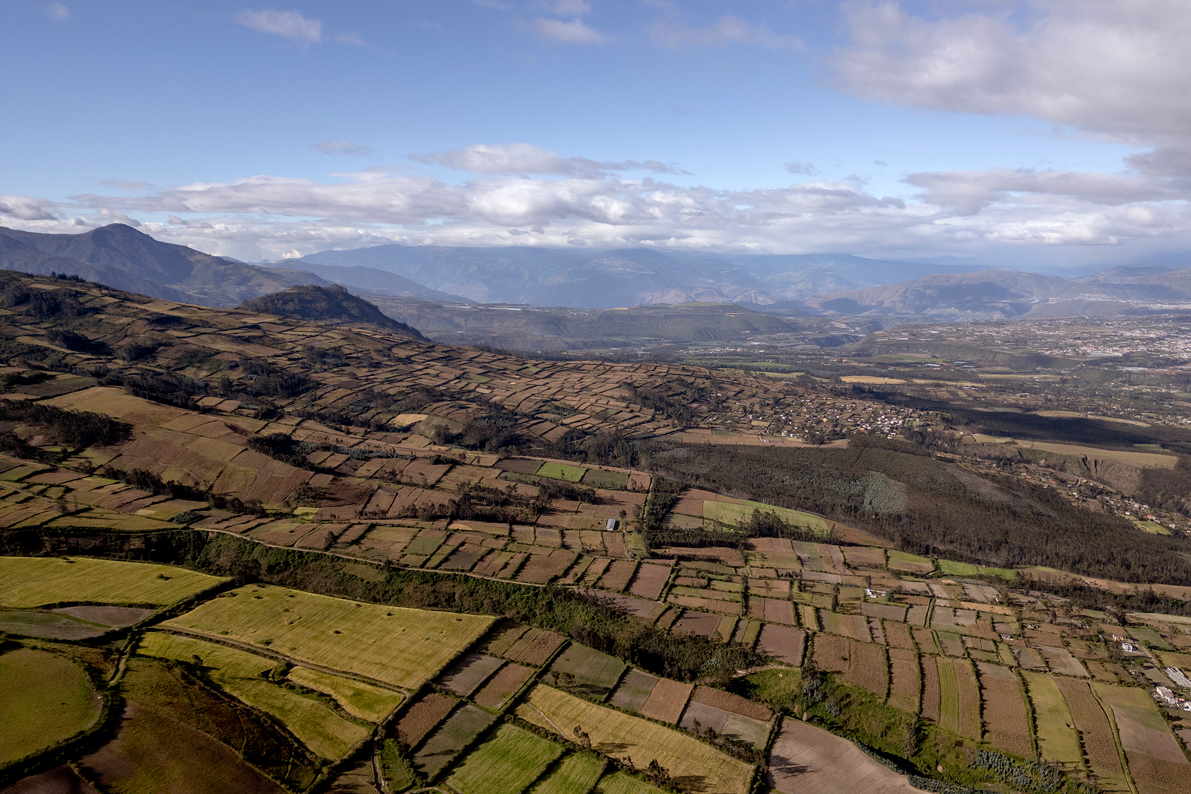
Farming in Ecuador’s highlands is no simple feat. Magdalena’s plots, situated between 2,500 and 3,400 meters above sea level, are exposed to increasingly erratic weather patterns brought on by climate change. Yet, for centuries, Kichwa women and their communities have maintained a complex system of food production that sustains nutrition, income, and cultural traditions. These chakras were recognised by the Food and Agriculture Organization of the United Nations (FAO) in 2023 as a Globally Important Agricultural Heritage System (GIAHS), highlighting their contribution to agrobiodiversity, medicine, fuel, fodder, and resilience against environmental stressors.
By 3:30 a.m., a truck arrives to transport Magdalena and other farmers to the market. She dons a traditional pink woollen shawl and lifts baskets into the cargo bed, struggling against the weight but proud of the bounty: berries, avocados, honey, potatoes, and other crops, all cultivated in the unique Andean microclimates. These microclimates, or pisos climáticos, enable farmers to cultivate a diverse range of crops on relatively small plots, capitalising on altitude, slope, and soil conditions to maintain high genetic diversity.
By sunrise, the market is bustling. Customers flock to Magdalena’s stand, buying produce that will feed their families for the week. By noon, nearly everything is sold, and Magdalena earns about 50 USD, enough to cover household expenses and set aside funds for her daughter’s education. In the chakras, an average of 25 different crops are cultivated, mainly for home consumption, yet surplus production now provides crucial income thanks to programs supported by the Forest and Farm Facility (FFF), a partnership facilitated by FAO.
Since 2019, over 13,500 rural families in Ecuador have benefited from FFF-supported initiatives, which train Kichwa women in accounting, marketing, and direct sales strategies, helping them transform excess crops into sustainable revenue streams. As Verónica notes, “Without farming our chakras, we wouldn’t have enough food to eat. The market helps us continue this way of life and pass on our knowledge.”
The secret to the chakras’ success lies in the Indigenous women who guard the seeds. Women like Magdalena meticulously save and exchange maize, beans, squash, and other native seeds. Their practices are honed over generations, ensuring crops can withstand local pests, frosts, and droughts. Yet climate change is testing these traditions. “When I was a child, the climate was normal,” Magdalena recalls. “Now the sun is so strong that my clothes feel like iron on my back. New pests and drier conditions kill the plants and reduce yields.”
FAO and local organisations like the Union of Peasant and Indigenous Peoples’ Organisations of Cotacachi (UNORCAC) are responding with multi-pronged interventions. Technical assistance helps farmers adapt cultivation practices, diversify crops, and strengthen seed banks. Maria Piñán, leader of UNORCAC’s Women’s Central Committee, emphasises the resilience of native seeds: “We have seen that they resist frosts and droughts. This knowledge is essential for food security in the highlands.”
Beyond cultivation, FAO has also supported women-led savings groups, which provide microloans for investment in seeds, tools, and infrastructure or to cope with emergencies like crop failure. In Cotacachi, these community-based credit systems have grown remarkably—from initial credit pools of 30 USD to over 2,000 USD in five years. “Strengthening saving groups is part of our strategy to transform the agrifood sector with inclusive rural development,” explains FAO Representative in Ecuador, Gherda Barreto. “Economic resilience is inseparable from climate adaptation.”
The chakra system is a living classroom. As Verónica sits beside her mother in the patio, she reflects on the lessons of the land and the responsibility of the next generation. “Here, women take the initiative. When I have my own family, I will sow as my mother taught me. Everything she passed on will stay alive through me.”
The biodiversity of chakras is remarkable not only for its food and economic value but also for its social cohesion and cultural significance. Families cultivate complementary crops that feed livestock, generate medicine, and support rituals tied to the Kichwa worldview. The Andean plateaus’ varying altitudes create microclimates where maize thrives alongside potatoes, squash, beans, and native fruits, allowing communities to maintain ecological balance while promoting resilience to climatic extremes.
FAO and UNORCAC are also supporting training in processing and storage techniques, improving post-harvest management, and enhancing market access. This enables women to retain more value from their labor and strengthens household and community food security. From agroecological fairs to education workshops, every intervention reinforces the link between ancestral knowledge and modern practices.
The challenges are formidable. Extreme weather events, such as droughts and floods, are increasingly frequent and unpredictable. These events threaten the transfer of critical knowledge: when a crop no longer thrives at its traditional altitude, younger generations may forget or lose the planting cues that sustain the system. “Everything we do is connected to the land and its rhythms,” says Magdalena. “If we lose these, we lose not just food but our identity.”
Yet hope and determination persist. The chakras, nurtured by women, remain a bastion of sustainability. By integrating traditional wisdom with modern technical support, these communities are creating a model for climate-resilient agriculture that blends heritage and innovation. Each seed saved, each crop harvested, each sale at the market, reinforces a cycle of ecological stewardship, social solidarity, and economic survival.
In the highlands of Ecuador, the crowing roosters signal more than the start of a day—they herald the tireless work of women who have kept the land fertile, seeds safe, and communities thriving. Magdalena and Verónica are part of a living legacy: guardians of biodiversity, culture, and hope in an era of climate uncertainty.
Source: The FAO News And Media Office, Rome
– global bihari bureau