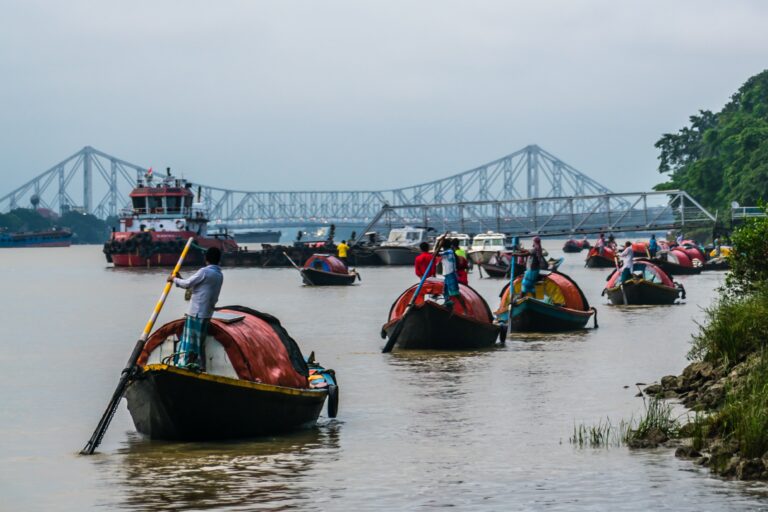
The cotton sector employs millions of people worldwide. It is a top industry for some of the poorest countries, attracting export revenues for producers. ©FAO/Giulio Napolitano
World Cotton Day Weaves African Designs to Life
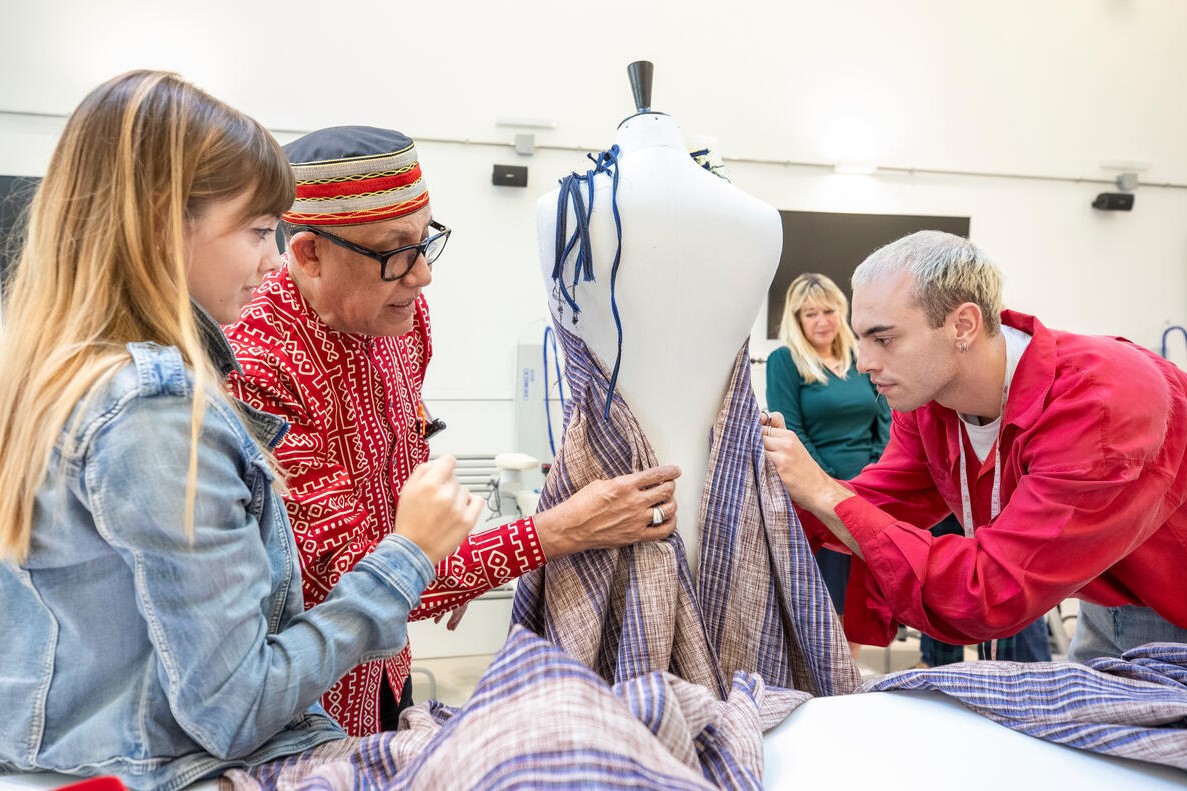
Rome: Sunlight pours through the soaring ceiling windows of the elegant Belle Époque palazzo in Rome, once a bustling department store, now the vibrant heart of the Accademia di Costume e Moda – the headquarters of Rome’s fashion institute. The air hums with the rhythmic whir of sewing machines, a symphony of creation as young designers cluster around mannequins and worktables. Their hands dance over vibrant African cotton—blues that echo the Sahel sky, reds pulsing with life, earth tones shimmering like desert sands—sketching, cutting, draping, transforming raw fabric into fashion that speaks of heritage and hope.
This is World Cotton Day, October 7, 2025, where Rome’s fashion institute becomes a canvas for celebrating African cotton and the artisans who breathe life into it.
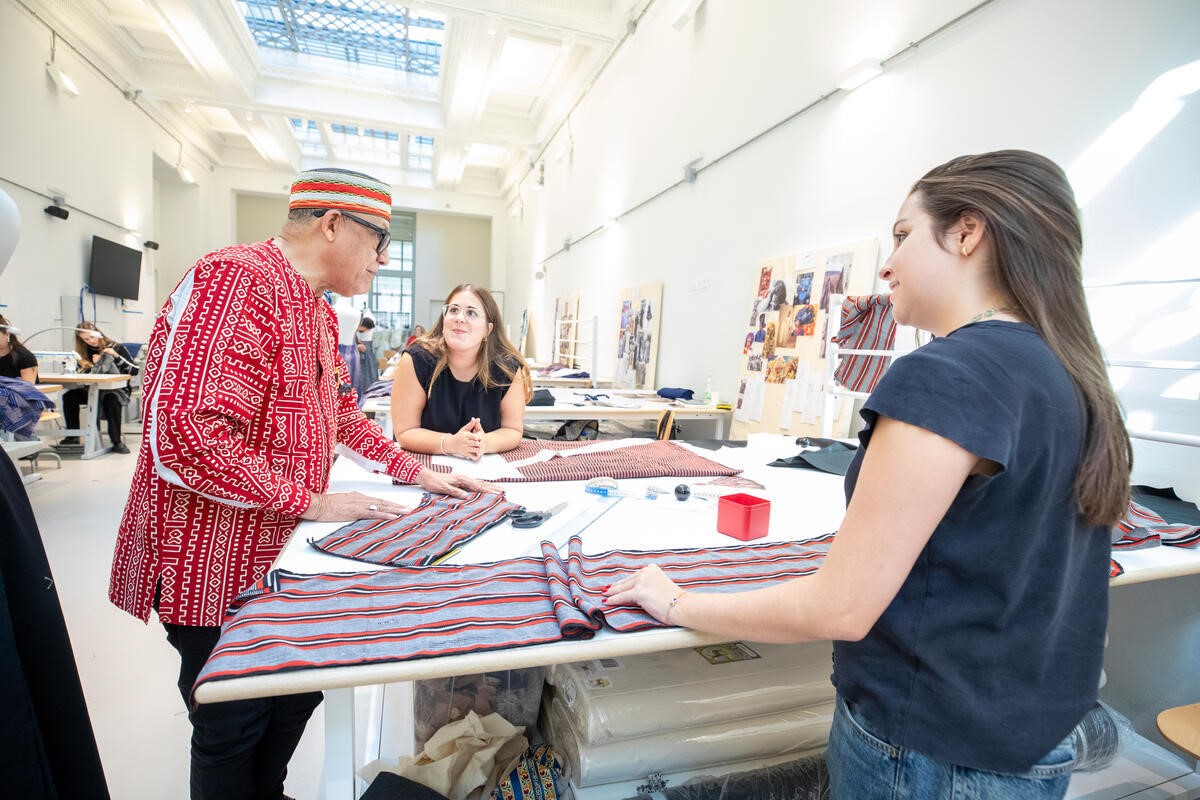
Nigerien designer and United Nations Educational, Scientific and Cultural Organization (UNESCO) Goodwill Ambassador Alphadi moves among the students, his presence a quiet force. With decades at the forefront of African fashion and as the creator of African Fashion Week, he pauses at each table, studying mood boards, tracing the lines of sketches, offering wisdom honed by years of championing African textiles. “We want to pay tribute to Africa for its textiles,” he says, voice rich with pride, “from the bogolan of Mali, the indigo weaves of Burkina Faso, to the raffia artistry of the Congo. This is a way to show all that Africa is capable of.” His words linger as he guides students blending African and Italian traditions, their creations a dialogue between continents.
Cotton, a cornerstone of global textiles, is more than a fabric—it’s a lifeline. As one of the world’s most vital natural fibres, its versatility fuels industries, yet it faces fierce competition from synthetics in a market increasingly hungry for sustainability.
“The cotton value chain is long,” explains ElMamoun Amrouk, Senior Economist at the Food and Agriculture Organization of the United Nations (FAO). “It starts with seeds, moves through picking, ginning, milling, and weaving into fine fabrics. It’s a web of technology, innovation, and skill.” FAO’s mission focuses on empowering small-scale cotton farmers with sustainable practices and providing market analysis, ensuring their place in a volatile global trade. Cotton employs millions, especially in some of the world’s poorest nations, channelling export revenues to communities in Africa and beyond.
World Cotton Day, born from African cotton-producing countries’ call to celebrate this crop globally, has grown since 2021 under FAO’s stewardship. This year, the organisation partnered with Rome’s fashion institute to trace cotton’s journey from field to runway, spotlighting its role in inspiring a new generation. Alphadi’s two-day Masterclass at the Accademia di Costume e Moda was a crucible of creativity. Students, pursuing undergraduate and graduate degrees, immersed themselves in research, weaving African aesthetics—bold patterns, rich hues—into Italian craftsmanship. Seven distinct outfits emerged, each a testament to African cotton’s quality and allure, crafted in colours that pulse with life: cerulean, crimson, ochre.
Maria di Napoli Rampolla, Head of Industry Relations and Career Development at the academy, sees these exchanges as vital. “Working with Alphadi has been an enriching cultural bridge,” she says. “It’s crucial for growth in this profession.” Student Sofia Rapanotti agrees, her eyes bright with possibility. “This initiative opens doors,” she says. “It makes us more collaborative, more open. It’s essential for fashion schools and designers already in the field.” Their creations, pinned and stitched under Alphadi’s watchful eye, reflect intensive research into Africa’s textile heritage, each piece a story of resilience and artistry.
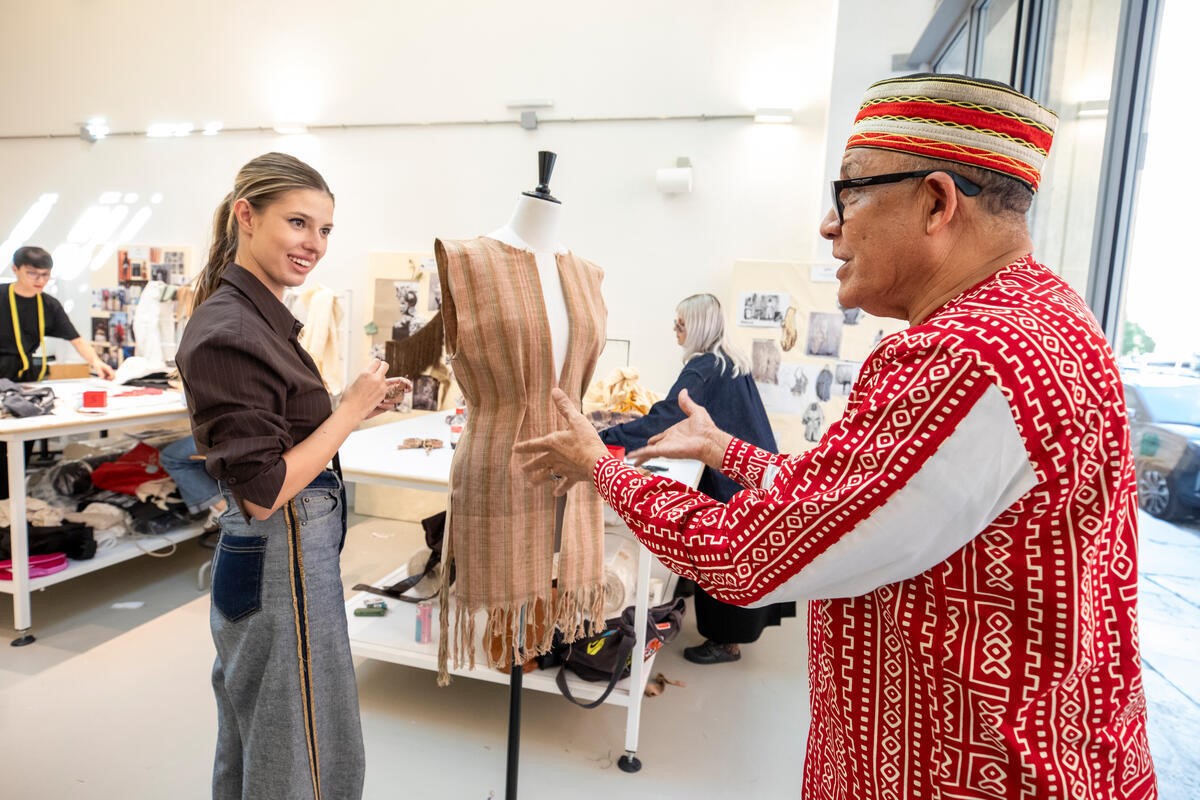
Alphadi, pausing to admire a draped silhouette, speaks with conviction: “African cotton is a quality product, used by people of the Sahel, Europeans, Americans—the whole world.” His Masterclass is more than a lesson; it’s a celebration of a continent’s strength, a call to value the hands that plant, pick, and weave. The students, shaping fabrics into forms that transcend borders, embody this vision. “It’s a fitting tribute to our continent,” Alphadi adds, “to illustrate Africa’s strengths and the work of its artisans.”
In this palazzo-turned-creative-haven, where light bathes bolts of cotton and ambition fuels every stitch, the next generation of designers agrees. African cotton, with its deep roots and global reach, is not just a material—it’s a movement, stitching together past and future, field and fashion, in a world that yearns for connection and conscience.
– global bihari bureau