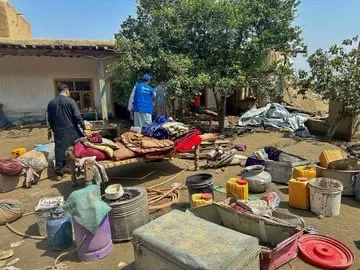
Photo source: @OmSamad|X
Sunday’s Quake Leaves Afghan Villages Isolated, Devastated
Survivors Plead for Aid Amid Rubble
Kabul/Geneva: In the remote, rugged mountains of eastern Afghanistan, the aftermath of Sunday’s magnitude-six earthquake has left entire villages buried under rubble, with the UN warning that “hundreds of thousands” may face the loss of homes, livestock, and livelihoods. The death toll has surpassed 800, with over 2,000 injured, and countless others remain trapped beneath collapsed mud and wooden homes, their cries for help echoing through isolated valleys as aid workers struggle against near-impossible conditions.
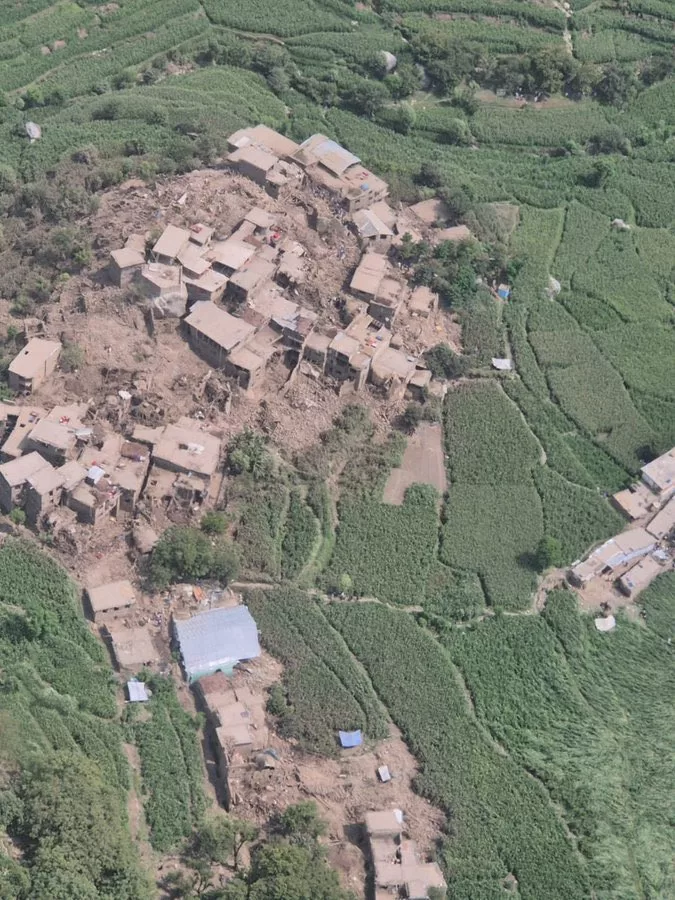
Indrika Ratwatte, the UN’s top aid official in Afghanistan, described the disaster’s staggering scope from Kabul. “Hundreds of thousands could be impacted, as in houses destroyed, injured, casualties, livestock lost and any livelihood systems that they had,” he said. The quake struck in the dead of night on Sunday, catching families asleep in fragile homes built with mud walls and wooden roofs predominant in Nangarhar province’s mountainous terrain. “When the walls collapse, the roof is what basically falls on individuals, kills them or suffocates them,” Ratwatte explained, noting the nighttime timing left many buried under debris, their fates uncertain.
The first 24 hours after the quake were marked by chaos and inaccessibility. Landslides and rockfalls triggered by the tremors blocked roads, severely limiting access to the hardest-hit areas. “This has posed a huge challenge to us as we deploy right now,” Ratwatte said, emphasising the urgency of the response. To overcome these barriers, 20 emergency assessment teams and 15 mobile units have been mobilised, with plans to enhance humanitarian flights from Kabul to Jalalabad, the capital of Nangarhar province. The UN Humanitarian Air Service has scheduled additional flights to ferry personnel and critical cargo, but “zero connectivity” with some affected communities, as Ratwatte described, has severed communication, complicating efforts to land helicopters or coordinate rescues. “It’s not easy to get to these areas and keep shuttling injured individuals,” he added, highlighting the logistical nightmare faced by the de facto authorities and aid teams.
The human toll is heart-wrenching. Survivors, many grieving loved ones crushed under collapsed roofs, face the immediate threat of waterborne diseases from unburied bodies and dead livestock, which Ratwatte warned “can happen very, very fast.” He underscored the urgent need for protection work, “including psychosocial support for individuals who lost family and loved ones,” as survivors grapple with trauma and loss. The Afghan Red Crescent, among the first responders, faces gruelling conditions. Joy Singhal, Acting Head of Delegation for the International Federation of Red Cross and Red Crescent Societies (IFRC), said volunteers often trek four to five hours to reach remote villages. “More people could have been saved if road access were easier,” he said, noting that once volunteers reach their destinations, they must carry the wounded back to city centres, where the two hospitals in the area are overwhelmed, their resources stretched beyond capacity.
Afghanistan’s pre-existing “systemic humanitarian challenges,” as Ratwatte called them, deepen the tragedy. Half the population—22.5 million people—relies on aid, with recent droughts aggravating food insecurity. Sweeping funding cuts since the beginning of 2025 have forced “hundreds” of aid facilities to close, leaving vulnerable communities exposed. “The earthquake comes at a time when vulnerable communities are going to be super-exposed to additional stresses,” Ratwatte said. The crisis is compounded by the return of 2.4 million Afghan refugees from Iran and Pakistan in 2025, many forcibly deported. Babar Baloch, UN refugee agency spokesperson, noted that the majority are returning to the quake-stricken areas, with communities “struggling to integrate” them. “More than half of these are deportations, people who have been put on buses and other forms of transport and left at the borders to go home,” he said, adding that this has “put a further restraint on our ability to support.” On Sunday, the grace period for registered Afghan refugees in Pakistan expired, marking a “worrying” development as UNHCR prepares for “significantly more returns” in the coming days. “These people, already with very few resources, are now returned to a disaster zone,” Mr. Baloch said, his voice heavy with concern.
The $2.4 billion humanitarian response plan for Afghanistan in 2025 is only 28 per cent funded, pushing aid efforts to the brink. “We are at a breaking point in terms of response to the multiple humanitarian shocks in the country,” Ratwatte said, his words a desperate plea for global support. As the dust settles on shattered villages, the anguish of survivors—facing loss, injury, and an uncertain future—underscores a nation pushed to its limits by a disaster layered atop an already dire crisis.
– global bihari bureau