Photo source: @OmSamad|X
Agony in Afghanistan as Quake Claims Over 800 Lives
Kunar’s Devastation Mounts After Deadly Earthquake
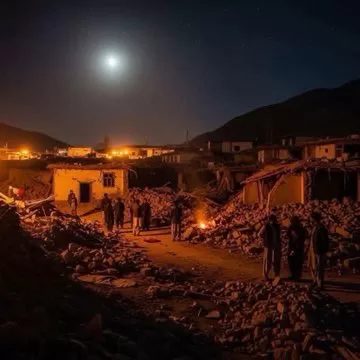
Kabul: A magnitude 6.0 earthquake tore through eastern Afghanistan just before midnight on August 31, 2025, at 11:47 PM local time, leaving a landscape of shattered homes and broken lives across Nangarhar, Kunar, Laghman, and Nuristan provinces. The United States Geological Survey reported the epicentre 27 kilometres east-northeast of Jalalabad, likely in Kama District, Nangarhar Province, though some sources suggest Kuz Kunar District, also in Nangarhar, near the border with Kunar Province. The quake struck at a shallow depth of 8 to 10 kilometres, amplifying its destructive force as mud-brick homes crumbled instantly. Aftershocks, ranging from magnitude 4.3 to 5.2, rattled survivors, deepening their fear and hindering rescue efforts, with tremors felt in Kabul, Islamabad, Lahore, and Delhi.
The human cost is devastating. The Afghan Red Crescent reported 825 deaths and 3,113 injuries, while Taliban spokesperson Zabihullah Mujahid confirmed 812 deaths and 2,839 injuries, with Kunar Province accounting for 800 deaths and 2,500 injuries. The United Nations Office for the Coordination of Humanitarian Affairs estimated at least 800 deaths, 2,000 injuries, and 12,000 people directly affected.
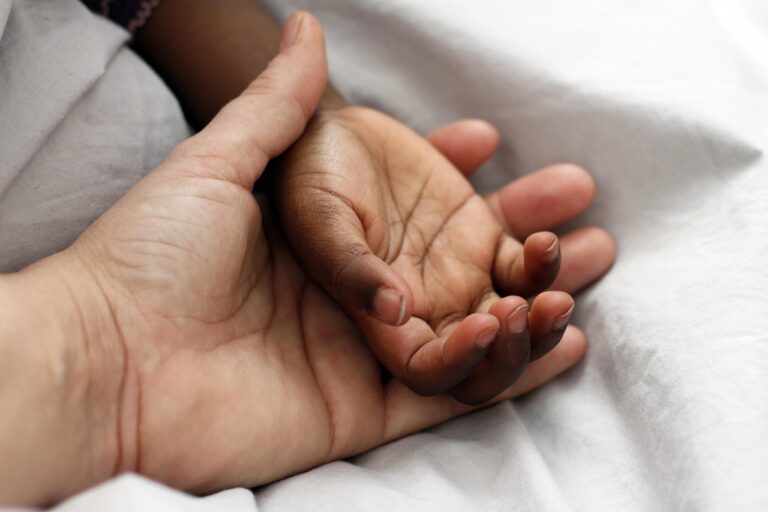
In Kunar’s Nurgal and Chawkay districts, villages like Wadir, Shomash, Masud, and Areet were flattened, with up to 90 per cent of residents feared dead or injured. In Mazar-e-Dara village, a survivor described “death in every home,” with dozens killed and nearly 100 injured, their cries piercing the night as families dug through debris. Muhammad Aziz, a labourer from Nurgal, lost his five children and 10 relatives, his voice breaking as he recounted holding his youngest daughter’s lifeless hand amidst the ruins. “The poor people here have lost everything,” he said, noting many remain trapped under rubble. Rasheed Khan, a Kabul cloth merchant from Kunar’s Watpur village, returned to find his wife, three children, and two brothers crushed under their collapsed home, his grief raw as he feared thousands remained trapped. In Nangarhar’s Darai Nur District, 12 deaths and 255 injuries were reported, while Laghman’s Alingar District recorded 58 of the province’s 80 injuries. Over 1,000 mud-and-stone homes were reduced to dust, leaving families exposed as winter nears, their possessions buried in wreckage.
Rescue efforts are a desperate struggle. Taliban-led authorities have deployed helicopters to airlift the injured to overwhelmed hospitals in Jalalabad and Asadabad, where bloodied patients crowd corridors, and doctors work by torchlight. The Ministry of Defence sent 30 doctors and 800 kilograms of medical supplies to Kunar, while 200 Taliban soldiers and volunteers in Nangarhar and Kandahar dig through rubble and donate blood. Landslides, worsened by recent floods that killed at least five, have blocked roads to remote areas like Dewagal and Mazar valleys, forcing rescuers to trek hours on foot. A mother in Chawkay, clutching her injured son, wept as she recalled hearing her neighbour’s children scream beneath rubble before falling silent. Poor telecommunications leave families unable to reach loved ones, amplifying their anguish. The United Nations, under Secretary-General António Guterres, has mobilised teams, with the Office for the Coordination of Humanitarian Affairs coordinating urgent needs: tents, tarpaulins, blankets, cooking sets, saline, intravenous fluids, clean water, and high-energy biscuits.
International aid is emerging slowly. On September 1, Indian Prime Minister Narendra Modi posted on the social media platform X: “Deeply saddened by the loss of lives due to the earthquake in Afghanistan. Our thoughts and prayers are with the bereaved families in this difficult hour, and we wish a speedy recovery to the injured. India stands ready to provide all possible humanitarian aid and relief to those affected.”
India delivered 1,000 family tents and 15 tons of food to Kabul, with more pledged. Iran offered medical supplies, China promised tailored relief, and France, Japan, and the European Union committed support, though details are limited. The United States State Department issued condolences but has not confirmed aid, citing Taliban restrictions on women and concerns over aid diversion. The Office for the Coordination of Humanitarian Affairs is seeking funds from the Central Emergency Response Fund and considering an emergency allocation from the Afghanistan Humanitarian Fund.
Afghanistan’s location in the Hindu Kush, where the Indian and Eurasian tectonic plates collide, makes earthquakes frequent, but the devastation is exacerbated by fragile housing. The country’s humanitarian crisis—over half of its 42 million people need aid due to drought, reduced foreign funding, and the return of 2.3 million Afghans from Pakistan and Iran—intensifies the tragedy. Sanctions and frozen assets, primarily in the United States, limit resources. In conservative Kunar, cultural norms delay medical care for women, with no female rescuers reported, echoing the 2022 Paktika earthquake, where women and children suffered most, trapped indoors during collapses.
As survivors mourn amid rubble, the death toll is expected to rise. The convergence of this quake with recent floods underscores Afghanistan’s dire straits. Filippo Grandi, United Nations High Commissioner for Refugees, urged donors to prioritise relief, saying, “The pain of these families must not be ignored.”
– global bihari bureau