Rajon ki Baoli
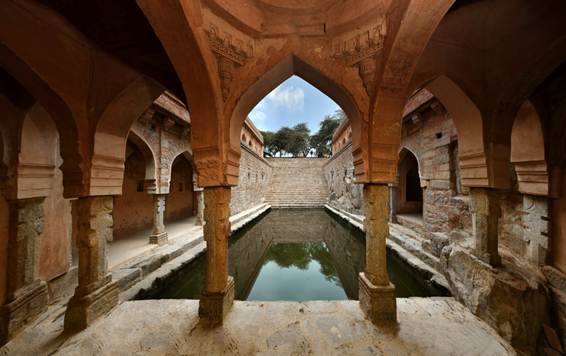
New Delhi: Tucked away in New Delhi’s Mehrauli Archaeological Park, where the city’s hustle fades into the quiet of history, Rajon ki Baoli feels like a secret whispered across centuries. Built around 1506 during the Lodi dynasty, this stepwell isn’t just a structure of stone and water—it’s a piece of the past that hums with stories. Its four tiers of steps, lined with graceful arched colonnades, are etched with stucco medallions, their floral and geometric patterns catching the light like a forgotten artist’s sketchbook. Spanning 1,610 square meters and dipping 13.4 meters deep, with a main tank 23 by 10 meters at its base, the baoli was crafted with care, not just to hold water but to offer travellers a cool, shaded haven in a sun-scorched land. You can almost picture the weary merchants and pilgrims who once rested here, their voices echoing off the intricately carved stones.
For years, though, Rajon ki Baoli stood neglected, its waters murky, its steps crumbling under the weight of time. It might have faded entirely, another casualty of progress, if not for a group of people determined to bring it back. The Archaeological Survey of India (ASI), working hand-in-hand with the World Monuments Fund India (WMFI) and the TCS Foundation, announced today that they’ve finished restoring this 16th-century gem. The project, part of WMFI’s Historic Water Systems of India initiative and backed by the TCS Foundation, isn’t just about saving an old stepwell. It’s about showing how the past can teach us to face today’s challenges, like water scarcity in a warming world.
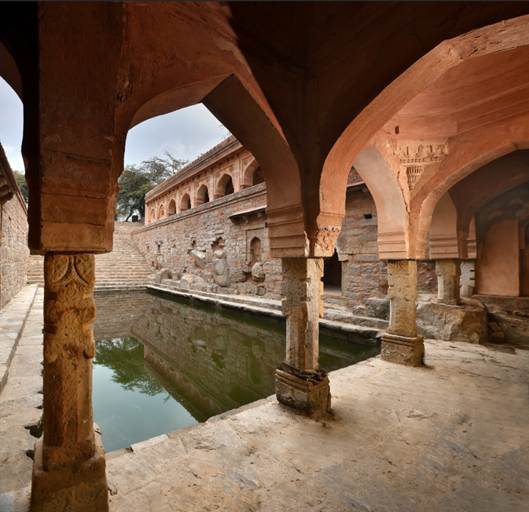
The restoration was a labour of love. Workers spent months cleaning out years of silt and debris, coaxing the baoli’s water back to life. They patched up the weathered stones with traditional lime plaster and mortar, sticking closely to historical records to keep the Lodi-era spirit intact. New drainage systems were added to protect it from future damage, and in a small but clever touch, they introduced fish to keep the water clean—a nod to old wisdom that feels right at home. Every detail, from the curve of an arch to the texture of the plaster, was handled with a kind of reverence, as if the team could feel the hands of the original builders guiding them.
What makes this story special isn’t just the stonework—it’s the people it’s brought together. The ASI and its partners didn’t just restore a monument; they invited the local community to be part of it. Through workshops and hands-on conservation activities, neighbours learned about the baoli’s history and its role in managing water sustainably. For kids growing up nearby, it’s no longer just an old well in the park—it’s a piece of their story, something to protect. You can sense the pride in the air, the way locals now talk about “their” baoli with a spark in their eyes.
As Rajon ki Baoli opens its gates to the public again, it’s ready to welcome new visitors. You can walk down its ancient steps, run your fingers along the carved medallions, and feel the cool air rising from the water below. It’s a place that feels alive, a reminder of a time when every structure was built with purpose and beauty. In a city racing toward the future, this stepwell pulls you back, whispering that the answers to some of today’s biggest problems—water, climate, community—might just lie in the ingenuity of the past.
– global bihari bureau