 By Dr Indira Khurana*
When Power Politics Block Climate Progress
COP 30 Exposes the Geopolitical Fault Lines of Our Era
Opinions on the success of the Climate Conference of the Parties (COP30) range from extreme disappointment to good progress, with the truth lying somewhere in between. But COP30 provides an opportunity learn about the rapidly changing geopolitical world.
In a fractured world, arriving at a common agreement that has the blessings of all countries is a nightmare for the hosting country. Negotiations leading to the COP30 declaration were no different. Touted as the ‘COP of truth,’ perhaps nothing could be further: The words ‘fossil fuel’ are missing from the main text, as is the shifting away from its use. More than 80 countries were in favour of a clear road map for phasing out of fossil fuels, including some European and island states and Latin American countries. The countries that refused to include mention or strong language around the phasing out of fossil fuels or an action plan around the same included some oil-producing countries and several rapidly developing economies.
COP30 was not supposed to be ‘just another climate summit’, nor was its location: Belem, at the mouth of the Amazon, a stark reminder of the role of the Amazon in climate regulation, the crisis that was before all of us, which we must collectively solve.
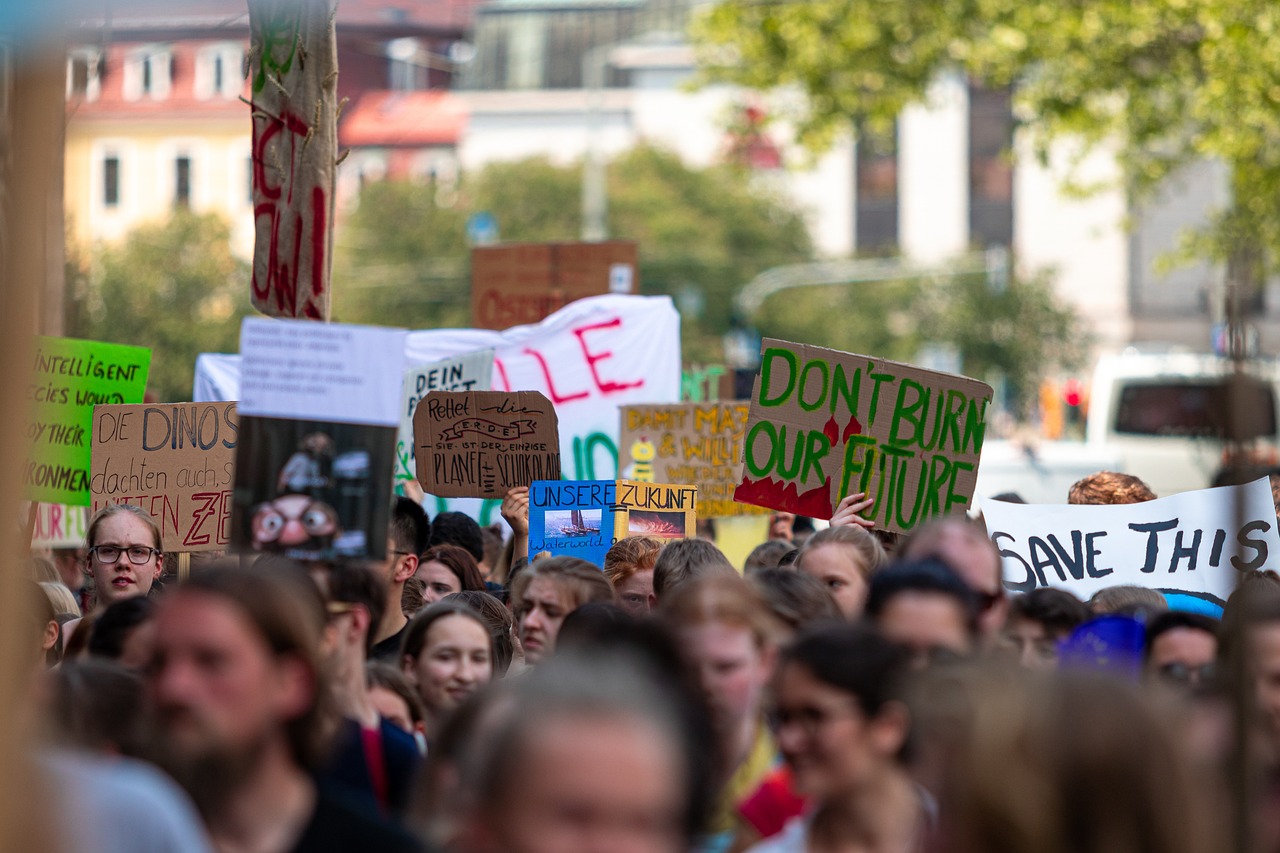
Optics dominated the scene. There was significant representation from indigenous groups, but how many of them entered the Blue Zone, the scene of all the action, was a moot point. The fuel lobby came in thousands. Youth was well represented, vocal and visible. This COP was not without drama: There was flooding after a heavy downpour and a couple of run-ins between indigenous peoples’ groups and the security. There was also a fire – quickly brought under control – just when negotiations heated up.
Undercurrents driving a weak COP declaration
That the declaration was weak indicates the wider challenges in arriving at consensus: In a geopolitical world where confrontation is rapidly replacing consensus and cooperation is making way for conflict, where existing fractures are widening into schisms and new fractures emerging, where self-interest (read national and interest of various industrial lobbies) take priority over planetary interest, arriving at a ‘Mutirão text,’ though highly desirable, is well-nigh impossible. Mutirão is a Portuguese-Brazilian term for a collective and community-driven mobilisation, a coming together to work together in a shared task. Given that the COP30 declaration requires all countries to sign up to the declaration, the risk that the COP would remain a ‘coming together with little consensus’ was only real.
Why is making commitments and taking decisions that benefit society as a whole and the planet so difficult to take? The answer lies in understanding geopolitics, how geography – location, terrain, climate and resources influence international relations, a nation’s foreign policy, power and strategy, all of which affect global stability and conflicts. Geopolitical analysis helps understand the interplay between political power and geographical factors. The emphasis on ‘the strategic importance of natural resources, their location, transportation routes, and chokepoints, constitutes a longstanding interest of geopolitics.
Geopolitics defines response to climate change: The reverse also holds true
With resource needs shifting, so is the politics. New geopolitical threats are emerging where climate mitigation questions the monopoly power based on fossil resource extraction, and where actors strive for control over new materials. Changing resource needs are shifting the focus to new players, such as countries with rich endowments of critical raw materials, such as rare earth minerals. This comes with significant new income opportunities and a growing influence on supply chains. However, there are also new challenges connected to resource extraction, such as potential damage to ecosystems or risks to social and labour rights.
The race for rare minerals (a set of 17 metallic minerals needed for artificial intelligence, data centres, robots, other high-tech devices, sensors, chips, green energy, amongst other uses) has led to tariff wars, tensions and environmental degradation, including climate implications.
Geo-political tensions have emerged in the race for access and control over resources, as nations stake claim over resources present in the ‘final frontiers’ such as the deep sea (for rare minerals), the deep Arctic, even sacred spaces and unexplored forests. How can one sustainably extract from the deep sea, which is largely unexplored, with complex food webs comprising millions of organisms? How are sustainable limits going to be defined? In a recent conference discussing the geopolitics of the Arctic and the Antarctic, the mind cringed at hearing experts, one after another, recommend ‘exploitation’ of resources. The Mirima hill has been considered sacred for centuries by the ethnic Digo people. Vast deposits of rare earth minerals, estimated at a whopping $ 62 billion, are found below the lush forests, drawing attention from Australia, the United States and China. The locals are divided and afraid. They want the hill intact but also thirst for development. The US government under President Donald Trump has made securing critical minerals central to its diplomacy in Africa.
As this race for capture and control (often beyond national boundaries) continues, ecosystems that support life and sequester carbon will erode, making a mockery of the shift from fossil fuel-based development.
Geopolitical games and shifts
Geopolitics has resulted in serious power play and a race for natural resource exploitation. Countries around the world are in multiple races for power, territorial expansion and domination, natural resource extraction, and are often facing stiff resistance. Alliances and alignments are shifting. Countries want to accelerate development as they define it – increased GDP based on natural resources exploitation, often from the commons or from some other poor country. Questions remain whether we are now in a unipolar, bipolar world or in one that is moving towards multipolarity. While the US and China are in an ‘on again, off again’ relationship, the European Commission has recently been rather quiet and appears to be without a stand in many international fora. The African continent is struggling with the rise in coup-d’etats and the unconstitutional change of governments. Armies of countries with shared boundaries around the world are aggressively staring at each other, flexing their military muscle as it were. So many groups and Forums have been formed based on specific interests: G20, QUAD (Quadrilateral Security Dialogue), BRICS, SCO (Shanghai Cooperation Organisation), to name a few, that it has been difficult to track which country is pitching for what and why. International governance and commitment processes, such as those of the United Nations, are being bypassed as countries regularly ‘cock a snoop’ at these.
Questioning needs, deep self-dives
Evolution made us the most intelligent species on earth, but our actions and desires barely reflect that.
There is a question that begs an answer: Do we really need all these devices that flood our social media, Television spaces and billboards? Do we really know the cost? Global natural resource consumption is forecast to rise 60 per cent by 2060, compared with 2020 levels, according to the UN. Natural resources are now being consumed at a pace 1.75 times faster than the Earth can regenerate. Where will the resources come from, for how long and for whom?
Is society aware of how this super-exploitative and largely unnecessary over-consumption breeds inequality? Fewer than 60,000 people – 0.001% of the world’s population – control three times as much wealth as the entire bottom half of humanity: The top 10 per cent of income-earners earn more than the other 90 per cent combined.
It’s not all doom and gloom. Responding to a weak mention around mitigation and the omission of fossil fuels from the text of the COP30 declaration, Colombia announced that it will co-host the first international conference on the phasing out of fossil fuels in April 2026, along with the Netherlands. Their frustrations are understandable. Several countries have taken serious steps to move their economies away from fossil fuels; Colombia has committed to stop issuing new licenses for oil and gas exploration, and the Netherlands is tightening industrial emission standards and actively reducing coal dependency. Uruguay has achieved the impossible: Building a power grid that runs almost entirely (around 98 per cent) on renewables and at half the cost of fossil fuels, creating 50,000 jobs along the way. According to physicist Ramon Méndez Galain, who made this possible, this transformation is possible if governments have courage and correct incentives are provided. All it needs is political will and good science.
Geo-politics is a slippery slope, requiring agility, and focusing on inward (national) and outward (international) action. Climate change makes this more complex. Given the complexities, COP30 can be viewed as a success of sorts.
India has already made a representation to hold COP33 here. Hopefully, miracles will happen, and humanity, especially leaders, will face the challenge before us all. Efforts to conserve and rejuvenate our natural heritage will accelerate, and consumption will come down. A long ask by far. In the meantime, society needs to rethink and deeply reflect (without using influencer artificial intelligence) on what kind of future they want for themselves, their future generations and their country. A deep dive into local, sustainable, rejuvenative economic growth models that help mitigation and adaptation and are embedded in the values of respect for culture and nature, that avoid overconsumption, could provide valuable insights. Meanwhile, any progress in the direction of ‘stability of the planet and its people’ is good progress.
*Chairperson of the Indian Himalayan River Basins Council (IHRBC)